
What makes the best residential roofer near Fort Worth isn’t a flashy ad. It’s a work plan that fits your home and makes clear what happens next. A polished pitch can’t tell you how the roof will be assessed, which materials are proposed, or how the project scope addresses your concerns.
It’s reasonable to want clear answers before committing, especially when hail or other storm damage adds pressure to a roofing decision. Credentials and reviews can offer useful signals, but they’re only part of the picture. You also need to understand the scope of work, the materials, warranty terms, and communication from estimate through project completion.
This guide explains how to weigh those details and choose a roofer with local roots and a project approach suited to your home. We’ll cover materials, storm-related concerns, proposals, and what to expect when requesting an estimate. Mike and Mike Roofing is a family-owned, father-and-son roofing company based in Weatherford and serving Fort Worth and Aledo. The goal is a straightforward process: clear information and a project scope you can understand.
Key Takeaways
- The best residential roofer near Fort Worth is one whose proposed work fits your roof’s condition and your home’s needs, not simply the one with the boldest claims.
- Compare proposals by scope, specified materials, workmanship details, communication, and review evidence. A manufacturer credential is only one part of the picture.
- Look for a written proposal that explains the work area, materials, project responsibilities, and warranty information so you can understand what’s included.
- A useful estimate process connects your concerns to a roof review, a discussion of options, and a clear explanation of the proposed scope and next steps.
- Mike and Mike Roofing is a Weatherford-based, family-owned father-son team serving Fort Worth and Aledo, installing residential roofs with Owens Corning materials.
What Makes a Residential Roofer the Best Fit Near Fort Worth?
Choosing a roofer comes down to more than picking a name from a search result. You want a clear scope and a roof plan that reflects your home’s condition. For homeowners in Fort Worth, Weatherford, and Aledo, the best residential roofer near Fort Worth is one who can explain how the proposed work, materials, and project details fit the property.
Use these signals to assess whether the fit is sound:
- Relevant experience: The roofer can discuss residential roof installation and the type and condition of your roof.
- Clear communication: Explanations are direct, questions receive considered answers, and next steps are easy to follow.
- Defined materials: The proposal identifies the roofing materials being considered instead of relying on broad descriptions.
- Review evidence: Customer feedback gives you insight into how the company works with homeowners, not just how it describes itself.
- Written scope: You can see what work is proposed and which parts of the roof or project it addresses.
What should Fort Worth-area homeowners expect from a residential roofer?
Expect a useful conversation about what you’ve noticed, what matters to you, and what the roof review shows. The proposed work should connect those points. If the concern appears limited to a specific area, a broader replacement recommendation should include an explanation of why. Replacement and repair address different needs, and a remote description or photo alone can’t establish the roof’s full condition. A sound recommendation starts with a professional assessment, not a one-size-fits-all pitch.
A written scope keeps the discussion concrete. Review the work area, materials, and tasks described, then compare them with the concerns you raised. If the explanation is vague, don’t treat a headline price or polished credential as proof that the project is right for your home.
Why local context matters when planning residential roofing
North Texas roofs face changing weather, including hail and strong winds, as well as periods of heat and sun exposure. Those conditions can inform conversations about roof condition and material selection, but the right plan still depends on the house. Roof shape, existing materials, and visible wear all matter. After severe weather, homeowners can note concerns from the ground, such as shingles or roofing debris in the yard, without climbing onto the roof.
That context matters across Fort Worth, Weatherford, and Aledo, but it doesn’t replace an inspection. A general overview of types of roof construction and materials can help explain why homes may need different approaches. The practical test is whether the roofer connects your property’s conditions to a clear, project-specific plan.
How to Compare Fort Worth Roofers: Materials, Workmanship, and Trust
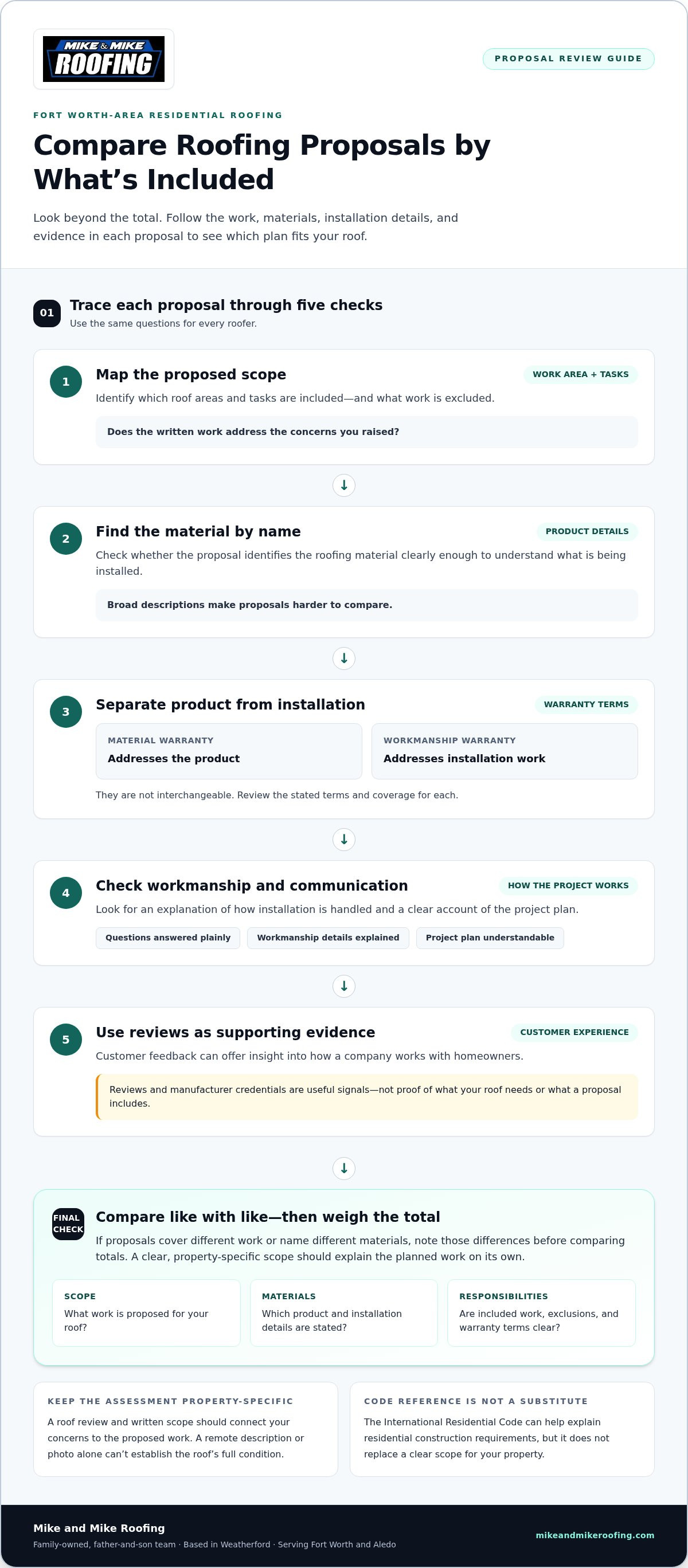
Once you have proposals in hand, compare the work being offered, not just the totals. Two estimates can look similar while describing different materials, work areas, or responsibilities. Reviewing them side by side makes gaps easier to spot and helps you judge which plan fits your roof.
| What to compare | What to look for |
|---|---|
| Proposed scope | Which roof areas and tasks are included, and what work is excluded? |
| Material named | Does the proposal identify the roofing material clearly enough to understand what is being installed? |
| Workmanship information | Does the roofer explain how installation work is handled and describe any workmanship warranty? |
| Communication | Are questions answered plainly, with a clear explanation of the project plan? |
| Review evidence | Do customer reviews provide useful insight into homeowners’ experiences? |
Compare like with like. If one proposal covers more work or names different materials, note that before judging the total. The International Residential Code for roofing is a useful reference for understanding residential construction requirements, but a code resource doesn’t replace a clear, property-specific scope. The proposal should make the planned work understandable on its own.
How do roofing materials and workmanship claims differ?
Materials and installation are separate parts of a roofing project. A named material tells you what product is proposed; workmanship describes the installation. Mike and Mike Roofing uses Owens Corning materials, and the project proposal should make clear which materials and installation work apply to your home.
A material warranty addresses the product; a contractor’s workmanship warranty addresses installation work, and the terms are not interchangeable. Read each warranty description for its stated coverage rather than assuming one covers the other. The specific terms matter, so review what the documents say.
Which trust signals are useful, and what do they prove?
Ratings and reviews offer clues about a company’s standing and customer experiences, but they don’t show exactly what your roof needs or define what a particular proposal includes. Manufacturer credentials can indicate a relationship or qualification within a manufacturer’s program. They’re one signal, not a substitute for understanding the scope, materials, and responsibilities in the project plan.
Mike and Mike Roofing has an A+ BBB rating and 5-star customer reviews. Consider these alongside the written details of the work. For a broader look at evaluating a company’s standing and communication, see this guidance on trusted exterior contractor guidance.
For a direct, project-specific comparison, Mike and Mike Roofing offers free roofing estimates through its website. A written estimate gives you a concrete scope and material description to review, rather than leaving the decision to a credential or headline figure alone.
How to Spot a Roofing Proposal That Leaves Too Many Questions
A low headline estimate is hard to judge if you can’t tell what work it covers. One proposal may describe a specific roof area and list materials; another may use a broad label without explaining what’s included. That difference doesn’t prove either roofer is acting improperly. It does mean you need enough detail to understand what you’re comparing.
A useful roofing proposal clearly describes the work, materials, and responsibilities involved in the project. Read it for the details that shape the job, not just the total. A clear scope helps you and the roofing company start with the same understanding. If a phrase could mean several things, get a plain-language explanation before deciding.
What should a residential roof estimate explain?
A project-specific estimate should describe the roof work proposed for your home. Look for the work area, material description, relevant project responsibilities, and warranty information. If removal of existing roofing or other tasks are part of the proposed work, their descriptions should show how they fit into the scope.
A generic online cost tool can offer a broad starting point, but it can’t describe your particular roof or define a project plan. An estimate based on the property is more useful for understanding the proposed work. It isn’t a promise that every project detail or final cost will remain unchanged, so treat the document as the roofer’s stated plan and review its terms carefully.
How can homeowners compare estimates with different scopes?
Line up the work descriptions before comparing totals. Check whether each proposal describes the same roof area, materials, removal work, and responsibilities. If one includes a task that another doesn’t mention, the figures aren’t a like-for-like comparison yet. Don’t assume an omitted detail is included or excluded. Get the wording clarified.
- Work area: Is the proposal clear about which roof or sections are included?
- Materials: Does it name the material or describe it clearly enough to distinguish it from other options?
- Removal and related work: Are these tasks described, if they’re part of the proposed scope?
- Responsibilities: Does the document explain who handles relevant project tasks?
- Warranty information: Does it identify the warranty coverage being described, without blurring product and workmanship terms?
If the language is unclear, seek an explanation instead of guessing. For example, “new roof” alone doesn’t tell you which materials are planned or what work the proposal includes. A roofer should be able to explain the written scope in straightforward terms. That clarity gives you a more useful basis for deciding which project plan fits your home, whether you’re reviewing one estimate or comparing several.
What to Expect From a Residential Roofing Estimate Near Fort Worth
A useful estimate starts with a conversation, then connects your concerns to what a professional observes and the work being proposed. You don’t need to know roofing terminology before the appointment. You do need the chance to explain what you’ve noticed, understand the options, and review the scope before deciding what comes next.
Think of the process in practical steps:
- Describe your concerns. Share what prompted the estimate, such as a visible change after a storm or a question about the roof’s age or condition.
- Review the roof. The professional assesses the property using an approach suited to its layout and conditions.
- Discuss options. Talk through the proposed materials and whether the recommendation addresses the concerns observed.
- Clarify the scope. Review the work described, the areas covered, and what the proposal says about materials and warranties.
- Consider next steps. Take time to understand the written recommendation and decide how you want to proceed.
How to prepare for a roofing estimate
A little preparation makes the conversation more useful. Have the property address ready, along with a concise description of what you’ve noticed and when. If severe weather prompted your concern, share observations made safely from the ground, such as debris in the yard or visible changes from a window. Don’t climb onto the roof to gather information. Access and inspection methods depend on the property and should be handled safely by professionals.
Write down your questions before the appointment. You might ask which materials are proposed, what work the estimate covers, and what warranty information applies to materials and workmanship. If you’re comparing options, note what matters most to you, such as understanding the full scope or choosing materials suited to your home. A residential roof installation guide can also help you become familiar with common project stages and terms before reviewing an estimate.
What happens after the roof and project needs are discussed?
After the roof review and conversation, take time to read the recommendation and written scope. Check that the description reflects the concerns discussed and that the proposed materials and work are understandable. An estimate is a planning document, not a reason to rush. If a phrase is unfamiliar or a responsibility isn’t clear, get a plain-language explanation so you understand what the proposal says.
This process helps you judge whether the plan fits your home instead of relying on a quick impression. If you’re ready to discuss your roof and receive a project-specific estimate, request a free roofing estimate from Mike and Mike Roofing through the company website. A clear conversation is a practical first step toward understanding the work and choosing the best residential roofer near Fort Worth for your project.
Why Fort Worth Homeowners Choose Mike and Mike Roofing
Choosing a roofing company is a practical decision. You want to understand who is doing the work, what materials are proposed, and how the plan fits your home. Mike and Mike Roofing is a family-owned, father-son residential roofing team based in Weatherford and serving Fort Worth and Aledo. As a local family-run company, Mike and Mike Roofing puts clear communication and a straightforward project discussion at the center of the experience.
A local, family-owned roofing team
Mike and Mike Roofing is operated by a father-and-son team. Homeowners can discuss roof installation needs with a team based in Weatherford and serving Fort Worth and Aledo. That local connection is a useful starting point for discussing the property, the proposed work, and materials that may suit the project.
Mike and Mike Roofing installs roofs using Owens Corning materials. The brand is one part of the decision, not the whole plan: consider the material alongside the roof’s condition and the written scope. The company’s A+ BBB rating and 5-star customer reviews are additional trust signals. Reviews can offer insight into customer experiences, while a rating is one measure of the company’s standing. Neither replaces a clear explanation of the work planned for your home.
The company also offers industry-leading warranties on its work. Review the warranty information for the specific project and understand what it says about coverage. A warranty is most useful when its terms are clear, rather than treated as a general promise without details.
A clear next step for Fort Worth-area homeowners
A free estimate gives you an opportunity to describe your roofing concerns, discuss materials, and understand the proposed scope before deciding how to proceed. Use the conversation to cover practical questions: What work is recommended? Which materials are being considered? What warranty information applies? Clear answers help you assess whether the project plan fits your home and priorities.
There’s no need to make a decision based on a headline claim alone. Review the written details, take time to understand unfamiliar terms, and consider how the recommendation matches your roof’s needs. That’s a steadier way to decide whether Mike and Mike Roofing is the best residential roofer near Fort Worth for your project.
If you’re ready to talk through your home’s roofing needs, request a free roofing estimate through the Mike and Mike Roofing website. It’s a straightforward first step toward understanding the work and materials being considered, with room to discuss the project before choosing your next step.
Take the Next Step With a Clear Plan
A roofing decision doesn’t have to be rushed. Give yourself time to understand the proposed work, consider how it fits your home, and decide what feels right. The goal isn’t to follow the loudest promise. It’s to move forward with a plan you understand and can evaluate with confidence.
If you’re looking for the best residential roofer near Fort Worth, make the next conversation useful: bring your questions, explain what you’ve noticed, and review the work being considered. An informed decision starts with straightforward information, not pressure.
Mike and Mike Roofing offers homeowners a free estimate as a starting point for discussing their roofing needs. Request a free roofing estimate and take the next step toward a roof plan that makes sense for your home.
Frequently Asked Questions
How do I know if a roofer near Fort Worth is reputable?
Consider customer reviews, a verifiable BBB profile, clear written project information, and straightforward communication together. Mike and Mike Roofing has an A+ BBB rating and 5-star reviews, useful context for homeowners in Weatherford, Fort Worth, and Aledo. Still, no single rating proves how workmanship will hold up on every project. The best residential roofer near Fort Worth should also explain how the proposed work addresses your home’s specific conditions.
How much does a residential roof replacement cost near Fort Worth?
Roof replacement totals vary with roof size, existing conditions, selected materials, and the scope of work. A broad online figure won’t account for details specific to your property, so compare written, project-specific scopes rather than headline totals alone. Check that the descriptions cover comparable work and materials. Mike and Mike Roofing offers free estimates so homeowners can discuss their property’s roofing needs and understand the proposed project.
Does homeowners insurance cover roof damage from a storm in Texas?
Whether storm-related roof damage is covered depends on your individual policy, the cause and timing of the damage, applicable exclusions, and the insurer’s assessment. Don’t assume every storm-related issue will be handled the same way. Review your policy documents and speak directly with your insurer about coverage questions. Keep notes and photos of visible signs gathered safely from the ground to help explain what you observed.
How long does a residential roof replacement take?
Timing depends on the roof’s size and design, existing conditions, material availability, weather, and project scope. Those factors differ from one home to the next, so a standard duration may not reflect your project. During the estimate conversation, discuss the expected schedule and what could affect the work. Use the project-specific plan, rather than a general online estimate, to understand the timing for your home.
Should I replace my roof before selling my house?
Not automatically. The decision depends on the roof’s condition, buyer expectations, inspection findings, and your plans for the sale. A roof showing wear may raise questions during an inspection, while a roof in serviceable condition may not call for replacement. Get a professional assessment and weigh its documented findings against your selling strategy. Consider the work only after understanding the roof’s condition, rather than assuming replacement will change the sale outcome.
Are Owens Corning shingles a good choice for a residential roof?
They may suit a project, but the right choice depends on your home’s needs, the specific materials proposed, the project scope, and installation. Avoid judging a material by brand name alone or assuming every option has the same characteristics. Mike and Mike Roofing uses Owens Corning materials. During an estimate discussion, review what materials are proposed for your home and how they relate to the project plan.
What should I do if I notice a roof leak after heavy rain?
Keep people away from unsafe areas, protect belongings where practical, and document visible signs from a safe location. Don’t climb onto the roof or enter areas that may be unsafe. A leak can have more than one cause, so visible water inside may not show where it entered. Arrange a professional conversation about what you observed and where it appeared, then use that information to discuss an appropriate assessment of the roof.


