
The lowest bid on your renovation isn't a bargain if you end up paying for it twice. When severe weather hits, hiring trusted exterior contractors is the only thing standing between your living room and costly, hidden water leaks. You shouldn't have to stress over aggressive sales pitches or transient storm chasers who knock on your door after a hail storm and vanish weeks later. You deserve straight answers, verified local credentials, and craftsmen who treat your property with the same care they would give their own homes.
Protecting your biggest investment comes down to knowing how your roof, siding, windows, and gutters work together as a single defensive barrier. In this guide, you will learn how to verify contractor licensing and liability coverage, decipher manufacturer-backed warranties, and demand genuine accountability from your crew. We break down the exact vetting checklist you need to choose the right partner with confidence before signing a single contract.
Key Takeaways
- Discover how to vet trusted exterior contractors who manage your roof, siding, windows, and gutters as an integrated defense against water and storm damage.
- Identify the essential legal safeguards to demand before signing, including active general liability policies, workers' compensation, and verified local ratings.
- Learn how to spot predatory estimate tactics and unusually low bids that secretly cut corners on flashing, critical fasteners, or clean-up costs.
- Follow a structured five-step planning roadmap to conduct your own surface audit and manage project milestones with complete confidence.
What Defines Trusted Exterior Contractors in Residential Construction?
A home isn't an assortment of disconnected parts. It functions as a single, engineered shield. True trusted exterior contractors don't look at a roof shingle or a piece of vinyl siding as an isolated fix. They operate with the broad technical knowledge of a licensed general contractor, coordinating trades so every seam, nail, and barrier works together to keep wind and water out.
Homeowner anxiety spikes after severe weather sweeps through a neighborhood. Out-of-town crews flood local streets with high-pressure pitches, promising fast repairs at dirt-cheap rates. That rock-bottom estimate usually comes at the expense of your equity. Long-term property value relies on manufacturer-backed materials, verified building practices, and craftsmanship warranties that remain enforceable long after the storm season passes.
The Role of the Complete Home Exterior Envelope
Your roofing, siding, windows, and drainage systems must collaborate to stop moisture intrusion. Treating exterior trades as separate projects creates severe weak points. If a siding crew doesn't understand roof step flashing, water slips straight behind wall assemblies, rotting wood framing and destroying insulation before you ever spot a ceiling stain.
- Flashing integration: Directing run-off away from critical wall intersections prevents structural rot.
- Window transitions: Wrapping window rough openings correctly seals out wind-driven rain and drafts.
- Drainage control: Sizing gutters to match roof pitch preserves foundation stability.
Accountability and Local Community Roots
Storm chasers thrive on rapid turnover. They pack up their trucks and cross state lines as soon as the initial insurance checks clear, leaving homeowners stranded with invalid warranties and defective installations. Physical roots protect you from that headache.
Established, multi-generational family businesses rely on local accountability. They live in the neighborhoods they serve, so their reputation is on the line with every project. You get a direct, honest evaluation of your exterior needs, backed by tradesmen who will actually answer the phone if you need maintenance years down the road.
Key Credentials to Verify Before Hiring an Exterior Contractor
A polished sales pitch cannot replace proven trade qualifications. Vetting trusted exterior contractors means looking past surface promises and inspecting legal safeguards. Across North Texas communities in Parker and Tarrant counties, local building departments enforce strict permitting requirements to guarantee structural wind and impact resistance. If an installer tries to skirt the permit process, you are the one left carrying the liability.
Manufacturer Certifications and Workmanship Warranties
Top material manufacturers do not hand out certifications to just anyone. Factory-certified crews, such as Owens Corning preferred contractors, must prove financial stability and complete rigorous training on ventilation, underlayment placement, and fastening patterns. These credentials allow crews to offer extended, non-prorated manufacturer-backed warranties that uncertified handymen cannot provide. Independent manufacturer standards ensure the crew working on your roof or siding builds strictly to factory specifications.
Insurance Coverage and Homeowner Liability Protection
Never rely on a contractor merely showing you a photocopied paper slip. To protect your finances and learn how to avoid a home improvement scam, require the contractor's insurance carrier to send a Certificate of Insurance directly to your email.
- General liability insurance: Covers accidental damage to your landscaping, structure, or interior during work.
- Workers' compensation: Protects you from devastating lawsuits if an installer suffers an injury on your property. Commercial auto coverage alone does not cover job-site accidents.
Independent Reputation and Third-Party Verification
Reputation is built on years of verified performance. Check the Better Business Bureau to verify how an outfit handles disputes and customer communication; an A+ BBB rating reflects consistent, ethical business practices. Look for detailed, photo-backed homeowner reviews rather than vague five-star ratings posted in sudden bursts. Take the time to evaluate established residential roof installation standards before signing any work order. If you want a clear, honest review of your property's needs without pressure, partnering with a dependable team like Mike and Mike Roofing gives you proven, multi-trade accountability right from the start.
How Specialized Exterior Systems Protect Home Value and Structural Safety
Texas weather tests residential construction to its limits. Triple-digit summer heat, spring hail, and sudden high-wind squalls expose every design flaw in an exterior perimeter. Experienced trusted exterior contractors understand that protecting equity requires more than picking attractive colors. Long-term structural protection comes from engineering rooflines, wall assemblies, and drainage systems to function as a unified barrier that preserves curb appeal and slashes household cooling loads.
Roofing and Attic Ventilation Architecture
Trapped attic heat cooks shingles from the inside out. Without balanced intake vents at the soffits and continuous exhaust along the ridge, summer temperatures bake roof decking, voiding material warranties and driving up electric bills. Heavy hail demands Class 4 impact-resistant composition shingles fastened with precision. Along roof edges and sidewalls, heavy-gauge metal drip edges and properly layered step flashing channel water away from fascia boards, stopping moisture before it reaches attic rafters.
Siding and Window Weatherproofing
Exterior walls must shed bulk water while letting internal vapor escape. High-performance fiber cement paired with insulated siding forms a durable shield against blistering sun and driving rain. Reviewing our comprehensive siding installation service guide details how breathable, weather-tight wraps stop wall cavity rot.
Windows remain the most vulnerable transition points on any vertical wall. Choosing an expert window installation service near me guarantees that sill pans, self-adhering flashing, and thermal gaps are sealed to the framing, preventing hidden wall rot and eliminating drafts.
Water Shedding Through Gutters and Outdoor Living Extensions
Controlling runoff protects the ground beneath your home. Expansive clay soils throughout North Texas shift violently when saturated, cracking slab foundations and warping framing. Seamless gutter systems, sized correctly for steep roof pitches, gather deluge rains and direct discharge far past grade edges. Scheduling routine gutter maintenance in Weatherford TX prevents clogs that cause water to overflow back into the eaves.
Outdoor living additions complete this defensive perimeter. Installing professionally designed patio structures shields rear walls and foundational footings from brutal solar exposure and direct storm impacts while expanding functional family space. If you are seeking design inspiration for broader property upgrades or want to explore Renovations, teams like HMJ Contracting demonstrate how thorough project planning balances lifestyle additions with durable construction.
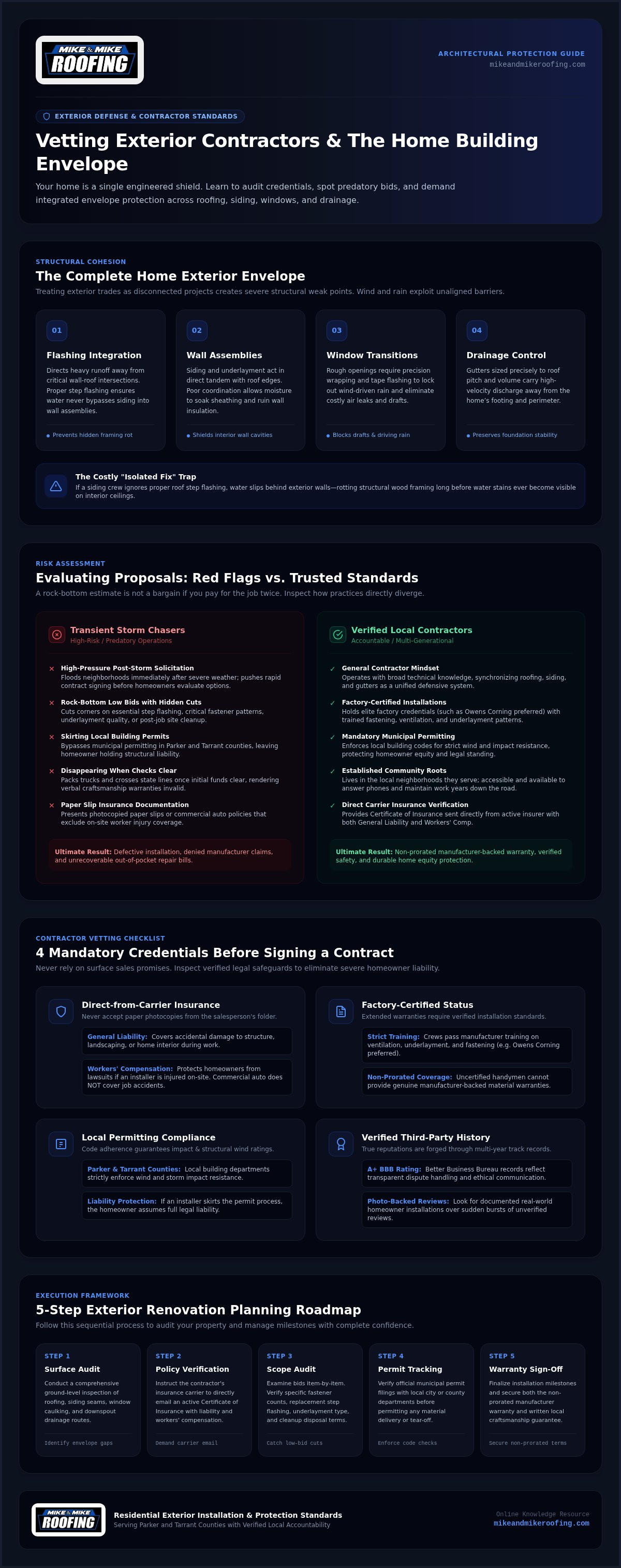
Evaluating Proposals: Red Flags vs. Dependable Contractor Signals
A detailed bid reveals far more than the final price tag. It shows how an operation runs its jobs and treats its clients. When comparing quotes, an estimate that sits suspiciously below the competition isn't a good deal. It usually means the installer cut corners on trash disposal, neglected structural flashing, or downgraded essential components to cheap generic brands. Finding trusted exterior contractors requires knowing how to separate predatory tactics from honest, dependable proposals.
Spotting Common Contractor Red Flags
Predatory operators rely on urgency to keep you from asking hard questions. If a salesperson shows up in an unmarked truck with out-of-state plates, pressure-selling a same-day discount, shut the door. Watch out for these critical warning signs:
- Waiving deductibles: Offering to absorb or waive your insurance deductible is illegal and constitutes insurance fraud. Walk away immediately.
- Asking you to pull permits: Legitimate contractors pull their own municipal permits. Asking a homeowner to do it is a sign they lack local licensing or active insurance.
- Full upfront payment: Never hand over full payment before materials arrive and work begins. Reputable operations follow structured milestone schedules.
- Vague line items: Broad statements like "repair roof" or "replace siding" give unethical crews room to reuse old flashing, skip synthetic underlayment, or tack on surprise fees later.
Hallmarks of Professional Contractor Estimates
Honest builders put everything in writing. A solid scope of work outlines the exact manufacturer lines being installed, from starter shingles down to fastener types and ventilation baffles. It also documents how the crew will protect your property, specifying tarp placement, landscaping defense, and continuous magnetic sweeps to collect loose nails.
Professional bids include clear completion timelines, weather-delay protocols, and verified proof of insurance. If you want a straightforward, itemized proposal built on multi-trade integrity, request a consultation with Mike and Mike Roofing to get an honest assessment of your home's exterior.
Steps to Confidently Plan Your Exterior Renovation Project
A successful remodel requires deliberate preparation. Taking a systematic approach keeps you in control from the first inspection to the final nail. Navigating this process becomes straightforward when you follow a clear roadmap:
- Phase 1: Surface audit. Document visible wear and water pathways.
- Phase 2: Local compliance. Check neighborhood covenants and municipal permit rules.
- Phase 3: Contractor selection. Collect detailed proposals from verified specialists.
- Phase 4: Scope finalization. Lock in warranties, materials, and schedules in writing.
- Phase 5: Job execution. Oversee work milestones and complete a final perimeter walkthrough.
Conducting an Initial Property and Needs Assessment
Start with a hands-on audit before calling in estimates. Head into your attic with a flashlight on a sunny day. Look for damp insulation, dark water stains on roof decking, and slivers of daylight around roof penetrations. Outside, check exterior siding seams and window casements for cracked caulk, bubbling paint, or soft wood that gives way under light pressure. If issues are primarily related to failing surface finishes, professional painting specialists like Walls Done Right can properly prep and seal exterior walls against moisture. Photograph any problem areas and jot down chronic drainage trouble spots so your installer receives an accurate picture of past issues.
Finalizing Agreements and Managing the Installation Phase
Check all specified materials against your HOA guidelines and local municipal building codes before signing an agreement. Make sure your contract lists exact product lines that match manufacturer warranty standards rather than generic substitutes.
Clear communication prevents delays once work begins. Establish daily check-in protocols with the project lead or owner so you know the exact schedule. When the crew finishes, walk the entire perimeter together. Verify that siding transitions are tight, gutters are pitched properly, and ground crews have swept your grass and driveway thoroughly with magnets. For a straightforward, honest assessment of your home's exterior needs, reach out to Mike and Mike Roofing for dependable, family-backed craftsmanship.
Secure Your Home With Craftsmanship Built to Last
Exterior remodeling isn't about chasing the cheapest bid. It's about protecting your family's biggest investment from the ground up. By verifying carrier-direct insurance coverage, demanding factory-trained installation standards, and treating your roofline, siding, windows, and gutters as an integrated defensive barrier, you shield your equity against severe regional weather. Partnering with trusted exterior contractors ensures every critical flashing detail and perimeter seam is built to endure for decades.
As a father-and-son local team serving Weatherford, Fort Worth, and Aledo, we bring straightforward accountability to every job site. We pair our A+ BBB rating and five-star customer reviews with Owens Corning preferred materials and industry-leading warranties. Don't leave your property's structural safety to chance. Schedule your dependable exterior consultation with Mike and Mike Roofing and protect your home with craftsmen who stand firmly behind their work.
Frequently Asked Questions
How do I check if an exterior contractor is properly insured in Texas?
Demand a Certificate of Insurance issued directly from the contractor's insurance carrier, not an outdated paper copy handed to you by a salesperson. Make sure both general liability and workers' compensation coverage are active. Call the issuing agency directly to confirm policy validity and verify that the coverage protects residential jobsites across communities in Weatherford, Fort Worth, and Aledo.
Why is manufacturer certification important when hiring a roofing or siding contractor?
Manufacturer certification proves an installation crew has met rigid financial, licensing, and installation standards set by industry leaders like Owens Corning. Uncertified crews can only offer standard product warranties, which often exclude labor when defects emerge. Working with trusted exterior contractors holding factory credentials gives you access to extended, non-prorated system warranties backed directly by the manufacturer rather than relying solely on tailgate guarantees.
What is the difference between a manufacturer warranty and a workmanship warranty?
A manufacturer warranty covers factory defects in the materials themselves, while a workmanship warranty covers installation errors committed by the labor crew. If a shingle fails prematurely due to internal defects, the manufacturer replaces it. However, if water penetrates your attic because an installer misaligned step flashing or improperly spaced nails, only the contractor's workmanship warranty covers the repair costs.
How can I avoid storm chasers after severe hail or wind damage?
Avoid hiring any door-to-door solicitor who shows up right after a severe storm without an established regional shop or permanent local business address. Check their vehicle license plates, verify their business registry, and inspect their standing with the Better Business Bureau. Established, family-run contractors serving Parker and Tarrant counties build their reputations on multi-decade community relationships, not high-pressure, fleeting storm claims.
Should I choose a single contractor for roofing, siding, and gutters or hire separate trades?
Choosing a single company to manage all exterior trades eliminates finger-pointing and guarantees your home envelope performs as a unified drainage system. When separate crews handle individual projects, siding installers often blame roofers for water penetration along eaves and flashing transitions. Hiring trusted exterior contractors with multi-trade experience ensures rooflines, drip edges, window wraps, and gutters integrate cleanly to prevent hidden structural rot.
What should be included in an exterior renovation contract?
An exterior renovation contract should provide a comprehensive scope of work specifying exact manufacturer product lines, fasteners, underlayment, and ventilation components. It must also detail firm start and completion dates, weather-delay protocols, structured payment milestones, local municipal permit responsibilities, and site cleanup routines. Never sign an agreement containing vague line items that give a contractor room to downgrade materials without written homeowner consent.
Can a contractor legally pay or waive my insurance deductible in Texas?
No, it is strictly illegal under Texas law for an exterior contractor to pay, waive, rebate, or absorb a homeowner's insurance deductible. Any builder offering to absorb your deductible through advertising credits or dummy invoices is committing insurance fraud. Homeowners are required by law to pay their full property insurance deductible, and dependable contractors will always require complete compliance with state statutes.


