

What if the roof damage you can see is only part of the story? After a storm in Weatherford, lifted shingles or granule loss can be difficult to assess from the ground, and it may not be clear whether a change is storm damage or ordinary wear. Weatherford TX roof insurance claim help starts with careful documentation, not guesswork or a rush to repair.
It’s reasonable to want clear answers before committing to work. Your insurer decides whether damage is covered under your policy. A roofing contractor can describe the roof’s condition and provide information about potential project scope. Understanding these different roles can help you move through the process with fewer surprises.
This 2026 guide explains what to photograph and save, how an inspection and claim review typically work, and which questions to ask your insurer. You’ll also learn how a local roofer can share clear observations and an estimate without promising a coverage decision. Mike and Mike Roofing is a family-owned, father-son roofing contractor based in Weatherford, serving homeowners in Weatherford, Fort Worth, and Aledo.
Key Takeaways
- Weatherford TX roof insurance claim help begins with safely recording visible damage and noting when you first observed it.
- Gather photos, storm details, and insurer correspondence so you have a useful record for claim discussions.
- A roofer’s assessment describes roof condition and potential project scope. The insurer determines whether the policy covers the reported damage.
- If a decision surprises you, compare the insurer’s written explanation with your inspection records before deciding what to do next.
- A local Weatherford roofing contractor can help turn documented roof conditions into a clear repair or replacement discussion.
Weatherford Roof Insurance Claim Help: Start With the Damage, Not a Promise
Finding a lifted shingle, dented gutter, or possible hail mark after a storm can be unsettling. The damage may be limited, or it may point to a wider problem. You don’t need to decide on a full replacement before you understand the roof’s condition. Weatherford TX roof insurance claim help should begin with careful observations and a clear record, not a promise that an insurer will pay.
The practical first steps are to document what you can see from a safe location, contact your insurer for instructions on reporting the damage under your policy, and arrange a roof assessment. Keep the roles clear. You report the loss and make decisions about your home. A roofer can describe visible roof conditions and discuss potential repair or replacement work. Your insurer reviews the policy and determines coverage.
- Note when you first observed possible damage and the storm conditions you remember.
- Photograph visible issues from the ground if it’s safe. Don’t climb onto the roof.
- Keep your photos, notes, and insurer communications together.
- Arrange a roofer’s assessment to understand the roof’s condition and potential project scope.
What roof insurance claim help can, and cannot, mean
A roofing assessment can record observable conditions, such as shingles that appear lifted or areas where the surface looks marked. A roofer can explain what those observations may mean for the roof and outline potential work. This information can help you describe the condition of your home, but it isn’t a coverage decision. Only the insurer can determine whether the reported damage is covered under your specific homeowner’s policy. No contractor can promise approval, payment, or a particular claim value.
Before authorizing major work, understand what the assessment describes and what the insurer has decided. An observation about the roof is not the same as an insurer’s coverage determination. Keeping that distinction in view helps you make informed choices without treating a contractor’s opinion as a guarantee.
Why Weatherford storm context matters
Hail and wind can affect roofing and exterior materials, but signs of damage aren’t always uniform. One roof slope may show visible marks while another appears unchanged. Gutters, screens, or other exterior components may also have signs worth documenting. A ground-level look can’t establish the full condition of a roof, so don’t treat a quick visual check as a final assessment.
Homeowners in Weatherford, Texas, Fort Worth, and Aledo can make their records more useful by noting when they noticed a change and what they observed around the home. Weather and storm conditions can vary locally, so write down what you personally saw rather than assuming damage came from a particular event. Mike and Mike Roofing, based in Weatherford, provides roofing services for homeowners in the local area.
How to Document Roof Damage and Begin a Claim in Weatherford
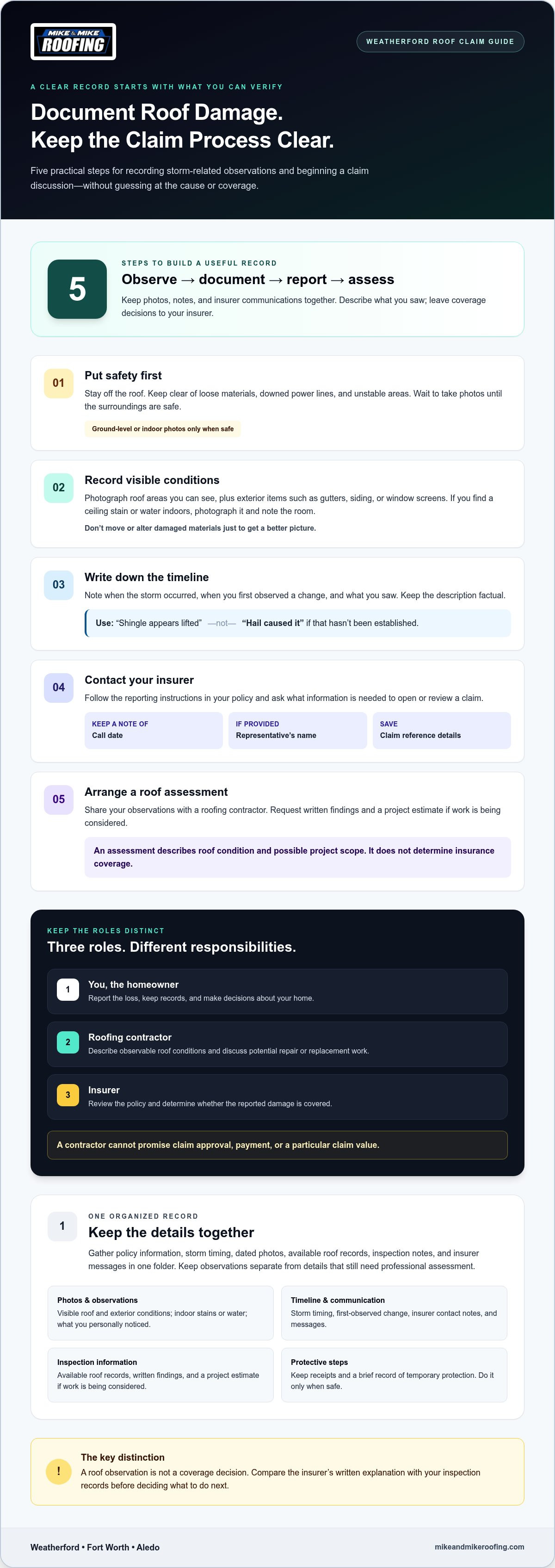
A useful claim record is built from details you can verify, not guesses about what caused them. Note what you see, preserve the evidence, then contact your insurer and arrange a roof assessment. This gives you a clearer account to share while leaving coverage decisions to the insurer.
- Put safety first. Stay off the roof and away from loose materials, downed power lines, or areas that may be unstable. If conditions around the house aren’t safe, wait until they are before taking photos.
- Record visible conditions. From the ground, photograph roof areas you can see, along with exterior items such as gutters, siding, or window screens. If you notice a ceiling stain or water inside, photograph it and note the room and date. Don’t move or alter damaged materials just to get a better picture.
- Write down the timeline. Note when the storm occurred, when you first observed a change, and what you saw. Describe observations plainly. For example, write “shingle appears lifted” rather than saying hail caused it if that hasn’t been established.
- Contact your insurer. Follow the contact and reporting instructions in your policy, and ask what information is needed to open or review a claim. Record the date of the call, the representative’s name if provided, and any claim reference details.
- Arrange a roof assessment. Share your observations with a roofing contractor and request written findings and a project estimate if work is being considered. An assessment can describe roof condition and possible scope. It doesn’t determine insurance coverage.
A safe first-response checklist after a storm
Photograph only what you can reach safely from the ground or inside the home. If temporary protection is needed, use it only when you can do so safely. Don’t climb onto a damaged roof. Keep receipts and a brief record of any protective steps taken. These notes help explain what you observed and what you did to limit further exposure, while preserving the original evidence as much as possible.
What to share with the insurer and roofing contractor
Keep policy information, storm timing, dated photos, available roof records, inspection notes, and insurer messages together in one folder. Share relevant information with each party, but distinguish what you observed from what still needs professional assessment. The National Roofing Contractors Association offers roofing-related consumer resources. Your own inspection records remain the direct account of your home’s condition.
During a Weatherford TX roof insurance claim help process, organized records can make conversations more precise. Ask your insurer how to submit supporting documents and what the next step is. Ask the roofer for written observations and an estimate that explains the proposed repair or replacement scope. Mike and Mike Roofing provides roofing services in Weatherford, Fort Worth, and Aledo, and can discuss roof conditions and project information. For a clearer discussion of your roof’s condition, request a roof assessment from Mike and Mike Roofing.
Roof Inspection vs. Adjuster Inspection: What Each One Establishes
A roofing assessment and an insurer’s inspection may examine the same roof, but they serve different purposes. One documents roof condition and potential work. The other helps the insurer evaluate a reported claim under the homeowner’s policy. Keeping the roles separate makes it easier to understand what each set of findings can and cannot tell you.
| Inspection | Who conducts it | What it focuses on | How findings are used |
|---|---|---|---|
| Roofing assessment | A roofing contractor | Visible roof conditions and potential repair or replacement scope | To explain the roof’s condition and provide project information |
| Claim inspection | The insurer or its representative | Reported damage and relevant policy terms | To inform the insurer’s claim decision |
What a roofing contractor’s assessment can document
A contractor can record observable details on the roof, such as shingle condition, flashing, gutters, and differences between roof slopes where visible. Written findings should distinguish what was seen from what may have caused it. For example, a report might note a damaged shingle without stating that hail caused it unless that cause has been established.
Those observations can also help explain potential project scope. If an assessment identifies conditions that may call for repair or replacement work, the contractor can provide an estimate describing the proposed work. That estimate is project information, not a promise of insurance coverage or payment. Weatherford TX roof insurance claim help is most useful when observations and estimates are clear enough to review alongside the insurer’s findings.
What the insurer’s inspection and decision address
The insurer or its representative reviews the reported damage and evaluates the claim under the policy. The insurer’s decision may address coverage, exclusions, and any payment calculation that applies to the specific policy and claim. Terms and outcomes vary by policy, so a contractor’s assessment cannot establish them.
If the two inspections describe the roof differently, don’t assume that one difference settles the claim. Compare the written records and note the specific area or condition that doesn’t match. Then ask the insurer direct questions, such as which roof areas were included in its review, how it interpreted the relevant policy language, or what documentation could help clarify its decision.
Keep the reports, photographs, estimate, and insurer correspondence together. A written record helps you refer to the same slope, shingle, or exterior component in follow-up conversations instead of relying on memory. If the insurer’s explanation is unclear, ask for clarification in writing and save the response with your claim documents. The goal is a well-supported discussion, not an assumption about what the final decision should be.
If a Weatherford Roof Claim Is Delayed, Denied, or Partially Approved
An unexpected claim decision can be frustrating, especially when your roof assessment describes conditions the insurer’s paperwork doesn’t address. But a delay, denial, or partial approval alone doesn’t explain what your policy covers or why the insurer reached that decision. The next step is to understand the written explanation and identify what information, if any, the insurer needs to review the claim further.
Start by checking the insurer’s letter or claim documents for its stated reasons, the items included or excluded, and any instructions for asking questions or requesting reconsideration. Deadlines and procedures can depend on your policy and claim. Ask the insurer to identify the applicable process and dates, and keep a note of the response. Don’t rely on a general assumption about how long you have.
When the insurer’s findings differ from roof observations
Make the difference specific. If the contractor’s notes describe a roof slope or component that isn’t mentioned in the insurer’s findings, gather the relevant dated photos, inspection notes, insurer documents, and estimate. Then ask the insurer whether that area was reviewed and how it evaluated the information you submitted. A difference in observations is a reason to ask for clarity, not proof that coverage or payment must change.
Keep questions focused and in writing where practical. For example, ask which documentation relates to a particular roof area, whether additional information is needed, and how to submit it. Save the reply with the claim record. Clear, item-by-item questions are easier to follow than a broad request to “reconsider everything.”
When only part of the roof work is approved
Compare the insurer’s written scope with the contractor’s documented observations and estimate. Identify the specific areas or work items that differ, then ask the insurer how the relevant policy terms apply to items not included in its decision. A contractor can explain roof conditions and project scope, but questions about policy interpretation, exclusions, or a dispute over the decision may call for a qualified insurance professional or attorney.
If the response is delayed, ask the insurer what step remains, whether it needs anything from you, and when you should follow up. Record the date and the answer. If the explanation remains unclear, ask how to escalate your inquiry through the insurer’s stated process. Keep copies of submissions and don’t treat a verbal update as a final written decision.
Mike and Mike Roofing can help clarify roof observations and potential project scope, but the insurer determines coverage under the policy. If you need a clearer account of the roof’s condition to compare with the claim paperwork, request a roof assessment and project estimate.
From Claim Documentation to Roof Work: Local Help Without the Guesswork
Once you have inspection records and the insurer’s response, the next step is to understand what work the roof actually needs. Keep the two decisions separate: the roofer describes roof condition and potential project scope; the insurer determines coverage under the policy. An estimate can help you plan the work, but it doesn’t guarantee approval or establish what the insurer will pay.
Mike and Mike Roofing is a family-owned, father-son roofing contractor based in Weatherford, serving homeowners in Weatherford, Fort Worth, and Aledo. A local roofing assessment can turn documented observations into a straightforward conversation about repair or replacement needs. The aim is a clear picture of the roof and proposed work, not pressure to commit before you understand the scope.
What a clear roof project discussion should cover
A useful project discussion connects observed conditions to recommended work. Ask for findings and an estimate in plain language, including which areas are involved and whether the recommendation is for repair or replacement. If a recommendation covers more than the specific area you first noticed, ask how the roof’s assessed condition supports that scope. Clear documentation gives you something concrete to compare with insurer records without confusing a roofing recommendation with a coverage decision.
For replacement planning, the residential roof installation guide can help you understand the project beyond the claim paperwork. Mike and Mike Roofing installs roofs using premium Owens Corning materials. The materials used for roofing work do not indicate insurer endorsement or influence a claim outcome.
Plan the next step with a Weatherford roofing contractor
Local experience can make it easier to discuss your specific roof and the work being considered. Bring your photos, inspection notes, and insurer documents to the conversation. A straightforward estimate should help you understand the proposed project while leaving policy questions with the insurer. For broader guidance on project expectations, see the trusted exterior contractor guide.
Weatherford TX roof insurance claim help should leave you better informed, not committed to work you don’t yet understand. Take time to review the written scope, raise questions about unclear items, and consider the insurer’s decision separately from the roof assessment. When you’re ready to discuss your roof and its potential project scope, request a free roofing estimate from Mike and Mike Roofing.
Take the Next Roof Decision One Step at a Time
Once the immediate claim questions are addressed, use what you’ve learned to make a practical plan for your home. Keep a roof file with project documents and notes about future changes in condition. A consistent record can give you a useful point of reference later, whether you’re planning routine upkeep or considering a larger roofing project. There’s no need to settle every decision at once. Focus on understanding the roof’s current condition and the work that makes sense for it.
Good Weatherford TX roof insurance claim help should leave you better equipped to choose your next step, without pressure or promises about an insurer’s decision. If you’re ready to talk through your roof, Mike and Mike Roofing can provide a project estimate based on your home’s needs. Request a free roofing estimate and move forward at a pace that feels right. A clear plan starts with an honest conversation.
Frequently Asked Questions
Is hail damage to a roof always covered by homeowners insurance?
No, hail damage isn’t automatically covered in every situation. Coverage depends on your specific policy, the circumstances you report, applicable exclusions, and the insurer’s review. A roofer can describe observed conditions, such as marks on shingles, but that assessment doesn’t establish coverage. Read your policy and ask the insurer to explain any unclear terms, including how they apply to the damage you’re reporting.
How long does a roof insurance claim take in Texas?
There’s no single timeline that applies to every roof claim in Texas. The review may depend on the details reported, the documents provided, the insurer’s process, and whether another inspection or follow-up is needed. Ask your insurer what stage the claim is in, what remains outstanding, and how to submit anything requested. Keep a dated record of calls and messages, and verify applicable requirements through authoritative sources.
Can I file a roof insurance claim if I notice a leak after a storm?
You can contact your insurer about a leak, but the leak alone doesn’t prove what caused it or whether the policy covers it. Protect people and belongings, then photograph interior signs such as a ceiling stain or wet flooring without disturbing the area. Don’t climb onto the roof. Ask the insurer what steps to take, and keep records and receipts for any temporary measures without assuming they’ll be reimbursed.
What should I do if my roof insurance claim is denied?
Read the insurer’s written decision and the policy language it references before deciding what to do next. Compare the explanation with your photos, inspection documents, and any estimate, then ask the insurer to clarify specific points and describe its review process. Weatherford TX roof insurance claim help can include clear roof observations, but it can’t determine policy meaning. For interpretation or a dispute, seek qualified insurance or legal guidance. A denial may or may not change.
Does every hail-damaged roof need to be replaced?
No. Hail being present doesn’t automatically mean the whole roof needs replacement. The appropriate work depends on the roof’s assessed condition and documented scope. In some cases, repair may be appropriate; in others, the conditions may support discussing replacement. A roofer can explain the observed roof condition and potential work. The insurer separately reviews coverage under the policy, so a roofing recommendation isn’t a coverage decision.
How much is my roof insurance deductible after storm damage?
Your deductible is determined by your own policy, so another homeowner’s amount isn’t a reliable guide. Check the declarations page for the deductible that applies to the relevant coverage, and ask your insurer to explain how it applies to this specific claim. If the policy uses wording you don’t understand, request a plain-language explanation before making financial decisions about the project.
Can I get a roofing estimate before the insurer makes a decision?
Yes. You can discuss roof condition and potential project scope with a roofer while the insurer reviews your claim. For example, an estimate may describe proposed work on a particular roof area and help you understand the project being considered. It doesn’t guarantee the insurer will approve or pay for that work. Keep the estimate with your inspection records and claim documents for reference.


