
The siding with added insulation isn’t automatically the best fit for a Texas home. When weighing vinyl siding vs. fiber cement in Texas climate conditions, insulated vinyl is worth considering if energy efficiency is a priority: its foam backing can improve efficiency compared with standard vinyl. Fiber cement may suit homeowners more concerned about vinyl softening or warping in excessive heat.
Look beyond appearance when choosing siding. Texas heat and strong sun put exterior materials to the test, while maintenance, durability, and insulation all affect how well a product suits your home.
This comparison explains how vinyl and fiber cement handle heat and sun, what upkeep each needs, and where insulated vinyl may help. Use the trade-offs to identify which material better matches your priorities.
Key Takeaways
- Choose based on the upkeep you’re willing to handle: vinyl doesn’t need repainting, while fiber cement generally needs repainting every 10 to 20 years.
- For hot, sunny exposures, weigh vinyl’s risk of softening or warping against fiber cement’s heat stability, and consider how siding color affects sun exposure.
- Insulated vinyl siding can improve energy efficiency compared with standard vinyl, but its foam backing doesn’t make it the automatic choice for every home.
- Account for severe weather when comparing siding systems: according to the National Oceanic and Atmospheric Administration, straight-line wind speeds during strong thunderstorms can exceed 100 mph.
Which is better: vinyl siding vs fiber cement siding for most homes?
The better choice depends on how much maintenance you want to take on and how long you expect the siding to last. Vinyl reduces repainting work; fiber cement needs more upkeep but may last longer with proper maintenance.
Vinyl Maintenance and Color Retention
Vinyl siding can be cleaned with a hose or mild detergent, and it doesn’t require repainting. That makes it a lower-maintenance option than fiber cement, which generally needs repainting every 10 to 20 years. Vinyl can also be painted, but proper surface preparation and special paint help with adhesion and reduce chipping.
Color and exposure also matter. Sunlight and the siding’s condition affect how well its appearance holds up. If a panel cracks or warps, it can often be replaced without redoing the entire exterior. Compare occasional cleaning and possible panel replacement with fiber cement’s painting and sealing needs.
Vinyl and Fiber Cement Warranties
Both vinyl and fiber cement may come with manufacturer warranties, but coverage and conditions vary by product. Review what could void the warranty, including the effects of installation, maintenance, or later painting. A premium product name alone doesn’t tell you what the warranty covers.
Fiber cement installation should follow the manufacturer’s instructions, with regular inspections and sealing to help prevent moisture damage. If painting is required, prepare the surface as directed and use a compatible exterior paint. Plan for repainting every 10 to 20 years. Fiber cement can last 50 to 100 years with proper maintenance, so ongoing inspection and upkeep matter to its long-term performance.
Vinyl siding performance in direct heat and sun
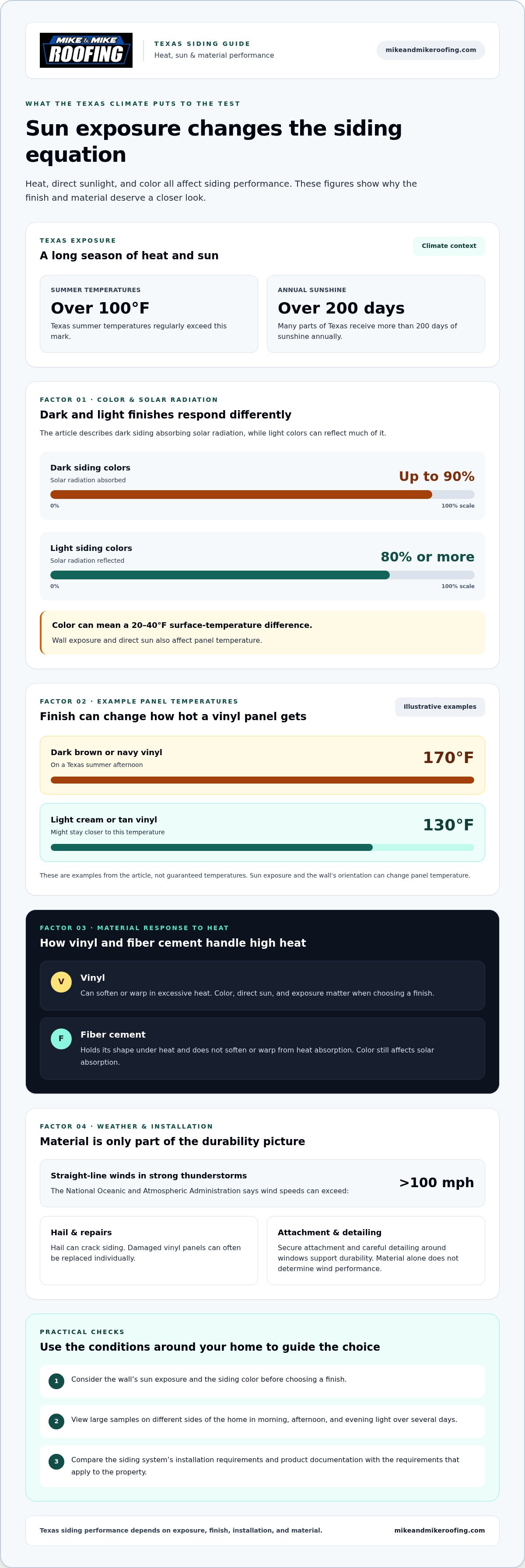
Texas sun puts siding through repeated heating and cooling, as well as intense exposure. Vinyl can soften or warp in excessive heat; fiber cement does not soften or warp from heat absorption.
Texas summer temperatures regularly exceed 100 degrees Fahrenheit, and many parts of the state receive over 200 days of sunshine annually. Dark siding colors absorb up to 90 percent of solar radiation, while light colors can reflect 80 percent or more. That difference can create surface temperature variations of 20-40 degrees.
A dark brown or navy vinyl panel might reach 170 degrees on a Texas summer afternoon. A light cream or tan panel might stay closer to 130 degrees. Wall exposure and direct sun affect panel temperature, so consider these factors before choosing a finish.
Fiber cement holds its shape under heat, including James Hardie fiber cement siding. Color still affects solar absorption, so view large samples on different sides of the home in morning, afternoon, and evening light over several days.
Hail can crack siding, and damaged vinyl panels can often be replaced individually. According to the National Oceanic and Atmospheric Administration, straight-line wind speeds during strong thunderstorms can exceed 100 mph. Secure attachment and careful detailing around windows support durability, but material alone doesn’t determine wind performance.
Texas homeowners insurance coverage for hail or wind damage depends on policy terms, exclusions, deductibles, and how the damage occurred. Review your policy to understand what siding damage is covered.
For a closer look at how siding is fitted around your home’s exterior, explore siding installation work.
Vinyl and fiber cement siding differences
Vinyl and fiber cement differ in fire performance, moisture management, weight, and repair. Fiber cement is described as having a Class A fire rating; vinyl may warp or trap moisture if installed incorrectly.
Vinyl Siding Fire and Moisture Risks
In this comparison, vinyl’s key risk is moisture from incorrect installation, not a stated fire rating. Poorly fitted panels can trap moisture, so proper attachment and careful detailing matter. A cracked or warped panel can often be replaced individually, limiting repairs to the damaged area. Consider the material’s fire performance as part of your decision.
Fiber Cement Fire and Moisture Risks
Fire performance can vary by product, so compare the fire-related specifications of each siding option. Moisture still needs attention: regular inspections and sealing help prevent damage. The fire rating doesn’t remove the need for upkeep, so maintain the sealing details as part of the exterior’s long-term care.
Installation requirements differ. Vinyl is lighter, while fiber cement is heavier and requires specialized tools and skilled labor. That can make fiber cement installation more time-consuming and potentially costlier. Precise handling and fitting matter for both materials, since incorrect vinyl installation can contribute to warping or trapped moisture.
Fiber cement’s denser composition generally provides better sound insulation than vinyl. Its fire rating and resistance to heat-related softening may appeal to homeowners who prioritize those qualities. Vinyl may suit those who value simpler panel replacement. Compare the appearance and upkeep of each option with the exterior you want to maintain.
Let your priorities guide the choice: favor vinyl if easier panel replacement matters most; consider fiber cement if its Class A fire rating and denser construction better match your needs. Neither material eliminates the need for correct installation and ongoing care.
Which siding types meet Texas building codes and local windstorm requirements?
Neither material meets requirements based on its name alone. For a Texas home, code and windstorm suitability depend on the selected siding system, installation, and requirements that apply to the property. Product documentation and correct attachment matter as much as the siding category.
Wind exposure deserves close attention. During strong thunderstorms, straight line wind speeds can exceed 100 mph, according to the National Oceanic and Atmospheric Administration. That makes panel fastening, wall condition, and installation details important parts of the decision, rather than treating siding as a finish alone.
Before choosing a product, take these steps:
- Identify the requirements that apply to the property and project.
- Review the siding product’s installation instructions and documentation.
- Plan how panels will be secured at corners, edges, and openings.
- Check transitions around windows and roof-to-wall areas for sound water management.
Vinyl panels are lighter, while fiber cement is heavier and requires specialized tools and skilled labor. These differences affect handling and installation, but don’t establish that either material automatically meets every local requirement. Correct installation matters for both.
Ask how the installation supports the chosen system’s wind performance, including how siding attaches to the wall and how exposed edges are finished. For example, panels around a window need secure fastening and careful transitions. Missing or incorrect kick-out flashing, where a roofline directs water into a wall, can also contribute to preventable siding failure.
Use product documentation and local project requirements to guide the material decision; don’t rely on a general claim that vinyl or fiber cement is “wind-rated.” To discuss siding installation for your home, contact a siding contractor.
Mike and Mike Roofing: Roof Installation
Mike and Mike Roofing installs siding for homeowners ready to move from comparing materials to planning the work. Its siding service can help carry out your chosen vinyl or fiber cement project. Correct fitting matters for panel attachment and moisture management, especially where siding meets windows or a roofline.
If your project also includes a new roof, Mike and Mike Roofing provides roof installation. Considering roofing and siding together helps you plan transitions where the materials meet, rather than treating each surface in isolation.
Contact Mike and Mike Roofing to discuss your siding project and the exterior work your home needs.
Choose the Next Step for Your Home
Base your siding decision on what you want your home’s exterior to do, not appearance alone. For the vinyl siding vs. fiber cement choice in Texas climate conditions, consider how the material works with the roof, windows, and the way rainwater moves around the house. Planning the exterior together can highlight transitions and installation details to address before work begins.
Mike and Mike Roofing provides siding contracting, roof installation, and window installation. Discuss your siding project alongside related exterior needs, whether you’re replacing one surface or planning a broader update. Contact the team to talk through your home and the work you want done.
Contact Mike and Mike Roofing to discuss your project and take the next step with confidence.
Frequently Asked Questions
Is Fiber Cement Worth the Higher Cost in a Hail-Prone Area?
Not automatically. Hail exposure alone doesn’t establish that fiber cement is the better value. Compare the specific product’s documented impact performance, warranty conditions, and repair options. Consider whether localized panel replacement or the material’s other qualities matter more for your home. In hail-prone parts of Texas, base your decision on documented product details rather than assuming either material is hail-proof.
So Which One Wins?
Neither material is the right choice for every home. Choose vinyl if simpler upkeep and the option to replace individual damaged panels fit your priorities. Consider fiber cement if its Class A fire rating, denser construction, and heat stability matter more. When weighing vinyl siding versus fiber cement in Texas climate conditions, rank what matters most: upkeep, heat performance, fire rating, or repair needs.
What Changes Siding Cost Per Square Foot (Installed) the Most?
Installed siding costs depend on the project. Major cost drivers include wall area, removal of existing siding, substrate repairs, trim details, product selection, and installation access. Damaged sheathing or complex wall shapes, for example, can add labor beyond a straightforward installation. Compare project scopes to see which preparation and finishing tasks are included.
Which Is Better Hail-Resistant Siding?
There’s no basis for naming vinyl or fiber cement the universal hail-resistant winner. Hail damage depends on the specific product and the impact, so look for documented impact performance for the exact siding under consideration. Plan for repairs, too: cracked vinyl panels can often be replaced individually. Find out what work a damaged area would require instead of relying on material labels alone.
How Does Vinyl Siding Perform in Texas Heat, UV Exposure, and Humidity?
Vinyl can soften or warp under excessive heat, so consider exposure and color on sunny walls. UV exposure can affect appearance over time, while humidity makes correct installation and moisture management important. For a Weatherford, Fort Worth, or Aledo home, consider which walls receive direct afternoon sun and whether nearby rooflines direct water toward the siding. These site details can inform product and installation choices.
How Does Fiber Cement Siding Perform in Texas Heat, Humidity, and Severe Weather?
Fiber cement doesn’t soften or warp from heat absorption, but it still needs moisture care. Regular inspection and sealing help reduce moisture damage. Performance in severe weather also depends on secure installation and the specific product, not the material name alone. For a North Texas home, consider wall exposure, water-shedding details, and the repair plan alongside heat performance.


