
Texas does not issue a state roofing license, but contractors working inside Weatherford city limits must register with the city. So when searching for “licensed and insured roofers in Weatherford,” look beyond the label: verify local registration, insurance, and relevant qualifications.
It’s reasonable to want clear proof that the people working on your roof are prepared to do the job responsibly. A license label alone may not tell you what you need to know.
This guide explains what Texas requires, how to compare insurance and voluntary roofing credentials, and which questions help you assess a contractor’s fit for your project. You’ll also learn how roofing services and project details affect the choice, so you can make a steady, informed decision before work begins.
Key Takeaways
- Separate Texas state licensing from Weatherford’s local contractor registration so you can interpret a roofer’s credentials correctly.
- Compare insurance documentation and voluntary credentials, including what an exam and continuing education can indicate about a contractor’s preparation.
- Match the project to the right scope of work: a roof replacement, a repair, and commercial roofing involve different considerations.
- Understand how permits and inspections fit into permitted roofing work within Weatherford city limits.
- Know the boundary between roofing work and negotiating an insurance claim on a policyholder’s behalf before discussing storm damage.
How do I choose the best roofing contractor?
Start with the local rules. Texas does not issue a state roofing license, but contractors working inside Weatherford city limits must register with the city. A contractor’s claim of being “licensed” does not replace checking local registration, insurance, and relevant experience.
When comparing licensed and insured roofers in Weatherford, focus on verifiable documents and the project scope, not just a company label. Ask for current insurance documentation and a written proposal that explains materials, tear-off, flashing, ventilation, cleanup, and permits. Compare estimates line by line: an asphalt-shingle replacement and a standing-seam metal installation require different materials and installation details.
The Roofing Contractors Association of Texas (RCAT) offers a voluntary roofing contractor credential. RCAT requires applicants to provide proof of insurance, pass an exam, and complete annual continuing education. This is not a state license, but it gives homeowners defined qualifications to consider alongside local registration and insurance. Ask what credential a contractor holds and what its requirements cover.
Choose experience that matches the structure. A historic home may need careful attention to its original roofline and visible details. A ranch house may have broad roof planes, while a barn can involve different framing and use. New construction calls for coordination with the building plans and roof assembly. Chapter 9 of the International Residential Code covers roof assemblies, so ask how the proposed work aligns with the project’s plans and applicable requirements.
What questions should I ask before hiring a roofer in Weatherford? Ask who supervises the job, what materials and installation steps are included, how changes are documented, and what insurance covers. Request a written timeline and cleanup plan, plus references for comparable residential work.
Warning signs include pressure to sign immediately, vague paperwork, refusal to show insurance documents, or a request to sign a blank contract. Be cautious if someone promises to handle or negotiate your insurance claim; Texas Insurance Code 4102.163 prohibits roofing contractors from acting as public adjusters or negotiating a claim on the policyholder’s behalf.
- Confirm Weatherford registration for work inside city limits, then review insurance documentation.
- Compare written scopes for materials, installation details, supervision, and cleanup.
- Match the roofer’s experience to your property, whether it is a historic home, ranch, barn, or new build.
- Treat RCAT’s exam, insurance proof, and annual continuing education as credential details, not a state license.
Residential, commercial, repair, and replacement roofing
The right roofing scope in Weatherford depends on the building and the damage. An inspection should distinguish surface wear from problems affecting decking, flashing, or ventilation. A few displaced shingles may call for a targeted repair, while widespread deterioration may make replacement more practical. The written assessment should explain which areas need work and why.
Maintenance helps homeowners track changes before they become larger problems. After a North Texas storm, look for lifted shingles, damaged flashing, debris, and signs of water inside the home. Keep inspection notes and photographs with the roof’s installation records. Standard laminated asphalt shingles in Weatherford are listed as lasting 15-25 years, though roof condition and installation quality also matter.
Insurance is another factor, but coverage depends on the policy and the roof’s condition. Homeowners insurance companies often will not cover roof replacement costs when a roof is older than 20 years. Review your policy’s age provisions and document visible damage before deciding on repairs or a full replacement. A contractor can describe roof conditions and work scope; Texas law does not allow a roofing contractor to negotiate an insurance claim on the policyholder’s behalf.
Make repair or replacement decisions based on the inspection, not a preset sales pitch. The City of Weatherford lists roof replacement and major roof repairs among its most common residential permits, with permitted work inspected at key stages. For isolated damage, ask for the repair area, materials, and completion steps in writing. For a full replacement, the proposal should specify tear-off, underlayment, flashing, ventilation, cleanup, and disposal.
Commercial roofing differs from residential work. Building use, roof assembly, access, and operational needs all shape the scope. A residential reroofing plan may not suit a commercial building, ranch, or barn. Each structure needs an assessment based on its design and intended use.
Weatherford replacement pricing depends on roof size, pitch, material selection, access, and any decking repairs, with a quote provided after a request. For payment plans, read the terms and schedule carefully, and get every agreed arrangement in writing before work begins. Larger or more complex replacements may take 2-3 days.
- Use inspection findings to distinguish localized repair from full replacement.
- Keep roof records and photographs, especially after North Texas storms.
- Review policy age provisions before assuming insurance will pay replacement costs.
- For a planned home reroof, explore roof installation options and compare the written scope with your inspection needs.
Contractor licensing labels and project services
A contractor’s label may refer to experience, a voluntary credential, or local registration. These are not interchangeable. For a Weatherford roofing project, sort documents by purpose: registration identifies a contractor working within city limits, a permit covers specified work, and insurance addresses covered risks. Ask which documents apply to your project, then keep copies with inspection records, estimates, the contract, and storm-damage photos.
Weatherford contractors working inside city limits must register with the city. The City of Weatherford Development Services and Building Inspections office is at 548 Santa Fe Drive, Weatherford, Texas 76086. Ask who will handle project paperwork and keep the permit record with your signed scope. That record can help clarify which work was approved and what inspections occurred, especially if the job includes structural changes.
Business longevity is worth considering, but a statistic cannot predict one contractor’s performance. The Small Business Administration is cited for figures stating 80% of roofers do not remain in business for two years and 96% are out of business within five years. Use those figures as a reason to examine continuity, not as proof that a newer company will fail. Check that estimates identify the contracting business clearly and that the same business name appears on project documents.
Insurance deserves the same document-based review. Ask for current proof, confirm that the named business matches the contract, and note the coverage dates. A polished truck or a confident storm damage pitch is not a substitute for paperwork. If someone asks you to sign an insurance authorization or says they will negotiate your claim, remember that Texas Insurance Code 4102.163 prohibits roofing contractors from acting as public adjusters or negotiating a claim on the policyholder’s behalf.
Reviews can add context to paperwork. Read recent comments for specific details about communication, cleanup, schedule changes, and how concerns were handled. Then compare estimates with matching scopes: one may include flashing replacement or damaged decking, while another excludes those items. In Parker County, a clear written record makes it easier to compare proposals after a storm or before planned work.
- Keep registration, permit, inspection, estimates, and contract records together.
- Use business survival figures as context, then assess each contractor’s documents and track record.
- Compare reviews for job-specific details and estimates for the same work scope.
Licensing, insurance, and certifications
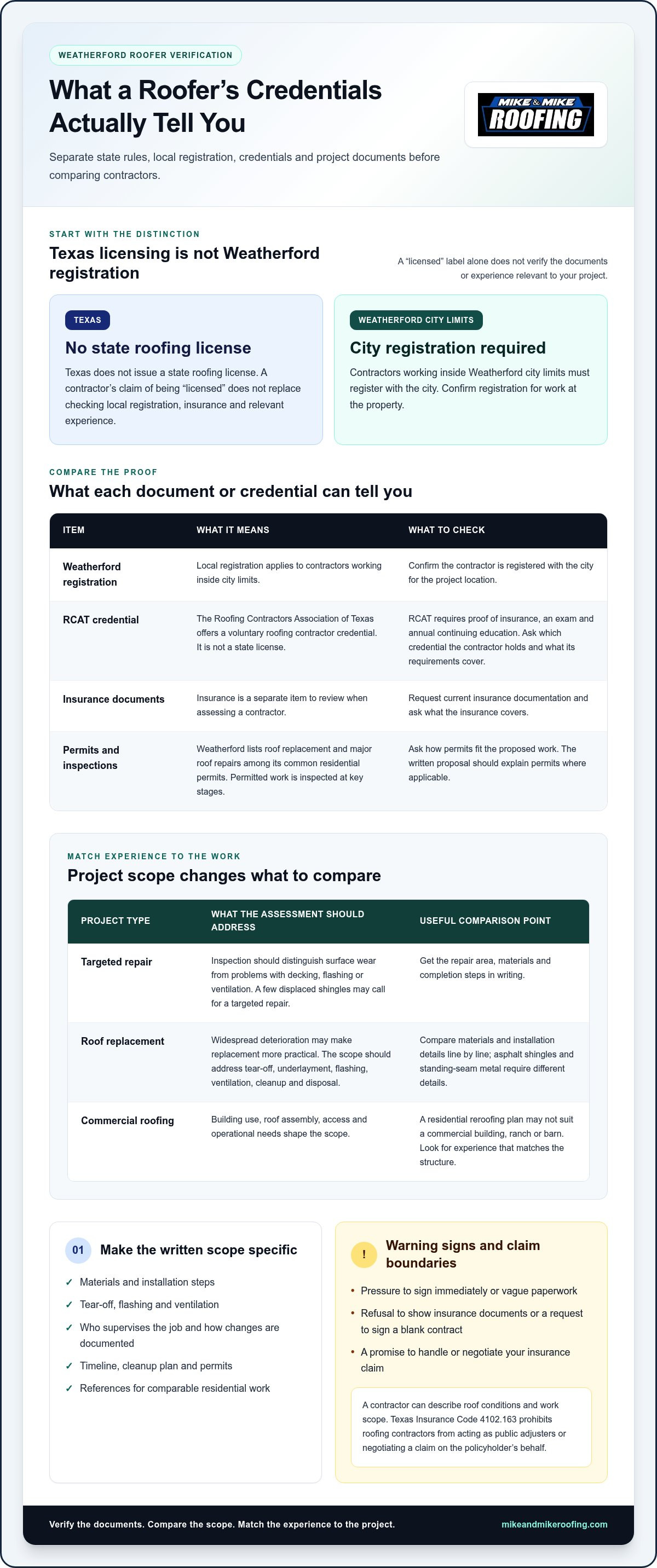
Texas does not issue a state roofing license, so a “licensed roofer” label does not establish state approval. Contractors working inside Weatherford city limits must register with the city. Keep the distinctions clear when reviewing paperwork: local registration, insurance documents, and voluntary credentials each serve a different purpose. A Weatherford roof-replacement proposal should identify the contracting business and clearly describe the work.
Insurance is a separate part of contractor screening. Review the policy documentation for the named business and effective dates, then compare those details with the company named in the estimate and contract. Keep copies with your project records. This helps prevent confusion if the crew name, business name, or paperwork differs during the job.
The Roofing Contractors Association of Texas (RCAT) offers a voluntary roofing contractor credential. Its requirements include proof of insurance, a passed exam, and annual continuing education. This is not a state-issued license, but it gives homeowners specific criteria to consider, including ongoing education. Ask what the credential covers and whether the contractor’s name matches the credential record.
Manufacturer credentials also have their own meaning. Fewer than 2% of roofing contractors in the United States hold GAF Master Elite status. That figure makes the designation selective, but it does not replace checking the written scope, insurance documents, or warranty terms. A certification may relate to manufacturer standards or eligibility, while a warranty sets out coverage conditions. Read each document for exclusions, required maintenance, and the party responsible for covered work.
For shingles, distinguish product ratings from contractor credentials. UL 2218 is the impact standard used to rate Class 4 impact-rated shingles. The rating applies to the shingle’s impact classification, not the roofer’s license or insurance. If a contractor proposes Class 4 materials for hail events, make sure the estimate names the product and explains where it will be installed. Compare that information with the warranty documentation and project scope.
Insurance claims have a firm legal boundary. Texas Insurance Code 4102.163 prohibits a roofing contractor from acting as a public adjuster or negotiating an insurance claim on the policyholder’s behalf. A contractor can describe observed roof conditions and the work involved, but the homeowner or authorized representative handles claim negotiations. Keep inspection notes, photographs, estimates, and insurer correspondence together.
- Read local registration, insurance, RCAT credentials, manufacturer designations, and warranties as separate records.
- Match every document to the business named in the estimate and contract.
- For Class 4 shingles, distinguish the UL 2218 impact rating from contractor qualifications.
Which roofing contractors in Weatherford, Texas are licensed and insured?
A local listing identifies 14 roofing professionals near Weatherford, but a listing alone doesn’t establish licensing or insurance. Texas does not issue a state roofing license. Contractors working inside Weatherford city limits must register with the city, so distinguish local registration from a state license when reviewing any contractor’s claims.
Build a shortlist by matching each contractor’s business name across the estimate, registration details, insurance documents, and contract. The names should align. Review insurance dates and policy information, and keep copies with your project records. If your home is outside city limits, check which requirements apply to the project location rather than assuming the city registration rule applies.
Use a comparison sheet for each candidate. Record the proposed scope, materials, insurance documentation, registration status, credentials, and warranty terms. One estimate, for example, may include flashing replacement while another covers only shingles. A shorter proposal is not comparable until you understand those differences. Keep the inspection findings beside each estimate to make sure the proposed work addresses the same conditions.
Credentials add context, but each serves a different purpose. The Roofing Contractors Association of Texas (RCAT) offers a voluntary credential requiring proof of insurance, a passed exam, and annual continuing education. It is not a Texas state license. Ask which RCAT credential the contractor holds, then match the credential name to the business on the proposal. A credential supports your review, but does not replace reading the scope and insurance records.
For an insurance-related roof project, keep the legal role clear. Texas Insurance Code 4102.163 prohibits a roofing contractor from acting as a public adjuster or negotiating an insurance claim on the policyholder’s behalf. A contractor may document roof conditions and describe proposed work. The homeowner or authorized representative handles claim negotiations. Keep inspection photos, estimates, and insurer communications together.
Choose a contractor whose paperwork, scope, and project explanation align. If a document uses a different business name, request a corrected copy before signing. If the estimate omits cleanup, flashing, or damaged decking, clarify the scope in writing. These details make comparisons useful and help prevent misunderstandings once work begins.
- Compare all 14 listed professionals by matching business names across project documents.
- Separate Weatherford registration, insurance, and voluntary credentials; they are not interchangeable.
- Review comparable written scopes, including materials, included work, and warranty terms.
Ready to discuss the roof work your home needs? Start a roofing project conversation.
Mike and Mike Roofing: Roof Installation
Mike and Mike Roofing is a natural next step when your home needs a planned roof installation or replacement. The team works with Owens Corning materials, and its A+ BBB rating and 5-star reviews offer useful context as you consider your options. Compare the proposed materials, installation scope, and warranty terms with the priorities you’ve identified for your home. Mike and Mike Roofing offers industry-leading warranties on its work, so review the applicable coverage details as part of your project decision.
If the project also involves exterior updates, the company offers siding, window installation, and patio services. For a residential roofing project, contact Mike and Mike Roofing or visit mikeandmikeroofing.com to start a conversation.
Set a Clear Direction for Your Roofing Project
As you narrow your choice of licensed and insured roofers in Weatherford, turn your research into a project brief. Note what you want addressed, what matters most in the finished roof, and any other exterior work you’re considering. A clear starting point makes the next conversation more useful and keeps decisions focused on your home.
Mike and Mike Roofing provides roof installation, siding, and window installation. If your plans include any of these services, bring your priorities to a discussion about the work. You can explore how the project fits your home and request a free estimate.
Contact Mike and Mike Roofing to talk through your roofing project. A thoughtful plan is a solid first step toward work that fits your home and your needs.
Frequently Asked Questions
Have Questions About Roofing In Weatherford?
Yes. Weatherford homeowners can start by identifying the roof concern, such as a leak, visible shingle damage, or a planned replacement. Note when the issue appeared and which rooms show signs of moisture. Photos taken from the ground or indoors can help explain what you’ve noticed. For work in Weatherford, also consider whether the property falls inside city limits, since local registration and permit requirements may apply.
How quickly can you get to a property in Weatherford?
Visit timing depends on the current schedule, route, and reason for the visit. Share the Weatherford property address and describe whether you need an inspection or are planning installation work. If water is entering the home, say where it appears and whether the leak is ongoing. Those details help determine the visit type and schedule. Don’t climb onto a wet or storm-damaged roof to investigate.
Are you licensed and insured?
Mike and Mike Roofing is licensed, bonded, and insured. If you’re comparing licensed and insured roofers in Weatherford, distinguish this business information from a Texas state roofing license: Texas does not issue one. Contractors working inside Weatherford city limits must register with the city. Match the business name on the agreement to the insurance documentation and review the policy dates before work begins.
Do you provide free estimates in Weatherford?
Mike and Mike Roofing provides a free roof inspection with photos and a free written estimate. The inspection documents observed roof conditions, and the estimate puts proposed work in writing. Use it to clarify which areas and materials the scope covers before deciding how to proceed. Keep the photos and estimate with your home maintenance records.
How do you know when you need a new roof?
Look for recurring leaks, widespread shingle loss, persistent attic moisture, or visible sagging. Damage in one area may call for repair rather than full replacement, so its extent and location matter. Roof age informs the assessment, but condition and installation history matter too. A documented inspection can help distinguish isolated damage from problems affecting several roof sections.
What insurance should a Weatherford roofer carry, and how can homeowners verify it?
Ask for current proof of insurance and review the named business, coverage dates, and policy details. General liability and workers’ compensation coverage relate to different risks, so ask about both. Compare the business name on the documents with the contract. If anything does not match, request corrected paperwork before work starts. Keep your copies with the signed agreement and project records.
Does Texas require roofers to have a state license?
No. Texas does not issue a state roofing license. Contractors working inside Weatherford city limits must still register with the city. A voluntary credential, such as one offered by the Roofing Contractors Association of Texas, is separate from state licensing. Consider what each credential represents rather than treating every license or certification label as the same approval.
What local permits or requirements apply to roof replacement in Weatherford, TX?
Roof replacement and major roof repairs are among the common residential permits listed by the City of Weatherford. Contractors working inside city limits must register, and the city inspects permitted roofing work at key stages. Ask how permit and inspection steps fit the written scope. Keep permit records and inspection documents with the contract, especially when work includes structural changes.


