
Finding a roofer’s contact details is straightforward; choosing one who stands behind the work takes more care. To reach a Fort Worth family-owned roofing business, start with its official website or business profile and use the phone number or inquiry form listed there. Then look at its company history and customer reviews to understand who you’d be working with.
It’s reasonable to want a local roofer who knows the area and communicates clearly. This guide explains how to assess a family-owned company, review its reputation, and compare roofing and related exterior services in Weatherford, Fort Worth, and Aledo.
You’ll also learn what to look for in written estimates and how to request one. Homeowners comparing roofing contractors are advised to get at least 2-3 written estimates, then compare the proposed work, materials, and terms rather than focusing on a single figure. The goal is a clear next step, whether you’re planning a roof installation or weighing other exterior work.
Key Takeaways
- Look beyond a family-owned label: company history, local presence, and clear accountability can help you assess who will stand behind the work.
- Read reviews for recurring details about communication, workmanship, and follow-through, not just the star rating.
- Compare the roofing and exterior services available across Dallas-Fort Worth to match the work to your home’s needs.
- Request written estimates and compare the proposed scope, materials, and terms so you can make a sound decision.
- Understand how state licensing and local registration questions apply when evaluating a Fort Worth roofing contractor.
Family-owned roofing company identification
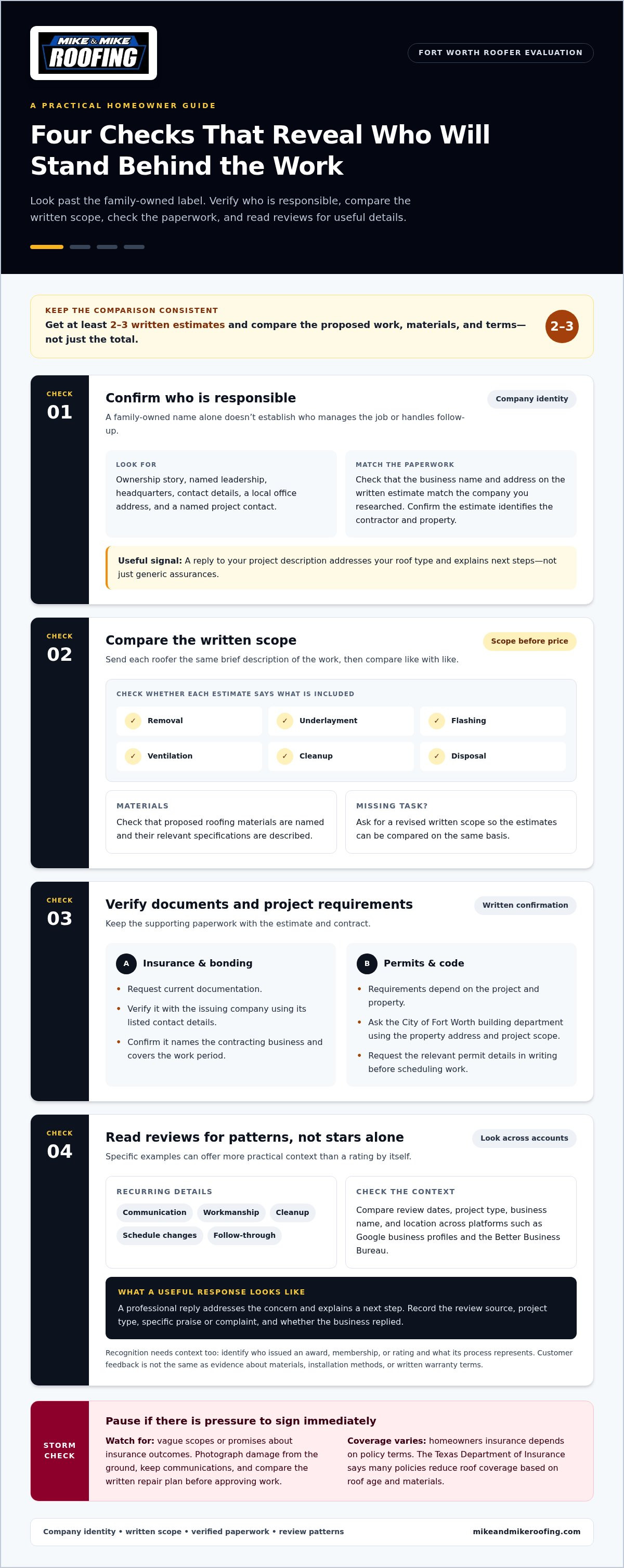
A family-owned name alone doesn’t tell you who manages a job or handles follow-up. When evaluating a Fort Worth family-owned roofing business, check its website for the ownership story, named leadership, headquarters, and contact details. Compare those with the business name and address on the written estimate. A clear match shows which company is responsible for the work.
Headquarters and crew size offer useful context, but they don’t measure workmanship. The median employee-size band among Fort Worth residential roofing companies is 1-10 employees as of Sep 21, 2026. A smaller crew may still install residential roofs, while a larger company may use several teams. Look for a local office address and a named contact who can explain who will oversee your project.
Use a roofing company’s official website or business profile to find its phone number and email. Send the same brief description of your roofing needs and save the replies. A useful response addresses your roof type and explains the next steps, rather than relying on generic assurances. Before comparing quotes, confirm that each estimate identifies the contractor and property.
Homeowners comparing Fort Worth roofing contractors are advised to get at least 2-3 written estimates. Compare the work scope, not just the total: note whether removal, underlayment, flashing, ventilation, cleanup, and disposal are included. Check that each quote names the proposed roofing materials and describes their relevant specifications. If one estimate leaves out a task, ask for a revised written scope so you can compare like with like.
For roof replacement in Fort Worth, permit and building-code requirements depend on the project and property. Contact the City of Fort Worth building department with the address and project scope to learn which requirements apply before scheduling work. Ask for the relevant permit details in writing.
To check insurance and bonding, request current documentation from the roofer, then verify it with the issuing company using its listed contact details. Confirm that the paperwork names the contracting business and covers the work period. Keep copies with the estimate and contract.
After a Fort Worth storm, watch for pressure to sign immediately, vague scopes, or promises about insurance outcomes. Take photographs from the ground, keep communications, and compare the written repair plan before approving work. Homeowners insurance coverage for storm or hail damage depends on policy terms; according to the Texas Department of Insurance, many homeowners policies reduce roof coverage based on roof age and materials.
Customer reviews and recognition
Reviews are most useful when they describe specific work, not just a star rating. Read several comments and note whether customers mention communication, cleanup, schedule changes, and how the company handled concerns. For example, a review describing how a crew protected landscaping during roof repairs gives more practical detail than “great job.” Look for patterns across separate accounts instead of treating one enthusiastic post as proof.
Check review dates and project details. A recent review of a residential roof replacement may tell you more about current communication than an older comment about a different service. Compare the reviewer’s description with the work you need, such as a full roof installation or storm repair. If a review names a material or explains a repair, see whether other customers describe similar follow-through.
Read more than one platform, such as Google business profiles and the Better Business Bureau. Compare the business name, location, review dates, and response style across listings. A company’s website may feature testimonials, while independent profiles add context. Matching ratings don’t necessarily mean matching workmanship, so focus on details about the job and the company’s communication.
Owners’ responses can reveal how a company handles problems. Notice whether a reply addresses the concern, explains a next step, and stays professional. For example, a response to a complaint about missed cleanup should say how the issue was addressed, rather than arguing with the reviewer. A thoughtful response doesn’t settle every dispute, but it shows how the business communicates in public.
Recognition also needs context. An award, trade membership, or rating may reflect a particular review process, membership standard, or customer feedback system. Read the description and identify who issued it. A badge without a clear issuing organization tells you little. Distinguish customer satisfaction evidence from information about materials, installation methods, or written warranty terms.
As you read, record the review source, project type, specific praise or complaint, and whether the business replied. This helps prevent one dramatic story from outweighing a consistent pattern. Also distinguish residential roofing feedback from industrial project claims: a review about one property type doesn’t automatically show experience with another.
Use reviews to prepare focused questions about the work, not to make a decision from ratings alone. If you’re comparing how roofing companies explain their projects, this roofing project information can serve as one point of reference alongside written scopes and customer feedback.
Family-owned roofing services in Dallas-Fort Worth
Family-owned roofing businesses in Weatherford, Fort Worth, and Aledo may emphasize reliability and customer service because their reputation matters in the communities they serve. Local conditions, including heat, wind, and storms, can also shape a roof assessment. A useful conversation connects those conditions to your roof’s current state, materials, and installation needs, rather than offering the same answer for every property.
Residential roofing work can include inspecting an existing roof, removing worn materials, and installing a replacement system. The proposed scope should identify the shingle type, underlayment, flashing, ventilation, and cleanup. These components work together: shingles shed water, while flashing protects joints around features such as chimneys and roof edges. Ask how the written scope addresses each part of your roof.
Roofing systems vary with a home’s design and chosen materials. A steep roof, several valleys, or roof penetrations can affect how crews plan removal and installation. A quote for a simple roof plane, for example, may not account for the same labor as a roof with multiple transitions. Look for a project description that reflects your home, not just a generic material list.
A family-owned company can help homeowners understand their options before they commit to work. Bring clear photographs, note any visible leaks, and list questions about materials or project sequencing. If a roofer recommends replacing rather than repairing a section, ask why and which areas are involved. A direct explanation helps you judge whether the proposed work fits the observed condition.
Exterior work can extend beyond shingles. Homeowners may also need window installation, patio improvements, or gutter cleaning. Since these projects affect different parts of a property, define each task separately. A gutter-cleaning request should identify the drainage concern, while a window project should specify which openings need attention. Separate scopes make planning clearer.
Commercial roofing differs from residential roofing. A business property may have different layouts, materials, and operating needs than a home in Weatherford, Fort Worth, or Aledo. Keep that distinction clear when comparing service descriptions, and match the stated work to your property type. For a residence, focus on residential projects and an installation plan suited to the roof.
Choosing a family-owned roofing business also keeps your project connected to the local community. Describe the property, the work you’re considering, and any visible concerns, then review the proposed scope and materials. That conversation can clarify whether the work addresses your home’s needs and how related exterior projects fit your plans.
Free estimates
A written estimate gives homeowners a defined scope to compare before approving roof work. In Fort Worth, homeowners comparing roofing contractors are advised to get at least 2-3 written estimates. Send each contractor the same project details, such as the property address, roof concerns, and whether you’re considering replacement or repairs. Similar starting information makes differences in the proposed work easier to spot.
Before arranging an estimate described as free, clarify what the visit includes. Ask whether the contractor will inspect the roof, document visible conditions, and provide a written scope. A useful estimate identifies the work proposed, materials, removal and disposal, flashing, ventilation, and cleanup. It should also explain which items are excluded, so you can see where one proposal differs from another.
Share relevant details before the inspection. For example, note where water appears indoors, when you first noticed it, and whether a recent storm affected the roof. Photos taken safely from the ground can help explain the concern. Don’t climb onto a roof to gather evidence. The contractor’s inspection and written description should connect the visible issue to the recommended work.
Compare estimates line by line, not just by the total. Check that the proposed shingle and underlayment are identified, and whether flashing or ventilation work is included. If one roofer recommends a repair and another recommends replacement, ask each to explain the condition supporting that scope. Keep the answers with the estimates and compare equivalent work.
Project details affect the scope. Roof shape, access, existing layers, and decking condition can change the work required. A roof with several valleys may need different detailing from a simple roof plane. Ask how the estimate addresses concealed damage discovered during removal and how additional work will be documented and approved before it proceeds.
A quote can cover related exterior work when it’s part of your plan. If damaged siding also needs attention, request a separate written scope for that work. Keeping roof and siding items distinct helps you compare each task clearly. Before signing, review the payment schedule, stated materials, workmanship terms, and project exclusions. Keep the final estimate and any revisions together as your project record.
Use estimates to resolve differences, not rush a decision. Ask for unclear terms to be explained in writing, and keep a copy of every version. The estimate helps you understand the proposed work; its written scope lets you assess whether it fits your property and priorities.
Are Fort Worth roofing contractors required to hold a state license or local registration?
Don’t treat “licensed roofer” as a complete answer for a Fort Worth project. State licensing and local registration are separate questions, and requirements can depend on the work and property location. Ask the contractor to identify the exact credential, who issues it, and whether it applies to your address and project scope.
For a home in Fort Worth, contact the City of Fort Worth building department before work begins. Provide the property address and describe the planned roof work, such as replacing shingles or altering roof structures. Ask whether a permit, contractor registration, or other city process applies. The address and project description help city staff give a relevant answer rather than a general one.
Keep the response with your project records. If the city requires a permit or registration, ask who handles the application and what documentation is needed. Compare that information with the written proposal. The contractor’s name, business name, project address, and stated responsibilities should be consistent across the paperwork.
Checking a credential is different from checking insurance. Request current insurance documentation separately, and confirm that the named business matches the company on the estimate. If a contractor says a state license or local registration proves insurance coverage, ask for the insurance document itself. Each record serves a different purpose, so keep them distinct.
Use a short checklist before signing:
- Ask which state credential or local registration applies to the specific work.
- Record the issuing office and credential details the contractor provides.
- Ask the City of Fort Worth whether the property address and scope require a permit or registration.
- Match the business name on the estimate, insurance paperwork, and any city documents.
- Save written answers with the contract and project correspondence.
These steps help distinguish a required authorization from a sales claim or voluntary trade credential. A professional membership, manufacturer credential, or customer rating may provide useful context, but it isn’t automatically a government license or city registration. Read what each document represents before relying on it.
If your project includes other exterior work, keep each scope clear in the paperwork. List siding separately from roof replacement so the city and contractor can assess each task correctly. Before approving a contract, use the City of Fort Worth’s guidance for the property and ask the contractor to document applicable requirements and responsibilities in writing.
Mike and Mike Roofing: Roof Installation
Mike and Mike Roofing installs roofs for homeowners planning a replacement or new roof. As a family-owned, father-son business, it offers a direct point of contact to discuss project scope, materials, and a written estimate. The company also handles siding, window installation, and patio services, helping homeowners coordinate related exterior work.
Turn to Mike and Mike Roofing to discuss a residential roof installation or compare exterior project options in Weatherford, Fort Worth, or Aledo. The company uses Owens Corning materials and holds an A+ BBB rating, with five-star reviews. Review the proposed materials and scope to see how the work fits your home.
For a straightforward conversation about your roofing project, contact Mike and Mike Roofing.
Take the Next Step With a Clear Plan
A roof project is easier to discuss when you know what matters most to your household. Before choosing a Fort Worth family-owned roofing business, decide which concerns you want addressed, such as roof condition, exterior appearance, or coordination with other home improvements. That gives your first conversation a practical starting point and keeps the project focused on your property.
Mike and Mike Roofing offers roof installation, siding, and window installation. If your plans include more than one exterior project, discuss how the needs fit together. A clear scope helps you understand the work being considered and what questions remain before moving forward.
For a direct conversation about your home and project, contact Mike and Mike Roofing. Take the next step at your pace, with your priorities in hand.
Frequently Asked Questions
How do I get contact information for these companies?
Use a company’s official website or business profile to find its contact details and inquiry options. For Mike and Mike Roofing, start on the company website and look for its contact or estimate request page. Make your message specific: include your Weatherford, Fort Worth, or Aledo address, the work you’re considering, and a brief description of the roof or exterior concern.
How many quotes should I get before choosing a roofer?
Get at least 2-3 written estimates before choosing a roofer. Ask each company to describe the proposed materials and work in enough detail for a fair comparison. If one scope includes decking replacement and another doesn’t, ask what roof condition explains the difference. Keep revised proposals together, and compare the final versions rather than relying on details discussed only by phone.
Why agonize with ordinary roofing contractors?
Clear decision criteria make choosing easier. Start with the work your home needs, then compare written scopes, communication, and relevant project experience. For a Fort Worth home, a roofer familiar with the area may understand local conditions, but the estimate should still explain the proposed work. Choose based on clear information, not pressure or slogans.
Which roofing companies in Fort Worth are family-owned?
Mike and Mike Roofing is a family-owned option serving Weatherford, Fort Worth, and Aledo. This father-son roofing business is based in Weatherford, Texas. If you’re looking for a Fort Worth family-owned roofing business, consider whether its local roots and residential services fit your project. Visit its official website to view contact details and request an estimate.
How can I verify that a Fort Worth roofing business is family-owned and locally operated?
Check whether the company identifies its owners and explains their connection to the business. Compare its stated headquarters with the places it serves, including Fort Worth, Weatherford, and Aledo. Look for consistent business names on its website, estimate, and written agreement. Named owners and a clear family connection are more informative than a family-owned label alone.
What roofing services do family-owned Fort Worth roofers offer?
Mike and Mike Roofing focuses on residential exterior projects, including roof installation, siding, window installation, patio services, and gutter cleaning. Match the service to your property: a roof replacement differs from a siding project, while gutter cleaning addresses drainage maintenance. For a home in Fort Worth or Aledo, describe the specific concern when requesting an estimate.
How do Fort Worth family-owned roofers compare on reviews, experience, and warranties?
Compare details that relate directly to your project, then read warranty terms rather than relying on a broad claim. Michael Cummings has 45 years of trade experience, including 15 years focused on roofing. Mike and Mike Roofing also states a 10-year labor warranty and an Owens Corning extended manufacturer warranty of up to 50 years on qualifying systems. Check which terms apply to the proposed installation.
What should I look for when comparing roofing estimates and contracts in Fort Worth?
Check that the contract identifies the property, materials, work scope, exclusions, and process for approving changes. Pay close attention to decking: Mike and Mike Roofing states that code requires replacement when plywood or OSB decking is soft, rotted, or sagging. For a Fort Worth home, make sure the written agreement explains how concealed damage will be documented and how scope changes will be communicated before work proceeds.


