

Gutter repairs are a sound choice when damage is localized and the system can still carry roof runoff away from the house. Aledo TX gutter repair services can address issues such as sagging runs, separated corners, and blocked or poorly directed downspouts. A roofline can dump a thousand gallons of storm water against one side of a house, and Aledo storms can drop an inch of rain per hour.
It’s easy to put off a gutter problem when the damage looks small. But leaks, loose sections, and water spilling beside the foundation can all signal that the system needs attention.
This guide explains when gutter repair makes sense, what an inspection should cover, and how downspout adjustments can improve drainage. You’ll learn when sagging runs or separated corners can be repaired and when wider damage may call for a different solution. Use these checks to understand the problem before deciding on your next step.
Key Takeaways
- Look for overflow, leaks, loose sections, and water pooling near the house to spot declining gutter performance early.
- Follow the path of roof runoff to see whether downspouts direct water away from the foundation or let it collect beside the home.
- A thorough inspection can distinguish a clog or isolated defect from damage that affects multiple parts of the system.
- Sagging runs and separated corners may need secure reattachment or joint repairs; the cause of the movement helps guide the fix.
- Use the condition of the gutters, roofline, and drainage path to decide whether a focused repair or a broader project makes sense.
Are Rain Gutter Repairs a Good Endeavor?
Repair is often appropriate when the damage is limited and the gutters can still carry runoff away from the house. Look for visible leaks, loose sections, overflow, and water collecting near the foundation.
Signs of Gutter Damage
After rain, inspect the gutter line from the ground. Water spilling over an edge, dripping from a joint, or leaving streaks on siding can point to a blockage, failed seam, or poor slope. Look for sections pulling away from the fascia, bent edges, and backed-out fasteners. At ground level, note erosion or pooling beneath the eaves. Gutter guards can reduce debris buildup, but they won’t repair damaged seams or correct poor drainage.
Repair Costs and Common Issues
Repair pricing depends on the damage, access, materials, and how much of the system needs attention; a specific price is provided after a quote request. A small leak may call for sealing a joint, while a sagging run can require re-securing supports and correcting its alignment. A loose downspout may need its fasteners restored or its connection adjusted. The amount of labor and whether more than one problem is present shape the repair scope.
Hail Damage and Roof Checks
After hail, inspect the gutters for dents, loosened joints, and debris, then look over the roof from the ground. A one-inch hailstone can strike a roof with substantial force. A two-inch hailstone strikes with several times the force of a one-inch hailstone. Hail-damaged shingles can crack within one to two summers after losing granules. If you see roof damage, include the roofline and gutters in the same inspection. Gutter repair alone won’t address damaged shingles that continue shedding granules.
Storm Damage and Response
After a storm, prioritize damage by its impact: water entering the home needs attention before a loose section that isn’t leaking. Storm demand and safe access to the damaged area also affect scheduling. From the ground, note where water escapes and whether it reaches a doorway, siding, or the foundation. Photograph visible damage and move belongings away from interior leaks. Don’t climb onto a wet roof or ladder to inspect a gutter.
Materials, Insurance, and Repair Decisions
Five-inch and six-inch K-style aluminum gutters are used on homes in Aledo. The right repair depends on matching the existing gutter profile and material, then securing joints and directing runoff properly. For an insurance claim, review the policy’s covered causes, exclusions, deductible, and claim steps. Keep photos of storm damage and note when it occurred. Coverage depends on the policy and the cause of damage, so document the condition before repairs change the evidence.
Downspout and drainage solutions
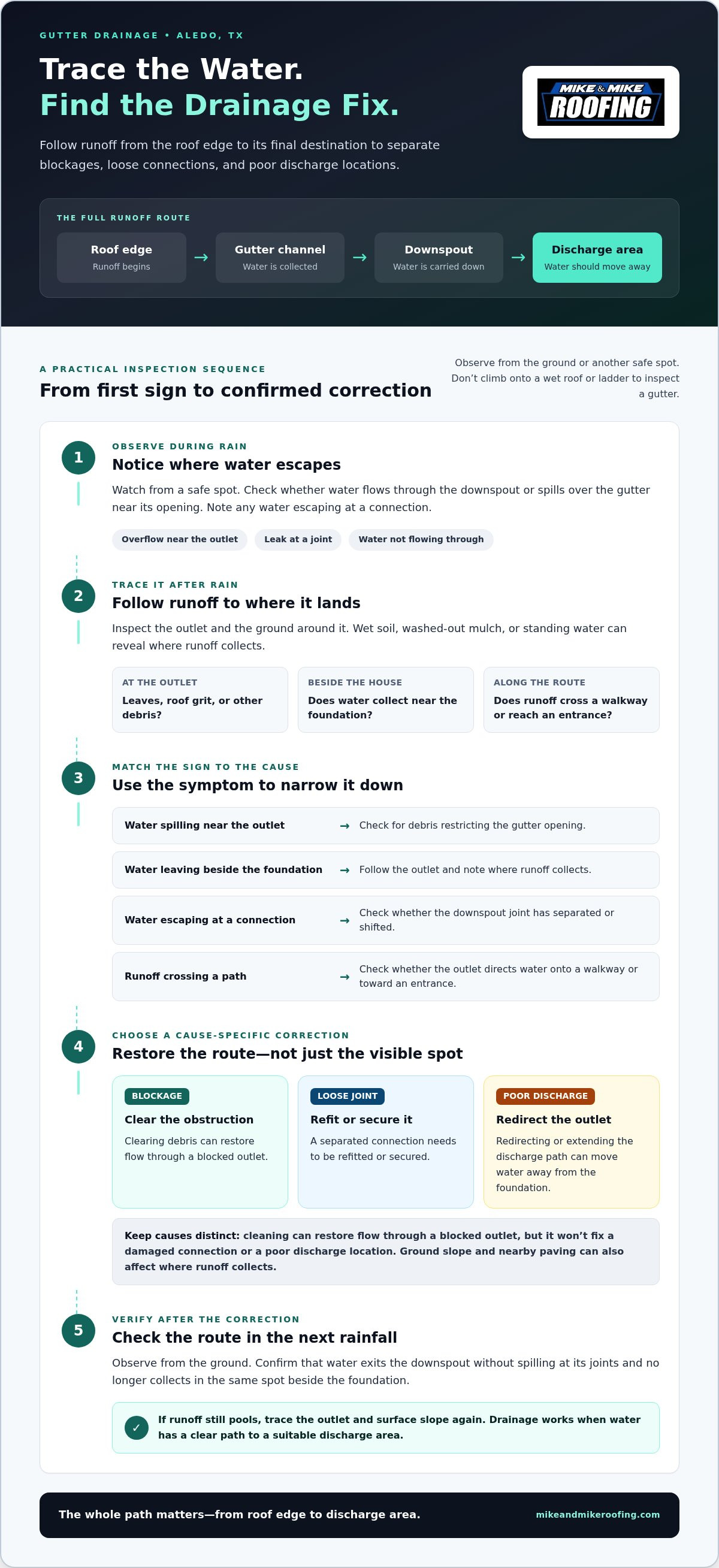
Gutters collect roof runoff and channel it through downspouts, helping keep moisture away from your home’s foundation. Even a functioning gutter system can cause drainage trouble if a downspout empties beside the house, drains onto a walkway, or releases water where it pools. Trace runoff from the roof edge to its final destination. The whole path matters.
During rain, watch the system from a safe spot. Check whether water flows through the downspout or spills over the gutter near its opening. Afterward, look for wet soil, washed-out mulch, or standing water where the outlet empties. These signs help distinguish a clogged downspout from a discharge point that needs redirecting. Debris at the gutter outlet can restrict flow even when the downspout is clear.
Use these checks to narrow down the problem:
- Water spilling near the outlet: Look for leaves, roof grit, or other debris restricting the gutter opening.
- Water leaving beside the foundation: Follow the downspout’s outlet and note where the runoff collects.
- Water escaping at a connection: Check whether the downspout joint has separated or shifted out of line.
- Runoff crossing a path: See whether the outlet directs water onto a walkway or toward an entrance.
Different conditions need different fixes. Clearing a blockage restores an open route for runoff, while a separated joint needs to be refitted or secured. If the outlet releases water beside the foundation, redirecting or extending the discharge path can move water away. Ground slope and nearby paving also affect runoff. A downspout aimed at a low spot may leave standing water even after the gutter drains properly.
Keep the drainage route clear after leaves or roof debris collect. If debris repeatedly slows the flow, a gutter cleaning service can help keep the system clear. Cleaning can restore flow through a blocked outlet, but it won’t fix a damaged connection or a poor discharge location. Separate those causes before choosing the repair.
After a correction, observe the next rainfall from the ground. Confirm that water exits the downspout without spilling at its joints and no longer collects in the same spot beside the foundation. If runoff still pools, trace the outlet and surface slope again. Drainage works only when water has a clear path from the roof edge to a suitable discharge area.
Gutter inspections and repair recommendations
A useful inspection follows the entire gutter system, not just the spot where water appeared. Check the roof edge, gutter channel, joints, hangers, downspout connections, and discharge point. Water spilling at one corner, for example, may result from debris upstream, a loose joint, or a sagging section holding water. Finding the cause helps match the repair to the problem.
After rain, start from the ground. Note where water overflows, drips, or collects, then inspect those locations more closely from a safe position. Look inside the channel for leaves and roof debris, and check whether water remains after rainfall. Examine seams for gaps and the fascia for staining or peeling paint. A written list of observations helps separate symptoms from possible causes.
Regular gutter maintenance helps keep the system clear and flowing. Cleaning removes leaves and debris that restrict flow, while a damaged seam or loose support needs a different repair. An inspection should distinguish these tasks rather than treat every overflow as a cleaning issue. If the channel is clear but water still pools, check the gutter’s alignment and the route into the downspout.
- Blocked channel: Remove debris and check that water can reach the outlet.
- Leaking seam: Locate the joint and assess whether it needs sealing or repair.
- Loose support: Identify the affected section and inspect how securely it attaches.
- Persistent overflow: Check the gutter’s slope, outlet, and downspout path.
Age also matters. Gutter systems in Aledo that are over 20 years old may need replacement rather than repair. That doesn’t mean age alone settles the decision. Inspect the full run for repeated leaks, widespread corrosion, multiple loose sections, or damage that makes isolated fixes impractical. A local defect on an otherwise sound run points toward a focused repair; several recurring failures suggest a broader assessment.
For a clear recommendation, record where the problem occurs, what damage is visible, and whether it returns after cleaning. Ground-level photos can show the gutter line, a separated joint, or water marks below an outlet. Note the system’s age and condition as well. These details provide a practical starting point for discussing whether the issue calls for maintenance or structural repair.
If leaves repeatedly block the channel, regular gutter cleaning can help maintain flow between inspections. Cleaning won’t restore a loose hanger or close a failed seam, so note those repairs separately. Address each issue according to its cause, then observe the next rainfall for overflow or pooling.
Gutter repairs for sagging runs and separated corners
A sagging gutter changes how water moves along the roofline. Instead of flowing toward a downspout, runoff may collect in the low section, spill over the edge, or pull at a joint. Older attachment methods, including spikes and ferrules, can eventually contribute to sagging or hanging gutters. The visible dip is a clue, but the attachment and nearby fascia also need inspection.
After rainfall, view the gutter from the ground. Note where the run dips, whether water remains there, and which joints appear separated. Look for backed-out fasteners and fascia that looks split, soft, or pulled away. One loose point may need a localized repair; movement along a longer run can mean several supports need attention. Don’t climb a ladder to test a loose gutter yourself.
A proper repair addresses the cause, not just the visible bend. A roofer may need to secure the affected section, restore the gutter’s alignment, or replace a failed attachment. If the fascia is damaged, fastening into the same weak spot won’t provide a sound base. Slope matters too: a straight-looking run can still hold water if it doesn’t direct runoff toward its outlet.
- One loose support: Check the surrounding gutter and fascia before securing that point.
- A visible low spot: Inspect alignment and standing water along the affected run.
- A separated corner: Examine the joint, its seal, and the adjoining sections for movement.
- Repeated sagging: Assess the full run instead of treating each dip as an isolated defect.
Separated corners need attention because they join gutter sections where runoff changes direction. A gap can let water escape behind the gutter or down the exterior wall. The repair depends on whether the corner has opened, adjoining runs have shifted, or supports have loosened. Rejoining the seam without correcting movement may leave the same opening vulnerable to the next storm.
After repairs, observe the gutter during rain from the ground. Check that water travels through the corner and toward the downspout without escaping at the joint or collecting in a dip. Clearing debris can restore flow, but gutter cleaning won’t correct loose supports, failed seams, or damaged fascia. Keeping cleaning and structural repairs distinct helps match the work to the defect.
What gutter repair services are available in Aledo, TX?
Gutter work can range from clearing a blocked outlet to repairing a damaged section that no longer carries runoff. For homeowners comparing Aledo TX gutter repair services, the right scope depends on where water escapes, what has shifted, and whether the rest of the system remains sound. A clear diagnosis matters: cleaning debris won’t fix a failed seam, and sealing a seam won’t correct a downspout that drains beside the house.
Common gutter repairs include resealing leaking joints, reattaching loose sections, correcting alignment, and reconnecting downspouts. Each addresses a different failure. A drip at a corner may come from an open joint, while overflow near an outlet can point to an obstruction. If water pools after leaving the downspout, the discharge path may need adjustment rather than a gutter repair.
A useful service visit connects the visible symptom to its cause. Follow the roof edge, gutter channel, seams, hangers, downspout, and outlet to see where the problem begins. This helps distinguish a small repair from an issue affecting several connected parts. For a sagging run, check the attachment and fascia as well as alignment. For a separated corner, inspect the joint and adjoining sections.
- Seam and corner repairs: Locate the opening, assess movement, and restore the joint.
- Support and alignment work: Secure loose sections and correct dips that trap runoff.
- Downspout corrections: Reconnect shifted pieces or improve where water exits.
- Cleaning and blockage removal: Clear debris that restricts flow through the gutter or outlet.
- Section replacement: Replace damaged material when a localized repair won’t restore function.
Gutter replacement isn’t automatically the answer to every leak. If surrounding sections remain secure and intact, a focused repair may address the trouble. Repeated failures across a run, damage affecting several joints, or a system over 20 years old may call for a broader assessment. Aledo homes commonly use 5-inch and 6-inch K-style aluminum gutters, so matching the existing profile matters when replacing a section.
The right Aledo TX gutter repair services should address the cause, not just the visible symptom. Before arranging work, note each leak or overflow location and take ground-level photos. Describe whether the issue appears during rainfall, after cleaning, or at a downspout outlet. If debris is the obstruction, schedule gutter cleaning to clear the channel and restore flow.
Mike and Mike Roofing: Roof Installation
Mike and Mike Roofing installs roofs when an inspection identifies roof damage beyond an isolated gutter problem. If storm impacts have damaged shingles or the roof needs broader work, roof installation may be a separate next step. A gutter issue alone doesn’t mean the roof needs replacement, so base the recommendation on the condition of both systems.
For related exterior projects, Mike and Mike Roofing also provides siding, window installation, and patio services. These address separate parts of the home and don’t replace diagnosing the gutter’s drainage problem.
If your roof inspection shows a need for roof installation, contact Mike and Mike Roofing to discuss the project.
Take the Next Step Toward a Sounder Exterior
Act on what your inspection shows rather than guessing at the cause. If a gutter issue appears alongside broader roof or exterior concerns, Aledo TX gutter repair services may be only one part of the work to plan. Mike and Mike Roofing also offers roof installation, siding, and window installation for homeowners considering those separate projects.
Keep notes on the affected areas and what you observed. This gives you a practical starting point for deciding what work your home needs, whether that means addressing roof concerns or planning another exterior improvement.
Contact Mike and Mike Roofing to discuss your home’s exterior needs. A clear plan can help you move forward with confidence.
Frequently Asked Questions
Are you licensed and insured?
Yes. Mike and Mike Roofing is licensed, bonded, and insured. Before an exterior project begins, review the written scope to understand the work, materials, and exclusions. This clarifies what the project covers and how it relates to nearby components. For example, roof installation and gutter cleaning are separate scopes, even though both affect rainwater management.
Which Aledo-area gutter repair companies are licensed, insured, and well reviewed?
Mike and Mike Roofing is identified as licensed, bonded, insured, and well reviewed, with an A+ BBB rating and a 5-star Google rating. Those credentials provide a starting point, but the project scope still matters. For an Aledo home, distinguish gutter cleaning from gutter repair, then make sure the written work description matches the problem you need addressed.
How do I choose between repairing and replacing gutters in Aledo?
Choose repair when the existing sections remain sound and the defect can be corrected without compromising the full run. Replacement may make more sense if metal is perforated, panels are crushed, or mismatched patches prevent a continuous fit. Consider whether the repair will restore a properly aligned route for runoff. A patch that leaves adjoining sections unstable doesn’t solve the larger problem.
What signs indicate gutters need repair or replacement?
Look for rust-through, pinholes, crushed panels, and end caps pulled out of position. Fasteners emerging through old holes can also signal weakened attachment. Damage in one area may call for a limited repair, while defects across several sections point to broader deterioration. Check the gutter’s shape and connections, not only whether water is visibly leaking.
What questions should I ask before hiring a gutter repair contractor in Aledo?
Ask what specific defect the proposed work addresses and what caused it. Clarify whether the scope includes nearby fascia and adjoining sections or only the visible leak. Ask how the repair will maintain a continuous route toward the downspout and how the completed work will be assessed. These details help you compare the written scope with the drainage problem you observed.
How can North Texas storms and hail affect gutters in Aledo?
Hail can dent or deform gutter channels, while wind can drive branches and roof debris into the system. A dent may disrupt runoff, and debris can restrict flow near an outlet. After a storm, inspect from the ground for new dents, shifted end caps, or debris caught along the roof edge. Note any fresh roof damage that could send material into the gutters.
How quickly can local gutter contractors respond to emergency gutter damage?
Response priority depends on the damage: water entering the home needs attention before a loose section that isn’t leaking. Storm demand and safe access also affect scheduling.


