

What if the best-looking part of an exterior home renovation is the part that should wait? Fresh siding or a new patio can improve curb appeal, but cosmetic work may need to be redone if water damage or failing roof components are left unaddressed. When several parts of a home need attention, it helps to know what to tackle first and how the projects fit together.
A sound plan starts with protection, not paint colors or finishes. Set priorities before choosing materials so you can define a realistic scope, coordinate exterior projects, and avoid spending on appearances before addressing underlying concerns.
This step-by-step template will help you assess your home, identify issues that need attention, and organize a practical project sequence. You’ll learn how roofing, siding, windows, gutters, and patios can affect one another, what to include in a project brief, and what to ask contractors before work begins. The goal is a clear plan that fits your home and supports it over the long term.
Key Takeaways
- Start your exterior home renovation with a home-by-home assessment. Separate cosmetic wear from signs of damage or water entry.
- Rank projects by how they protect the home, improve function, and refine appearance.
- Check where roofing, siding, windows, gutters, and patios meet so you can discuss project sequence and scope clearly.
- Use a simple worksheet to record each concern, its location, the evidence, its priority, and questions for contractors.
- A clear written scope makes contractor conversations more useful, especially when exterior projects connect.
Exterior Home Renovation Starts with a Home-by-Home Assessment
A renovation can start with questions, not a commitment to replace every exterior feature. First, take stock of what you can see and what you’ve noticed over time. A faded finish may be a cosmetic concern; recurring leaks, staining, or warped materials may point to an issue that needs closer attention. Record what you observe, but don’t try to diagnose damage from the ground.
For an exterior home renovation in Weatherford, Fort Worth, or Aledo, consider how your own property is exposed to sun, wind, and storms. Conditions vary from one home to another, so note what you see rather than assuming every house faces the same wear. For background on the range of projects involved, see this overview of Home improvement, which includes exterior features such as roofing and siding.
What should homeowners inspect before planning exterior work?
Walk around the property and review each side, or elevation, from a safe position on the ground. Look over roof surfaces and visible flashing, siding, windows, gutters, drainage paths, and outdoor living areas. Note anything loose, cracked, stained, warped, or repeatedly repaired. These observations can help you prepare questions, but they don’t confirm what’s happening beneath a surface.
Take clear photos of each elevation and close-ups of specific concerns. Record the location, date, and whether a leak or other issue has returned. If reaching an area would be unsafe, or you can’t tell what may be causing the damage, leave the closer inspection to a qualified professional.
How do you separate urgent repairs from appearance upgrades?
Start with active water entry and visible damage that could worsen if left unaddressed. A recurring leak, for example, deserves attention before a choice about exterior color. Fading, dated colors, or minor visual inconsistencies can go on the planning list, but they aren’t automatic reasons to replace sound materials.
Keep your notes concise and factual. Describe what you observed, where it is, when it appeared, and whether it has happened before. Avoid writing conclusions such as “the roof has failed” unless a professional has confirmed that. A clear account gives a contractor something useful to assess and keeps the estimate conversation focused on your home’s needs.
Before moving on, sort your findings into three simple groups:
- Observed damage: Leaks, stains, or visible deterioration to discuss promptly.
- Uncertain concerns: Areas that need professional assessment before you make a decision.
- Appearance goals: Cosmetic updates to consider after protection and function.
Set Exterior Renovation Priorities Around Protection, Performance, and Appearance
A useful priority list moves from protecting the home to improving how its exterior works, then refining how it looks. This isn’t a fixed package, and it doesn’t mean every project must include a roof, siding, windows, gutters, and patio work. Inspection findings and your goals should determine the scope. In an exterior home renovation, a sound component with a dated finish may not need replacement, while confirmed damage deserves attention before decorative updates.
Use the table as a starting point for discussion, not as a diagnosis. “Likely priority” means a concern to investigate sooner, not an automatic instruction to replace a component.
| Project area | Common trigger | Question to investigate | Likely priority |
|---|---|---|---|
| Roofing | Documented wear, storm effects, or water entry | What has been observed, and does it need prompt attention? | Protection, if concerns are confirmed |
| Siding or windows | Visible deterioration or windows that don’t operate as intended | Is the issue affecting protection, function, or appearance? | Protection or performance, based on findings |
| Gutters and drainage | Water isn’t being directed away as intended | Where does water go, and is the drainage path clear? | Protection, if water management is affected |
| Patio or exterior finishes | Appearance goals or concerns about how the space functions | Is this an appearance update or a repair concern? | Performance or appearance, as applicable |
Which exterior projects should be considered first?
Give protection concerns the first look. If there’s documented roof wear, evidence of storm effects, or water entry, ask what needs assessment before planning finish upgrades. Consider siding and windows next when their visible condition or operation raises questions about protection or function. Review gutters and drainage if water isn’t flowing away from the home as intended. The findings, not the project label, determine the order.
When are curb-appeal updates enough?
Cleaning, repainting, or a small finish update may be reasonable when a component is sound and the concern is appearance alone. Fading, dated colors, and minor visual differences don’t automatically call for replacement. But don’t cover up a suspected leak, deterioration, or a component that isn’t working properly with a cosmetic refresh. Ask a qualified professional to assess uncertain or confirmed damage first, then decide what appearance work makes sense.
Once you’ve identified your concerns and goals, a contractor familiar with connected exterior work can help clarify scope and sequence. Mike and Mike Roofing is a family-owned, father-son contractor serving Weatherford, Fort Worth, and Aledo, with roofing, siding, window, gutter, and patio services. You can review local exterior project options as you prepare your questions.
Coordinate Roof, Siding, Windows, Gutters, and Patio Work in a Sensible Sequence
There isn’t one correct order for every exterior project. The sequence depends on inspection findings, which areas need access, how much work is included, and what contractors recommend. A roof project may affect work near roof edges; siding or window work may meet at openings and trim; patio plans may need to account for drainage or equipment access. In an exterior home renovation, identifying these connections early helps prevent scheduling decisions from being made in isolation.
How can connected exterior components affect one another?
Look closely at the places where one exterior component meets another. Roof edges, flashing, siding, and window openings come together, so a change in one area may affect nearby finish details or the order of work. Ask contractors to explain which surfaces their work may touch and how they’ll protect adjacent finished areas during installation.
Include gutters and discharge paths in the same water-management discussion. Note where runoff travels and whether it appears to drain away from the home as intended. Patio location and access may also matter if planned work could affect movement around the house or overlap with drainage concerns. These observations are prompts for contractor discussion, not proof of a hidden problem.
What should a project schedule account for?
Build the schedule around clear milestones rather than assuming every trade can start as soon as the previous one finishes. Ask each contractor to identify dependencies, expected disruptions, and what you’ll need to prepare or decide. A shared plan can make handoffs clearer, especially when separate contractors are working on connected parts of the exterior.
- Inspection: Confirm which conditions need assessment before the scope is set.
- Material decisions: Clarify what must be selected before work is scheduled.
- Site access: Discuss staging, equipment access, and areas that need to stay clear.
- Work sequence: Ask what must happen first and which tasks can overlap.
- Final walkthrough: Agree on how completed work and any outstanding concerns will be reviewed.
Weather, material availability, and conditions discovered during work can affect timing. Ask contractors what could change the project schedule and how updates will be communicated. For homes in Weatherford, Fort Worth, and Aledo, check with the relevant local authority about requirements that may apply to the planned work. Don’t rely on assumptions or advice for another area. Confirm the details before setting dates.
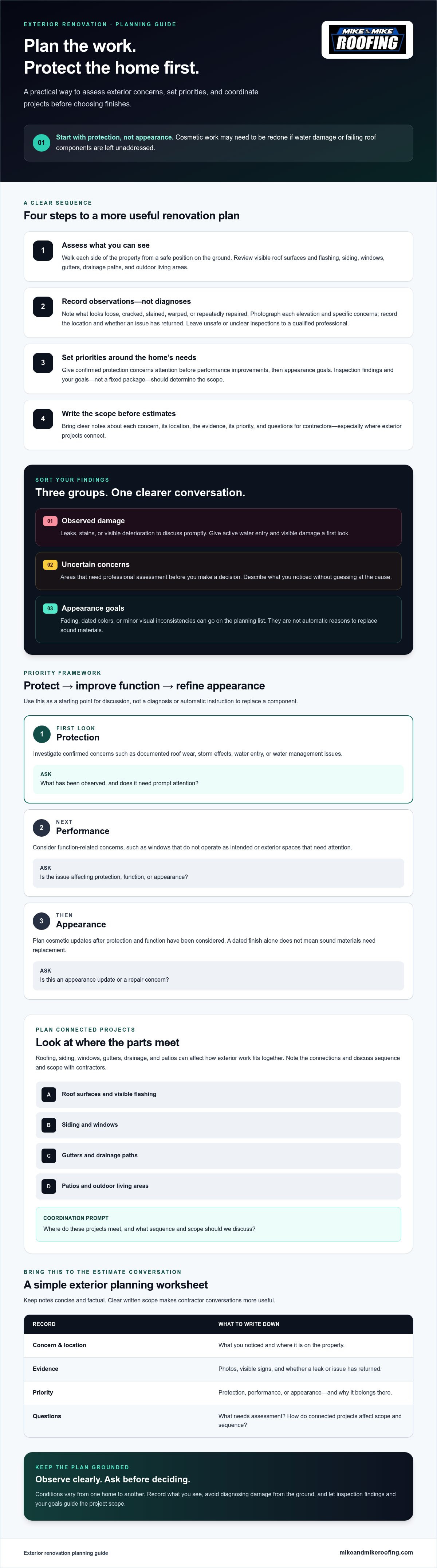
Use This Exterior Home Renovation Planning Template Before Requesting Estimates
A short written brief turns your exterior home renovation notes into a scope contractors can respond to. Set a practical goal first: address known damage, improve how a component functions, update the appearance, or handle more than one need. Then record what you know and what still needs professional assessment. Keep observations separate from assumptions.
What information belongs in a renovation brief?
Use one entry for each concern, even if several relate to the same area. Add photos when available, and mark whether an issue is confirmed or still a question. Include only the project areas that apply to your home.
| Field | What to record |
|---|---|
| Property location | Address or general location for the estimate request |
| Project area | Roof, siding, windows, gutters, or patio |
| Concern and location | What you observed and exactly where it appears |
| Evidence | Photo, date noticed, recurrence, or other relevant notes |
| Priority and goal | Address damage, improve function, update appearance, or assess an uncertain issue |
| Questions and timing | What you want clarified, preferred timing, and who will make decisions |
For example, write “water stain below the front window, noticed after rain; cause unknown” rather than declaring the window has failed. That distinction gives a contractor a clear question to investigate without turning a guess into a repair request.
How should homeowners compare exterior renovation proposals?
Ask for a written scope, then compare what each proposal actually includes. A low total or brief description is hard to evaluate if important details are missing. Check whether the documents explain the work, specified materials, exclusions, cleanup responsibilities, and schedule assumptions. Ask what warranty terms apply and have them stated in writing. Don’t assume the terms are the same from one proposal to another.
- Who will supervise the work, and who is your point of contact?
- How will changes or concealed conditions be documented and approved?
- What access, preparation, or other responsibilities fall to you?
- Which local permit, HOA, or neighbourhood requirements should be checked, and who will confirm what applies?
Compare answers alongside the proposed scope, not just the project title. For more questions to consider while reviewing contractors, see Roofing Contractor Ratings: A Homeowner's Guide.
Once your brief is ready, you can request an estimate from Mike and Mike Roofing for applicable residential exterior work. A clear list of concerns and questions gives the next conversation a solid starting point.
Plan Your Next Step with a Local Exterior Contractor
A clear assessment and written scope give your next contractor conversation a better starting point. You don’t need to arrive with every answer. Bring your notes, explain what you’ve observed, and be clear about what you want to solve. A useful discussion should help distinguish what can be assessed now, what needs further inspection, and what remains uncertain.
What should homeowners expect from a first project conversation?
Share your planning worksheet, photos, concerns, priorities, and questions. For example, point out a recurring leak or a window that’s difficult to operate, and explain when you first noticed it. Ask what the contractor can assess from the information available and what would require a closer inspection. You should leave with a clearer understanding of the proposed scope, not pressure to add unrelated work.
Mike and Mike Roofing is a family-owned, father-son contractor serving Weatherford, Fort Worth, and Aledo. Its residential exterior services include roofing, siding, window installation, gutter cleaning, and patio services. The right conversation focuses on work that fits your home’s observed condition and your goals. You don’t need every service just because you’re planning an exterior home renovation.
How can homeowners continue researching specific exterior projects?
Keep researching the project areas that apply to your plan. If roof installation or energy efficiency is a priority, exploring scopes from specialists like Underline Energy Concepts can help you prepare questions about materials, performance, and long-term protection. If siding work is under consideration, look into siding installation and the choices that affect your home’s exterior. For window replacement, review window installation basics and note what you want to ask about function, fit, and project coordination.
Use project-specific information to sharpen your questions, not to diagnose a problem or assume a particular solution is right for your home. For broader inspiration on managing comprehensive renovations, check out TimberworX Construction Group to see how design-build practices coordinate multi-phase exterior and structural improvements. During the discussion, ask the contractor to explain how the proposed work addresses your recorded concern and what details still need confirmation. Then compare the written scope with your goals before making a decision.
If your assessment is ready, you can request a free exterior project estimate from Mike and Mike Roofing. Bring the issues you’ve documented and the questions you want answered. A grounded plan starts with the needs of your home, one project at a time.
Move Forward with a Clear Exterior Plan
A sound exterior home renovation begins with careful observation, not a decision to replace everything. Record what you’ve noticed, separate confirmed concerns from questions, and prioritize protection and function before appearance. Then use a written scope to clarify which projects belong together, what’s included, and what still needs assessment.
If you’re in Weatherford, Fort Worth, or Aledo, Mike and Mike Roofing is a family-owned, father-son contractor serving the area. Its residential exterior services include roofing, siding, windows, gutters, and patios, depending on your home’s needs.
Bring your notes and photos to the next conversation, and ask direct questions about scope, materials, timing, and uncertainties. If you’re ready to discuss your project, request a free exterior project estimate. A practical plan can help you take the next step with confidence, one priority at a time.
Frequently Asked Questions
What is included in an exterior home renovation?
An exterior home renovation can include updates or work to protect, improve, or refresh a home’s outside. Depending on the property and goals, the scope might involve roofing, siding, windows, gutters, or a patio, but not every project needs all of them. Start with observed conditions and decide what applies. For homeowners in Weatherford, Fort Worth, and Aledo, the right scope depends on the individual home, not a standard package.
How do I plan an exterior home renovation?
Plan an exterior home renovation by assessing the property before choosing projects or finishes. Photograph each side of the house, note concerns and when they occurred, and separate visible evidence from questions that need a contractor’s assessment. Set goals, such as addressing known damage, improving function, or updating appearance. Then request written estimates that explain the proposed work and compare the scope, materials, exclusions, and schedule assumptions.
Which exterior home repairs should be done first?
Prioritize active water entry and confirmed damage that could worsen if left unaddressed. Documented roof concerns, recurring leaks, or water that isn’t draining away as intended are reasons to seek a professional assessment. Next, review siding and windows if their condition or operation raises concerns about protection or function. Treat fading or dated colors as appearance goals, not automatic reasons to replace components that are otherwise sound.
Can I renovate my roof, siding, and windows at the same time?
Yes, related projects can be planned together, but the right approach depends on inspection findings, access, scope, and contractor input. Roof edges, flashing, siding, and window openings meet, so ask how work in one area may affect adjoining surfaces, details, or scheduling. A coordinated plan can help clarify dependencies, but doing all the work together isn’t automatically necessary. Include only the projects that fit your home’s needs and goals.
How do I compare exterior renovation estimates?
Compare written scopes, not just totals or project labels. Check which work and materials are included, what’s excluded, who handles cleanup, and what schedule assumptions apply. Ask who will supervise the work, how changes or concealed conditions will be documented, and what warranty terms are stated in writing. If proposals differ, ask contractors to explain the difference so you can see whether they’re addressing the same concerns and project areas.
Do I need a permit for exterior renovations in Weatherford, Fort Worth, or Aledo?
Permit requirements can depend on the project and its location, so don’t assume one city’s rules apply in another. Before setting a schedule, describe the planned work to the relevant local authority in Weatherford, Fort Worth, or Aledo and ask what requirements apply. Also check any HOA or neighbourhood requirements that may affect your plans. Confirm responsibilities with your contractor, but verify local requirements directly rather than relying on assumptions.
How much should I budget for an exterior home renovation?
There isn’t one reliable budget for every exterior project. The scope, condition of the home, selected materials, and any issues identified during assessment can all affect the estimate. List the work you’re considering, then ask contractors for written, project-specific estimates that explain what’s included and excluded. Mike and Mike Roofing offers free estimates through its website for its residential exterior services. Avoid treating a general figure as a quote for your home.


