
What if the first roof replacement estimate you receive isn’t the right solution for your home? After a leak or North Texas storm, it’s natural to want a clear answer, but damage doesn’t always mean the entire roof needs replacing. Reliable roof replacement services should begin with a documented assessment, not a sales pitch. The right recommendation depends on the roof’s condition and the work needed.
Comparing estimates can be difficult when contractors describe the work differently. You’ll want to know which materials are included, how workmanship and warranties are addressed, and what happens if hidden damage is found. If you’re considering an insurance claim, remember that coverage and claim decisions are made by your insurer, not your roofing contractor.
This guide explains how to weigh repair against replacement, what to look for in a written proposal, and how to evaluate contractors serving Weatherford, Fort Worth, and Aledo. You’ll also find a practical overview of material choices, storm-related claim considerations, and the steps to expect as a project moves forward, so you can make a sound decision with fewer unanswered questions.
Key Takeaways
- A leak or visible damage doesn’t automatically call for a full replacement. Roof condition and repair history help guide the decision.
- When comparing roof replacement services, check that each written proposal clearly describes the work, materials, project boundaries, cleanup, and warranty documentation.
- Look beyond the bottom line. Compare what’s included, what’s excluded, and how the contractor plans to communicate throughout the project.
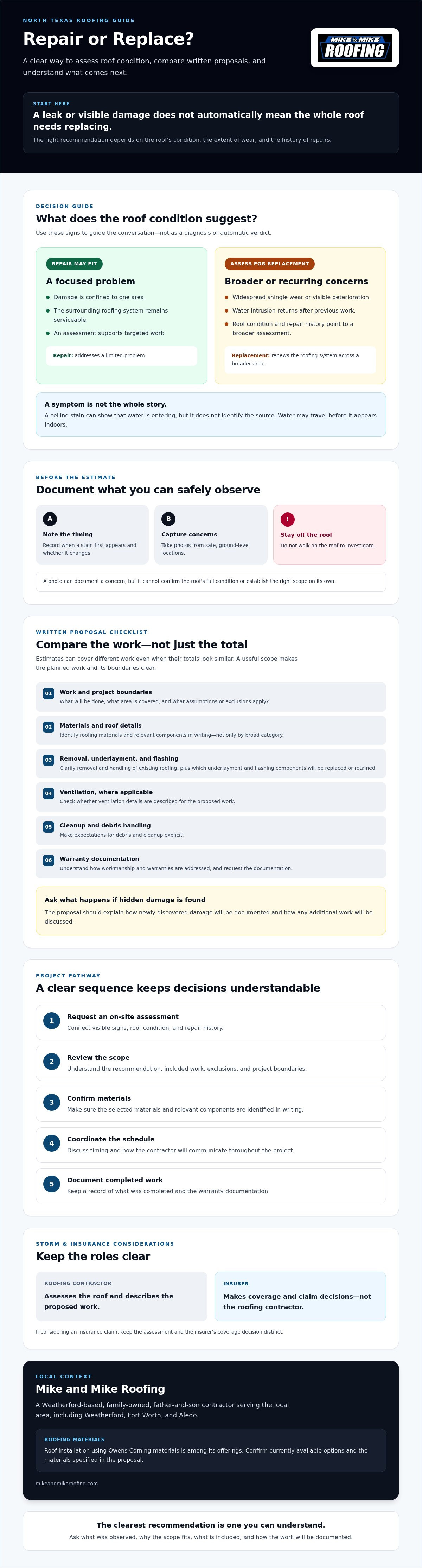
- Plan in clear steps: request an assessment, review the scope, confirm materials, coordinate the schedule, and document completed work.
- Mike and Mike Roofing is a Weatherford-based, family-owned, father-and-son contractor serving the local area, with roof installation using Owens Corning materials among its offerings.
Roof Replacement Services in Weatherford: When Is Replacement Better Than Repair?
A leak, missing shingle, or ceiling stain can raise an immediate question: does the whole roof need to come off? Not necessarily. One visible problem doesn’t prove that replacement is the right answer. The roof’s age, extent of wear, recurring leaks, and history of earlier repairs all help shape a sound assessment.
Roof repair addresses a limited problem; roof replacement renews the roofing system across a broader area. That distinction is a starting point, not a diagnosis. Roofs combine multiple layers and components. Understanding roofing materials and construction can help explain why a surface symptom may not reveal the full condition underneath.
What roof conditions can point toward replacement?
Widespread shingle wear, visible deterioration, or water intrusion that returns after previous work are reasons to request a closer inspection. They are prompts, not automatic verdicts. A small area of damage may be isolated, while broader wear or recurring problems may call for a replacement assessment.
Interior staining can indicate that water is entering, but it doesn’t identify the source. Water may travel before it becomes visible indoors, so the stain’s location alone may not pinpoint the problem. Note when you first see the stain, whether it changes, and any visible exterior concerns. Take photos from safe, ground-level locations. Don’t walk on the roof to investigate.
When might a repair be enough?
If damage is confined to one area and the surrounding roofing system remains serviceable, a targeted repair may be reasonable. Whether that’s appropriate depends on inspection findings, including the condition around the damaged spot and any history of leaks or previous repairs. A photo can help document a concern, but it can’t confirm the roof’s full condition or establish the right scope on its own.
Ask the contractor to explain how the proposed work addresses the observed problem and whether broader deterioration changes the recommendation. If replacement is advised, ask what findings support that scope. For a wider look at the installation process, see this residential roof installation guide.
For homeowners weighing roof replacement services, the useful next step is an on-site assessment that connects visible signs, roof condition, and repair history. A clear explanation should help you understand whether the recommendation is for a focused repair or a broader replacement, and why.
What Roof Replacement Services Should Include in a Written Scope
A written scope turns a broad proposal into a description you can check. It should explain the planned work, materials, project boundaries, and cleanup expectations. That detail matters because two estimates with similar totals may cover different work. Compare what each contractor will actually do, not just the headline figure.
A comparable roof proposal clearly identifies the work, materials, exclusions, and warranty terms. Professional roof replacement specialists like ALG Roofing Limited emphasize providing detailed, transparent breakdowns of the complete scope before any work begins. Before signing, ask which items are included, which are excluded, and which may need further assessment after tear-off. If the contractor finds damage beneath the existing roofing, the proposal should explain how that discovery will be documented and how additional work will be discussed.
Depending on the home and proposed project, check whether the scope describes:
- Removal and handling of existing roofing materials.
- Underlayment and flashing work, including which components are being replaced or retained.
- Ventilation details, where applicable to the proposed work.
- Debris handling and cleanup expectations.
- Project boundaries, assumptions, exclusions, and warranty documentation.
Which materials and roof details should be specified?
Ask for roofing materials and relevant components to be identified in writing, rather than described only by a broad category. The right selection depends on the home, roof design, and contractor’s assessment. Mike and Mike Roofing offers roof installation using Owens Corning materials. Confirm which options are currently available and make sure the proposal identifies the materials being considered. Ask for warranty documents and clarify who provides each warranty, its terms, and any exclusions.
How can homeowners compare estimates fairly?
Put proposals side by side and compare the same items: removal, underlayment, flashing, ventilation, cleanup, project assumptions, material descriptions, and warranty paperwork. A vague allowance or broad exclusion can leave important questions unanswered. Ask for written clarification before signing, especially if one proposal includes a component while another leaves it open to later assessment.
The lowest proposal isn’t automatically the best value if it covers less work or relies on different assumptions. A clear scope gives you a fairer basis for comparing roof replacement services and understanding where the proposed work begins and ends. For a separate discussion of cost factors, see this roof replacement cost reference.
If you want another written proposal to compare, you can request an estimate through Mike and Mike Roofing’s website.
How to Compare Roof Replacement Contractors Around Fort Worth and Aledo
Choose a contractor by comparing the work and the working relationship, not just the headline figure. A lower proposal may leave out materials, cleanup, or other work that another estimate includes. Homeowners in Weatherford, Fort Worth, and Aledo should also confirm the contractor serves their address and explain how project updates and questions will be handled.
Use a side-by-side checklist to spot differences before you decide:
| What to compare | What to confirm |
|---|---|
| Written scope | Work included, project boundaries, assumptions, and exclusions |
| Materials | Specified roofing materials and relevant system components |
| Schedule assumptions | How timing is planned and how weather or other changes will be communicated |
| Cleanup | How debris will be handled and what cleanup is included |
| Communication | Who manages the project, provides updates, and answers questions |
| Warranty documentation | Written terms, exclusions, duration, and who provides each coverage |
Then check recent reviews, business credentials, and references. Verify information with the original source where possible, and look for consistent details across review platforms rather than relying on a single rating or testimonial. If a contractor provides proof of insurance or other credentials, confirm the documents are current and match the business you’re considering. Don’t treat a claim as verified just because it appears in an advertisement.
What should homeowners ask before hiring a roofer?
Ask who will oversee the project, how changes will be documented, and whom you should contact with questions. Confirm the planned work sequence, material selection, cleanup expectations, and which documents you’ll receive when the work is complete. Clear answers help you judge whether expectations are set before work begins. For a deeper checklist on evaluating reviews, see this roofing contractor ratings guide.
How should you assess warranties and workmanship claims?
Manufacturer product coverage and contractor workmanship coverage are different. Ask for the actual documents, then review what each covers, its exclusions, how to submit a claim, and how long coverage lasts. Don’t rely on a broad phrase such as “industry-leading” without seeing the terms that apply to your project. For any roof replacement services proposal, written documentation is the basis for a fair comparison.
Planning Roof Replacement in North Texas: Inspection, Weather, and Project Communication
A well-planned project moves through clear steps: request an assessment, review the written scope, confirm materials, schedule the work, and keep the completion documents. For homeowners in Weatherford, Fort Worth, and Aledo, weather is one scheduling consideration. Ask how changing conditions could affect planned dates and how updates will be shared. No schedule should depend on a promise that the weather will cooperate.
What happens during an assessment and estimate?
An estimate is a chance to discuss observed conditions, proposed work, materials, and your questions. Ask which areas and components were inspected, what the findings support, and whether any concerns need further evaluation before the scope is final. If storm damage is part of the concern, keep relevant photos and records and ask what the assessment documents. A contractor’s observations don’t determine whether an insurer will cover damage or approve a claim.
Before accepting a proposal, make sure you understand what work is planned and how you’ll be notified if conditions or the agreed scope change. A useful conversation should leave you with a clear next step, not unanswered questions about what the estimate includes.
How can you prepare for replacement work?
Before work is scheduled, ask what you should move, protect, or make accessible. Discuss access to the home, nearby landscaping, debris handling, and how the crew will communicate during the project. Confirm who will contact you about changes and whether those changes will be documented in writing before you agree to additional work.
Keep copies of the proposal, material details, messages about schedule or scope changes, and documents provided when the work is complete. These records make it easier to check what was agreed and understand the project after the crew has finished.
If roof work is part of a larger exterior project, plan the sequence and responsibilities across contractors before dates are set. This exterior renovation planning template can help organize the moving parts.
Roof replacement services are easier to plan when expectations are settled before work begins. For a roof installation estimate in Weatherford, Fort Worth, or Aledo, request an estimate from Mike and Mike Roofing.
Choosing Mike and Mike Roofing for Roof Replacement Services in Weatherford
Mike and Mike Roofing is a Weatherford-based, family-owned, father-and-son roofing contractor serving the Weatherford, Fort Worth, and Aledo area. The company offers roof installation using premium Owens Corning materials. Material options can change, so ask which products are currently available and have the proposed materials identified in writing before you decide.
A free estimate gives you a chance to discuss what you’ve noticed, review the proposed scope, and ask questions. It isn’t a guarantee of a particular diagnosis, schedule, or outcome. A useful measure is whether the assessment and estimate clearly explain the observed conditions, recommended work, material choices, and any questions that still need an answer.
What makes a local estimate useful?
A useful estimate gives you something concrete to evaluate, not just a recommendation. Check that it describes the proposed work and materials, and ask the contractor to explain anything unclear. Then compare the written scope with other proposals so you can see where inclusions, exclusions, or assumptions differ. Take time to understand the recommendation before committing.
Mike and Mike Roofing reports an A+ BBB rating, five-star reviews, and industry-leading warranties. Treat these as claims to verify: check the current rating and review sources, and request applicable warranty documents to confirm coverage, terms, exclusions, and who provides each one. A broad warranty description on its own isn’t enough to judge what protection applies to your project.
What should homeowners do next?
Before requesting an estimate, jot down the roof concerns you’ve noticed and when they appeared. You can also gather photos taken safely from the ground and prepare questions about materials, scope, and what the estimate includes. Don’t climb onto the roof to take pictures. Share your address early and confirm that service is available for your home in Weatherford, Fort Worth, or Aledo.
Use the conversation to understand the recommendation, not to rush into a decision. If you receive a written proposal, review it alongside any other estimate and ask for clarification where the scopes differ. That gives you a clearer basis for deciding whether the proposed roof installation fits your home and priorities.
Ready to discuss your roof and the work it may need? Request a free roof replacement estimate from Mike and Mike Roofing.
Make Your Next Roofing Decision With Confidence
A leak or visible damage doesn’t automatically mean your roof needs full replacement. Start with a clear assessment, then compare written proposals for the work, materials, exclusions, cleanup, and warranty terms. The right roof replacement services should help you understand the recommendation and its scope, not leave you guessing.
Mike and Mike Roofing is a family-owned, father-and-son contractor based in Weatherford. The company offers roof installation with premium Owens Corning materials. Confirm current product availability and the options proposed for your home. The company also reports an A+ BBB rating and five-star reviews, which you can verify through current sources. Free estimates are available through its website, giving you an opportunity to discuss your roof concerns and questions.
Bring notes about what you’ve observed, along with photos taken safely from the ground. Review the estimate alongside other proposals before deciding. A careful comparison can make the next step feel more manageable.
Request a free roof replacement estimate and get a clearer view of the work your home may need.
Frequently Asked Questions
Is roof replacement always necessary when a roof leaks?
No, a leak doesn’t automatically mean the entire roof needs replacement. The source and extent of the leak, the condition of the surrounding roof, and the history of earlier repairs all matter. A professional assessment can help determine whether a targeted repair or broader work makes sense. Don’t climb onto the roof to investigate. Document what you can see safely from the ground and share those observations.
How do I know whether my roof needs replacement or repair?
Widespread wear, repeated leaks, or extensive visible damage are reasons to request a replacement assessment, not automatic proof that replacement is necessary. A localized problem may be repairable if the surrounding roof remains serviceable. An on-site inspection gives the contractor a chance to assess the roof’s condition and repair history. Ask for a clear written scope that explains the recommendation and the work it would involve.
What should roof replacement services include?
A proposal for roof replacement services should describe the work area, materials, relevant roof components, removal and cleanup expectations, schedule assumptions, exclusions, and warranty documentation. The exact scope depends on the home and inspection findings. Ask the contractor to explain any unclear item, including work that may need further assessment after existing materials are removed. Compare proposals only after checking that they describe comparable work and assumptions.
How can I compare roof replacement estimates from different contractors?
Compare the written scope, material descriptions, exclusions, cleanup expectations, project communication, and warranty terms, not just the total. Ask each contractor to clarify assumptions and identify work that could change after further assessment. A proposal may appear lower because it covers less or leaves items unspecified. Before deciding, confirm that the estimates describe comparable work, materials, and project boundaries. Then weigh the clarity of each proposal alongside its overall value.
Does homeowners insurance cover roof replacement after storm damage?
Coverage depends on your policy, the documented roof conditions, the cause of damage, and your insurer’s claim decision. A roofing assessment can describe observed conditions, but it can’t determine what your policy covers or promise claim approval. Document concerns from safe locations, review your policy, and contact your insurer with coverage questions. Keep records and photos available to discuss with both the insurer and the contractor as needed.
How long does a roof replacement take?
There isn’t one timeline that fits every roof. Project duration depends on the roof’s size and design, selected materials, weather, access, and any conditions discovered during work. Ask the contractor for the anticipated schedule for your specific home and how updates or delays will be communicated. Before work is scheduled, confirm what preparations are needed, including access arrangements and any items you should move or protect.
What should I ask a roof replacement contractor before hiring?
Ask for a written scope, identified materials, exclusions, cleanup expectations, a communication plan, and applicable warranty documents. Confirm who will manage the work, whom to contact with questions, and how proposed changes will be documented and approved. Check reviews, references, and business credentials independently. Most of all, compare proposals based on the same work and assumptions, not sales promises or a headline total alone.


