

A home exterior remodel is more than a cosmetic update. It can restore the protective shell that stands between your home and North Texas heat, hail, and storms. The challenge is knowing where to start with home exterior remodeling and which parts of the exterior actually need attention.
It’s reasonable to be wary of storm chasers, unsure which materials suit the Texas climate, or concerned that hidden roof or siding damage could expand a planned upgrade. Start with a careful assessment, not a guess from the curb. Mike and Mike Roofing is a family-owned, father-son team based in Weatherford, serving homeowners in the Weatherford, Fort Worth, and Aledo area.
This checklist offers a practical way to evaluate your home, set priorities, and plan the work in a sensible order. You’ll find signs of wear to look for on roofing, siding, windows, and gutters, along with material comparisons, including Owens Corning shingles and Hardie Board siding, and tips for evaluating a contractor. The goal is a durable exterior and a clear plan before the next storm season.
Key Takeaways
- Walk around your home to spot visible wear, then note less obvious signs that may warrant a closer assessment.
- Plan home exterior remodeling around protection first, then compare materials for durability, upkeep, and appearance.
- Consider how roof and siding updates may relate to insurance and curb appeal, without assuming a remodel guarantees a higher appraisal.
- Look for a clear assessment and straightforward communication. Mike and Mike Roofing is a family-owned, father-son team with an A+ BBB rating.
- Prepare for installation by understanding the project phases and moving outdoor furniture and other belongings away from work areas.
Signs Your Home Needs an Exterior Remodel: A Diagnostic Checklist
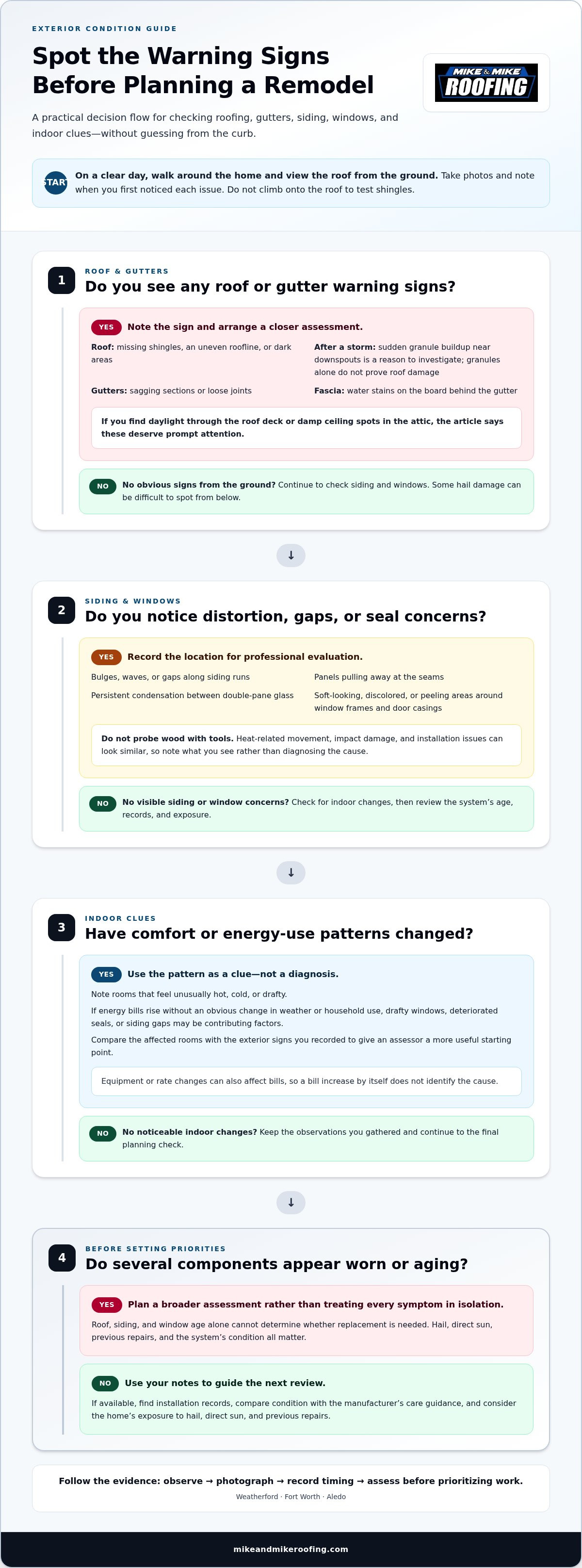
Start with a slow walk around your home on a clear day, viewing the roof from the ground rather than climbing onto it. In the Weatherford, Fort Worth, and Aledo area, hail damage can be difficult to spot, while long, hot summers put steady stress on siding, window seals, and caulking. A practical process of improving a structure begins by noting what appears worn, what may be damaged, and what needs a closer inspection before you plan home exterior remodeling.
Walk around each side of the house and note gaps, loose trim, cracked caulk, wavy siding, and granules collecting near downspouts. Granules alone don’t prove roof damage, but a sudden buildup after a storm is a reason to investigate further. Take photos from the ground and record when you first noticed each issue. The pattern and timing can help distinguish ongoing wear from changes that followed a storm.
Roofing and Gutter Red Flags
From the ground, look for missing shingles, an uneven roofline, or dark areas that may need a closer assessment. Hail bruising can be hard to identify without examining the shingles directly, so don’t climb up to test them. Check for sagging gutters, loose joints, and water stains on the fascia, the board behind the gutter. In the attic, daylight through the roof deck or damp ceiling spots deserve prompt attention.
Siding and Window Warning Signs
Look along siding runs for bulges, waves, gaps, or panels pulling away at the seams. Heat-related movement may contribute to distortion, but impact damage and installation issues can look similar. Persistent condensation between double-pane glass can indicate a failed seal. Don’t probe wood with tools. Instead, note soft-looking, discolored, or peeling areas around window frames and door casings for professional evaluation.
Age matters, but a calendar alone can’t tell you whether a roof, siding, or window needs replacing. Find installation records if you have them, compare the system’s condition with the manufacturer’s care guidance, and consider its exposure. Hail, direct sun, and previous repairs all affect how an exterior performs. If several components are aging at once, plan a broader assessment rather than treating each symptom as an isolated repair.
Pay attention to sudden changes indoors, too. If energy bills rise without an obvious change in weather or household use, drafty windows, deteriorated seals, or siding gaps may be contributing factors. Bills aren’t a diagnosis. Equipment or rate changes can also play a role. Note which rooms feel unusually hot, cold, or drafty, then compare those areas with the exterior. That gives an assessor a more useful starting point and helps you prioritize protection over guesswork.
Selecting Rugged Materials for the North Texas Climate
Exterior materials are a long-term decision, not just a style choice. In North Texas, heat, hail, wind, and strong sun put roofing, siding, and windows through repeated stress. A product that looks good in a sample may disappoint if it doesn’t suit the home’s exposure or is installed poorly. Treat home exterior remodeling as an investment in protection, and compare material performance, maintenance needs, and installation requirements before choosing a look.
The Owens Corning Advantage for Roofing
Shingles are only one part of a roof. The underlayment, flashing, ventilation, and other components also need to work together to manage water and help protect the roof deck. That system-level approach matters during spring storms. Owens Corning offers premium shingle options, and Mike and Mike Roofing specializes in Owens Corning roofing. Compare the wind-resistance information for the specific shingle and installation details instead of assuming every product performs the same. For a closer look at the process, see this residential roof installation guide.
Siding Solutions: Hardie Board vs. Premium Vinyl
Fiber-cement siding such as Hardie Board is a durable option to consider in a climate with heat and storm exposure. It offers strong fire resistance, while impact performance depends on the product, installation, and force of the impact. Premium vinyl may suit homeowners seeking a lower-maintenance exterior, but product quality and proper installation matter, especially through temperature changes. Compare care requirements and product performance for your home rather than choosing on appearance alone. Explore low maintenance siding options and the benefits of Hardie Board siding installation.
Windows That Balance Light and Heat
More glass can brighten a room, but it can also increase heat gain if the window isn’t suited to the home’s orientation and climate. Review the window’s energy information, including its U-factor, which indicates heat transfer, and solar heat gain coefficient, which indicates how much solar heat passes through. Low-emissivity coatings can help manage heat and light. The right choice depends on room exposure, existing frames, and comfort concerns, not just a desire for larger windows.
Before committing to a product, compare its documentation with your priorities and confirm that the installation plan accounts for the whole assembly. The Federal Trade Commission’s Hiring a Contractor guidance offers practical steps for protecting yourself during a home project. For roofing or siding decisions, Mike and Mike Roofing can provide an assessment tailored to your home.
Calculating the ROI of a Home Exterior Remodel
A remodel’s return isn’t just a figure on a resale estimate. In Weatherford and across North Texas, value may also come from fewer recurring repairs, a more comfortable home through hot summers, and a roof or siding system buyers can assess with confidence. When considering home exterior remodeling, separate measurable savings from possible resale benefits. Energy reductions, insurance changes, and a higher appraisal are not automatic.
Energy Savings in the Texas Heat
Start with the problem you want to solve. If rooms heat up in afternoon sun, poorly sealed windows, limited insulation, or gaps in the exterior may contribute. Double-pane windows can reduce heat transfer compared with single-pane units, while properly installed siding and suitable insulation can help limit unwanted heat flow. A thermal bridge is a conductive path, such as a framing member, that transfers heat through an otherwise insulated wall.
Roof ventilation helps move hot, moist air out of the attic when the system is properly designed, which can reduce heat buildup above the living space. It doesn’t guarantee a longer HVAC life. Equipment condition, sizing, maintenance, and installation all matter. To estimate potential energy savings, compare utility bills from similar months before and after the work, accounting for weather, thermostat settings, household changes, and rate changes. A month-to-month comparison is more useful than assuming a fixed percentage reduction.
Insurance and Resale Value
A new roof may improve a home’s condition and documentation, but it doesn’t guarantee a lower premium or an easier sale. Insurers set terms based on their own criteria, while buyers and inspectors consider the roof’s age, visible condition, and available installation records. Keep contracts, product documentation, invoices, and photographs together. Share the roof details with your insurer to understand how the replacement applies to your policy.
There’s no universal rule that a new roof is the number-one requirement for selling a Texas home. Still, visible roof wear can raise questions during inspections and negotiations. In Weatherford, curb appeal can shape a buyer’s first impression, but appraisal value depends on the property and relevant comparable sales, not appearance alone. Quality siding, clean rooflines, and sound windows can help present a well-maintained exterior without promising a particular valuation.
An A+ BBB rating reflects a contractor’s business rating, not an appraisal of a renovation or a guarantee of workmanship. A clear project record can still document what was installed and when. For your own ROI check, list expected savings, avoided maintenance, and potential resale benefits separately. This keeps the estimate grounded and makes it easier to judge whether the project meets your priorities.
Contractor Selection Checklist: Finding a Straight-Shooter
A successful home exterior remodeling project depends on more than the materials. You need a clear scope, honest answers, and a written record of what happens if hidden damage is uncovered. A local presence can make communication and follow-up more straightforward, but a Weatherford or Fort Worth address alone doesn’t prove the quality of the work. Look for a consistent local presence and specific answers, not just a polished pitch.
Mike and Mike Roofing is a family-owned, father-son team based in Weatherford, with an A+ BBB rating and 5-star reviews. Ratings and reviews offer useful context, but they don’t replace a detailed contract. A contractor should explain what’s visible, what remains uncertain, and what needs further inspection without pressuring you to approve extra work on the spot.
Questions to Ask About the Work
Get the answers in writing before work begins. A clear discussion should cover who is responsible for oversight, how changes will be documented, and how the project record will be maintained. Use questions like these to make expectations concrete:
- “Who will be on-site supervising the work every day?” Establish the point of contact and how updates will be shared.
- “Can you provide a list of local projects completed in the last 12 months?” Recent nearby work can help you understand the contractor’s experience with local homes and conditions.
- “How do you handle hidden damage found after the project begins?” Agree that the issue, proposed work, and any change to the scope will be explained and documented before proceeding.
Read the Warranty Terms, Not Just the Headline
A manufacturer warranty generally covers specified product defects under its terms. A workmanship warranty addresses installation-related issues, with coverage and exclusions set by the contractor. These are separate protections. Read the documents for duration, exclusions, claim steps, and who handles the issue. Don’t assume a product warranty covers labor or that a workmanship warranty replaces the manufacturer’s coverage.
Storm-Season Red Flags
After hail, door knockers may arrive quickly offering inspections or urging a fast signature. Their arrival alone doesn’t prove bad intent, but pressure to decide immediately should give you pause. Be cautious of unclear scopes, verbal-only promises, and demands for full payment before materials arrive. A family-owned operation can offer direct accountability, but the written scope and records still matter. Keep copies of the agreement, product details, change approvals, and payment receipts.
For a direct conversation about roofing, siding, or windows, talk with the Mike and Mike Roofing team.
Executing the Project: What to Expect from a Professional Remodel
A well-managed home exterior remodeling project has a clear scope, a planned work sequence, and a strategy for keeping daily life manageable. The schedule depends on the home, materials, weather, and whether roofing, siding, and windows are handled together. Before work starts, make sure you understand what happens first, where crews will work, and how changes will be communicated.
Roofing commonly begins with protecting the work area and removing existing materials. The exposed roof deck is then checked before the roofing components are installed and debris is cleared. Siding work may involve removing old panels, addressing the exposed wall surface, and fitting new siding and trim. Window installation can require access to rooms near the openings. If projects overlap, clarify the order so you can prepare your household and keep access routes clear.
Preparation and Site Safety
Before the crew arrives, move patio furniture, planters, grills, and vehicles away from the work zone. Point out delicate landscaping, and keep children and pets indoors or well away from active work. A roof tear-off can involve falling debris and substantial noise, so plan calls, naps, and pet routines around the disruption where possible. For more detailed preparation guidance, read about siding installation service.
Agree on how progress and any changes to the scope will be communicated before the project begins. Mike and Mike Roofing is a father-son team, and homeowners can discuss communication expectations with the team ahead of the work. Clear expectations help prevent surprises, especially if concealed damage becomes visible after old materials are removed.
The Final Inspection and Warranty Handover
At completion, walk the property with the project scope in hand. Review the roofing, siding, windows, and gutters included in the work. Look for incomplete details, leftover debris, or areas that need explanation, and record any items that require follow-up. Confirm that the work matches the written agreement, not just that the house looks different from the street.
Collect the final project documents, product information, and applicable warranty paperwork. Manufacturer coverage and registration requirements vary by product and terms, so follow the current instructions provided with the Owens Corning roofing materials and keep a copy for your records. Don’t assume product coverage and installation workmanship coverage are the same. Review each document separately.
For a conversation about your exterior project, request an assessment from Mike and Mike Roofing.
Protect Your Home with a Clear Plan
A lasting exterior project starts with an honest assessment, not a rushed decision. Look for signs of wear and storm damage, prioritize the protective parts of your home, and choose materials suited to North Texas weather. Keep the project scope, warranty documents, and installation records together so you can track what was done and understand the coverage.
Home exterior remodeling is about more than curb appeal. The right work can help protect your home, reduce ongoing maintenance, and give you greater confidence before the next storm season. Mike and Mike Roofing is a father-son-owned and operated team with an A+ BBB rating and 5-star reviews. The team provides roofing, siding, gutter, window, and patio services for homeowners in the Weatherford, Fort Worth, and Aledo area.
Ready to plan your project? Request a free estimate from Mike and Mike Roofing and discuss the exterior work your home needs.
Frequently Asked Questions
How long does a full home exterior remodel usually take?
There’s no single timeline for a full exterior remodel. The schedule depends on the home’s size, project scope, materials, weather, and any hidden damage uncovered during removal. Roof, siding, and window work may happen in separate phases or overlap when the plan allows. Before work begins, review the proposed sequence and how progress updates will be shared so you can plan around noise, access, and time outdoors.
Can I replace my siding and roof at the same time?
Yes, roof and siding replacement can be planned as one coordinated project. Doing both together may help organize site preparation and avoid repeating some disruption, but the right sequence depends on the home and the work involved. Agree on the order, protection for landscaping, debris cleanup, and how newly installed areas will be protected while other work continues. A written scope makes responsibilities and project boundaries easier to follow.
Does a home exterior remodel really increase my home value in Texas?
It can improve curb appeal and show buyers that major exterior components have been maintained, but no remodel guarantees a higher appraisal or a specific resale return. Value depends on the home, its condition, comparable sales, and local buyer demand in places like Weatherford, Fort Worth, and Aledo. Keep installation records, product information, and warranty documents. They help explain what was updated, though they don’t determine the appraised value by themselves.
What is the best siding for the extreme heat in Weatherford?
There isn’t one best siding choice for every Weatherford home. Fiber-cement siding such as Hardie Board is a durable option to consider for North Texas heat and storm exposure. Premium vinyl may also suit homeowners looking for a lower-maintenance exterior. Compare product care requirements, installation details, and the home’s exposure to sun and impact. Proper installation matters as much as the material, so weigh performance and upkeep alongside appearance.
How do I know if my roof has hail damage if it isn’t leaking?
A roof can have hail damage without an active leak. From the ground, note missing or uneven shingles and check downspouts for an unusual amount of shingle granules, especially after a storm. These signs don’t confirm hail damage on their own, and some damage isn’t visible from the ground. Don’t climb onto the roof to inspect it. A qualified roof assessment can help identify concerns before water reaches the interior.
What is the difference between a manufacturer warranty and a workmanship warranty?
A manufacturer warranty covers specified product defects under the manufacturer’s terms and exclusions. A workmanship warranty addresses certain installation-related issues, with coverage defined by the contractor. They’re separate protections, and one shouldn’t be assumed to replace the other. Review each document for coverage, duration, exclusions, claim steps, and whether labor is included. Keep the paperwork with your project records, and follow the current product instructions for any registration requirements.
Do I need to be home during the exterior remodeling process?
You may not need to be home for every hour of exterior work, but plan for access and communication with the crew. Before installation, agree on how the team will reach you if a question or unexpected issue comes up. Move vehicles, outdoor furniture, and fragile items away from work areas, and keep pets and children clear of active construction. Window work may require access to rooms near the openings, so plan accordingly.
How much does a new roof or siding typically cost in North Texas?
Roof and siding project costs depend on the home’s size, existing conditions, materials, access, and the work required beneath the visible surface. Hail damage or deteriorated sheathing can also change the scope once removal begins. Since those details vary from house to house, a generic price range may not reflect your project. Mike and Mike Roofing provides free estimates for exterior projects in the Weatherford, Fort Worth, and Aledo area.


