
How many times are you willing to pay for the same paint job before you realize the North Texas sun always wins? Your home exterior isn't just about curb appeal. It's a shield against golf-ball-sized hail and 105-degree afternoons that can bake the life out of traditional materials. Most homeowners eventually tire of the cycle of repairing wood rot or watching cheap vinyl warp under intense UV rays. If you want to stop spending your weekends on ladder-bound chores, exploring modern low maintenance siding options is the only way to protect your investment for the long haul.
We know you want a home that stays pristine without the constant headache of repainting or pest control. This guide will show you which materials actually survive a local spring and keep their color for decades. We'll break down the durability of fiber cement, the resilience of engineered wood, and how these choices impact your property value in our current 2026 market. You'll get an honest, straight-shooter assessment of what works and what fails in our climate, so you can choose a finish that stays beautiful with nothing more than an occasional rinse.
Key Takeaways
- Understand why fiber cement and engineered wood have become the standard for North Texas homes facing extreme weather and pest pressure.
- Evaluate the best low maintenance siding options by comparing how they perform during spring hailstorms and summer heat waves.
- Discover the simple inspection routine that replaces the high cost of frequent repainting and prevents moisture damage before it starts.
- See why professional installation and proper flashing are just as critical to your home’s longevity as the siding material itself.
Defining Low Maintenance Siding for the Texas Climate
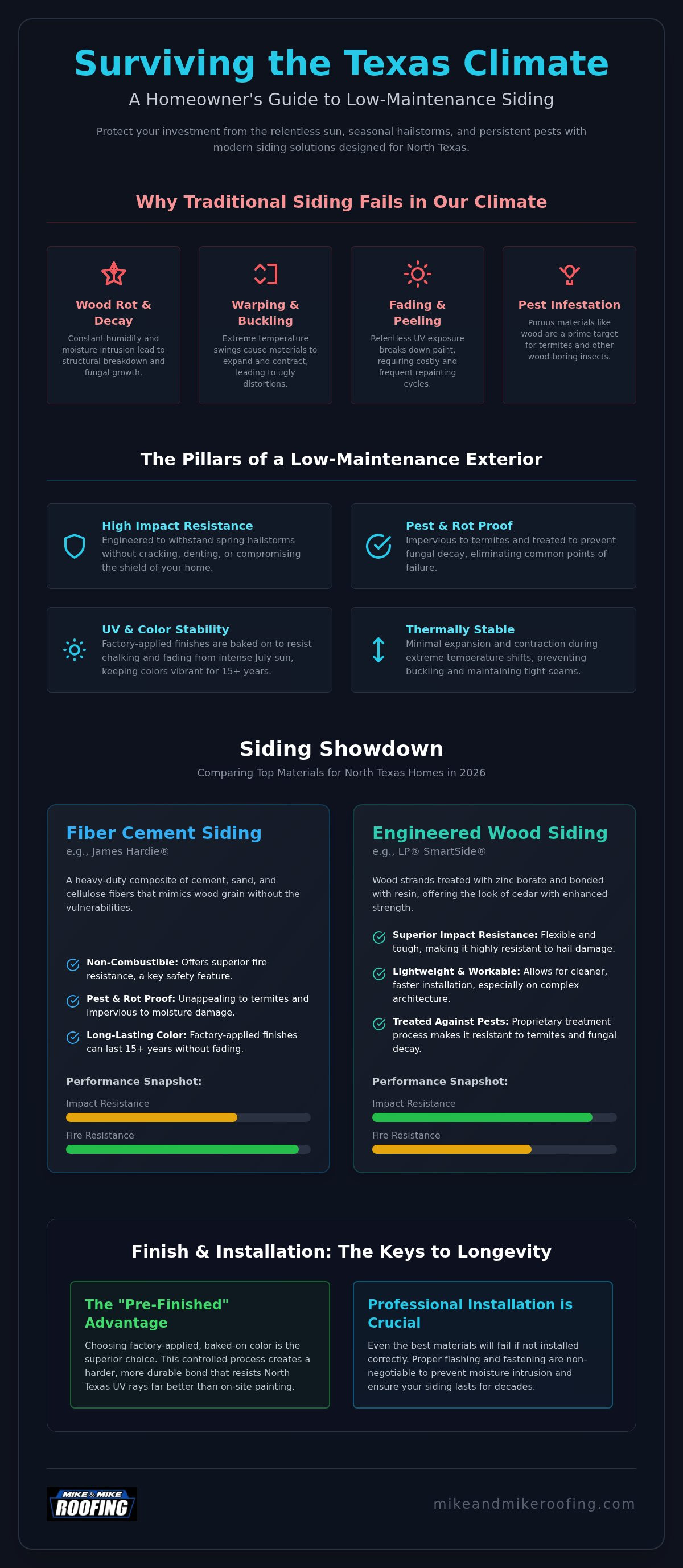
In North Texas, your home's exterior takes a beating that would ruin houses in milder climates. When we talk about low maintenance siding options, we aren't just talking about avoiding a weekend chore. We're talking about structural integrity. For a homeowner in the Weatherford or Fort Worth area, low maintenance means a material that doesn't rot when the humidity spikes and doesn't require a fresh coat of paint every few years. It's about choosing products that withstand the relentless sun and seasonal hailstorms without needing constant intervention.
Traditional wood siding often fails here because it's porous. It expands and contracts with our wild temperature swings. This constant movement eventually cracks the paint seal. Once that seal breaks, moisture gets in. In our region, that leads to wood rot, termite damage, and warping. While wood looks great on day one, the long-term cost of keeping it that way can drain an exterior renovation budget. Choosing a durable alternative ensures your money goes toward increasing home value rather than endless repairs.
Let's be clear: "no maintenance" is a myth. Every home needs an occasional rinse to look its best. However, high-quality common siding materials like fiber cement or engineered wood move the needle from constant repair to simple care. This shift protects your wallet by extending the time between major capital outlays. A truly low maintenance exterior should offer:
- Resistance to fungal decay and wood-boring insects.
- High impact resistance against spring hailstorms.
- UV-stable finishes that don't chalk or fade in the July heat.
- Minimal expansion and contraction during extreme temperature shifts.
The "Paint-Grade" vs. "Pre-Finished" Debate
Choosing between on-site painting and factory-applied finishes is a major decision. Pre-finished siding is baked on in a controlled environment. This process creates a bond that resists intense North Texas UV rays much better than a brush and bucket can. Darker colors might look sharp, but they absorb more heat. This can lead to higher cooling costs. Lighter, pre-finished tones often provide the best balance of aesthetics and thermal performance for our local climate.
Texas-Specific Maintenance Factors
Parker County homeowners deal with red dirt and fine dust that clings to every surface. A material with a smooth, durable finish allows this grit to wash away easily. On North-facing walls, where the sun rarely hits, humidity can cause mildew to grow if the siding stays damp. High-quality low maintenance siding options are treated to resist this growth. We also watch for thermal expansion. Cheap materials can buckle when the thermometer hits triple digits. Professional-grade siding is engineered to stay flat and secure regardless of the heat.
Top Low Maintenance Siding Materials for 2026
Choosing the right material is the foundation of a worry-free home exterior. In the current market, homeowners have several low maintenance siding options that balance aesthetics with extreme durability. These materials are engineered to solve the common failures of traditional wood, specifically targeting the rot, pests, and fire risks that plague North Texas properties. We focus on products that offer a set-it-and-forget-it experience, allowing you to spend more time enjoying your home and less time scraping paint.
Fiber Cement (Hardie Board) Benefits
Hardie Board remains a staple for a reason. It's a heavy-duty mixture of cement, sand, and cellulose fibers that won't ignite when exposed to direct flame. This non-combustible property is a significant safety advantage for homes in rural areas or near dry grasslands. It's often the first choice for Hardie board siding installation in Fort Worth because it mimics the texture of natural wood without the vulnerability. With factory-applied finishes, you can expect a paint cycle that lasts 15 years or longer, even under the punishing Texas sun.
Engineered Wood (LP SmartSide) Advantages
LP SmartSide is a top contender for those who want the warmth of cedar with modern resilience. It's treated with a proprietary zinc borate process that makes every plank resistant to fungal decay and termites. One of its biggest wins in our region is impact resistance. While fiber cement can occasionally crack under heavy hail, engineered wood is incredibly flexible and tough. It's also lightweight, which allows for cleaner, faster installation on homes with complex gables or deep overhangs. If you're worried about spring storms, this material offers peace of mind.
Advanced Vinyl and Poly-Ash
Modern vinyl has come a long way from the thin, brittle panels of the past. Insulated vinyl now includes a rigid foam backing that improves your home’s energy efficiency and adds structural stiffness. For areas where siding might touch the ground or a deck, poly-ash options like TruExterior are a game changer. This material is made from fly ash and polymers, meaning it can survive direct ground contact without ever rotting. If you want a premium look that never requires a drop of paint, cellular PVC is another excellent choice that stays stable in high heat. If you're ready to upgrade, a local siding specialist can help you compare these materials side-by-side.
Comparing Durability: Hail, Heat, and UV Resistance
North Texas weather is a gauntlet. Between spring hailstorms and summer heat that regularly tops 100 degrees, standard materials often fail within a few seasons. When evaluating low maintenance siding options, durability isn't a luxury; it's a requirement for survival. You need a material that stays stable when the temperature swings 40 degrees in a single afternoon. If your siding can't handle the thermal expansion of a Texas July, it'll buckle and pull away from the wall before the year is out.
Pest resistance is another factor that many homeowners overlook until it's too late. Wood siding is an open invitation for termites and carpenter ants. Even woodpeckers can cause significant damage by drumming on cedar planks to find insects or establish territory. Modern composites and fiber cement offer no nutritional value to these pests. This stops the damage before it starts and eliminates the need for expensive chemical treatments or structural repairs down the road.
Impact Resistance: Protecting Against Hail Damage
In a typical spring, our area sees everything from pea-sized to baseball-sized hail. Older vinyl siding often becomes brittle with age and shatters upon impact, leaving your home's sheathing exposed to water. Engineered wood offers superior flexibility, absorbing the energy of the hail rather than cracking under pressure. Fiber cement is also incredibly tough, though it lacks the slight "give" found in wood-based composites. In 2026, the industry standard for high-performance siding is a Class 4 impact rating, which indicates the material can withstand a two-inch steel ball dropped from 20 feet without cracking.
Even the toughest material fails if it's loose. Professional installation ensures panels are fastened correctly with the right overlap. This prevents the siding from rattling or blowing off during the high winds that accompany our thunderstorms. When the wind picks up, you want to hear the rain, not your siding vibrating against the studs.
Heat Deflection and Energy Efficiency
The sun is the biggest enemy of color longevity. UV rays cause lower-quality paints to chalk and fade, leaving your home looking tired and neglected. Factory-applied finishes on premium siding are designed to reflect these rays. This UV stability keeps your home looking freshly painted for years. Material choice also dictates how much heat enters your home. Darker colors on uninsulated panels can turn your walls into radiators, transferring heat directly into your living spaces. Mike and Mike Roofing recommends using a high-grade foam backing or radiant barrier house wrap to break this thermal bridge. This system keeps your interior cooler and reduces the strain on your AC unit during those long July stretches.
Maintenance Realities: What "Low" Actually Looks Like
The term "low maintenance" is often misunderstood as "no maintenance." In the harsh environment of North Texas, ignoring your home's exterior for a decade is a recipe for expensive repairs. Even the best low maintenance siding options require a baseline of care to reach their full lifespan. Think of it like a truck; you don't have to rebuild the engine every year, but you still need to change the oil. A proactive approach prevents small issues from turning into structural failures.
Cleaning is the most common task you'll face. While some competitors suggest power washing, we advise against it. High-pressure water can force its way behind the siding laps, soaking the house wrap and inviting mold into your wall cavities. A simple garden hose and a soft-bristle brush are usually all you need to remove the red Parker County dust. If you encounter stubborn spots, a mild soap solution works wonders without damaging the factory finish.
Your landscaping also plays a silent role in siding health. We recommend keeping bushes and trees at least 12 inches away from your walls. This gap allows for proper airflow, which helps the siding dry out after a heavy thunderstorm. It also prevents branches from scratching the surface during high winds and stops pests from using your prize hollies as a bridge to your eaves. If your siding is already showing signs of wear from overgrown brush, it might be time to schedule a professional siding assessment to check for hidden damage.
A Simple Siding Care Schedule
You don't need a complex manual to keep your home in top shape. Following a seasonal rhythm ensures nothing gets overlooked. Most homeowners can complete these checks in less than 20 minutes.
- Spring: Walk the perimeter after the first major hailstorm. Look for cracks, chips, or loose panels that need immediate attention.
- Fall: Check the caulking around windows, doors, and corner posts. If the sealant is shrinking or cracking, replace it to keep moisture out.
- Every 3-5 Years: Perform a thorough soft-wash. This removes oxidation and dirt buildup that can dull the appearance of your home over time.
Signs Your "Low Maintenance" Siding Needs Professional Help
Sometimes, the issues are beyond a simple DIY fix. If you run your hand across your vinyl siding and it comes away with a white, powdery residue, that’s "chalking." It’s a sign that the material is breaking down from UV exposure. On fiber cement, keep an eye out for bubbling paint. This is rarely a paint failure; it’s usually a sign that water is trapped behind the board and trying to escape. When these signs appear, you should consult exterior siding contractors to determine if you need a targeted repair or a full replacement. Catching moisture intrusion early is the only way to save your home's framing from rot.
Professional Installation: The Secret to Long-Term Durability
Even the highest-quality material is just a pile of boards until it's properly installed. Many homeowners spend weeks researching low maintenance siding options but overlook the most critical factor: the crew holding the hammer. If the flashing is installed incorrectly or the water management system is flawed, even the most expensive fiber cement will fail. Poor installation leads to moisture trapped behind the panels, which eventually rots your home's framing from the inside out. In our climate, there's no room for "good enough" craftsmanship.
Fastener selection is another area where many contractors cut corners. At Mike and Mike Roofing, we understand the specific wind loads our North Texas homes face. We use specific hot-dipped galvanized nails driven to precise depths to ensure your siding stays put during a spring supercell. If nails are driven too deep, they can crack the material; if they are too shallow, the panels will rattle and eventually blow off. A professional warranty from a local team protects your investment for decades, giving you recourse that a "fly-by-night" operation simply can't provide.
The Mike and Mike "Straight-Shooter" Approach
As a father-son team with deep local roots, we treat your home with the same respect we give our own. We don't believe in high-pressure sales tactics or hyperbolic marketing. Our goal is to provide an honest, blunt assessment of what your home needs to stay protected. When you request a free siding estimate, you're getting a professional consultation based on years of hands-on experience. Our A+ BBB rating reflects our commitment to doing things the right way, even when it's the hard way. We take pride in our workmanship because our reputation is built on the longevity of the homes we service in Parker and Tarrant counties.
Integrating Siding with Roofing and Gutters
We look at your home as a complete system, often called the "envelope." Your siding doesn't exist in a vacuum. It must work seamlessly with your roof and drainage systems to keep water away from your foundation. During a residential roof installation, we pay close attention to how the roofline directs water toward the siding. Without proper gutter installation services, rainwater can cascade off the roof and splash back onto your lower siding panels. This constant moisture exposure can lead to premature wear and staining. By ensuring all exterior components work together, we minimize your future to-do list and maximize your home's protection against the elements.
Protect Your Home Investment
Your home's exterior is its first line of defense against unpredictable North Texas weather. Choosing from modern low maintenance siding options is about more than just curb appeal; it's about finding a material that stands up to intense heat and spring hail while keeping your chore list short. We've seen how the right combination of durable materials and precise installation creates a shield that protects your family for decades.
As a family-owned and operated team with an A+ BBB rating and 5-star local reviews, we're here to help you navigate these choices with an honest, neighborly perspective. We bring the same rigorous standards we use as an Owens Corning roofing specialist to every siding project. You deserve a home that stays beautiful without constant repainting or structural repairs.
If you're ready to stop worrying about wood rot and start enjoying a pristine exterior, Request Your Free Siding Estimate from Mike and Mike Roofing. We'll give you a straight-shooter assessment of what works best for your property and your budget. Let's build something that lasts.
Frequently Asked Questions
What is the most low-maintenance siding for a house?
Fiber cement and engineered wood are the most durable low maintenance siding options for North Texas homes. Fiber cement offers superior fire and pest resistance, while engineered wood provides exceptional impact protection against spring hail. Both materials eliminate the need for frequent scraping and painting. A truly hands-off exterior also depends on using factory-applied finishes that resist the intense UV rays we experience in the Aledo and Fort Worth areas.
How much does home siding installation cost in North Texas for 2026?
Siding costs in the Weatherford area vary based on material choice and home size. According to 2026 market data, vinyl siding installation in the Dallas-Fort Worth region averages around $10,449, though larger projects can reach higher valuations. Fiber cement and engineered wood typically command a higher price point than vinyl due to their durability. We provide a straight-shooter assessment and a free estimate to give you an accurate number for your specific property.
Do I ever need to paint fiber cement or engineered wood siding?
You don't need to paint these materials nearly as often as traditional wood. Pre-finished boards often come with a 15-year warranty on the finish itself. If you choose a paint-grade option and have it finished on-site, you can expect a 7 to 10-year cycle before a refresh is needed. The key is that these materials don't rot or warp, so the paint doesn't peel or crack due to moisture intrusion from the board.
Which siding material is best for resisting hail damage?
Engineered wood is currently the leader for hail resistance in our region. Its flexible composition allows it to absorb the energy of a stone without cracking or shattering. While fiber cement is incredibly tough and non-combustible, it is more brittle and can sustain damage from very large hail. For homeowners in Parker County who prioritize storm protection, modern composites and engineered wood offer the highest impact ratings available in 2026.
Can I install new siding over my old wood siding to save money?
We don't recommend installing new panels over old wood siding. While it might seem like a way to save money, it often traps moisture and hides existing rot or pest infestations. This practice can lead to structural issues that are much more expensive to fix later. To ensure your new low maintenance siding options perform correctly and qualify for manufacturer warranties, we always suggest removing the old material and inspecting the wall sheathing first.
How long does low-maintenance siding typically last in the Texas heat?
Premium siding materials are designed to last 30 to 50 years, even in the relentless Texas heat. The longevity of your exterior depends heavily on the quality of the installation and the stability of the material. Products like fiber cement and cellular PVC don't expand and contract significantly when the temperature spikes. This stability prevents the fasteners from loosening and keeps the water management system intact for the life of the home.
Is vinyl siding still a good option for Weatherford homes?
High-grade vinyl remains a practical choice for many Weatherford homeowners. Modern technology has produced thicker panels and insulated options that resist warping and fading much better than the products of twenty years ago. It's an excellent budget-friendly solution that requires only an occasional rinse with a garden hose. However, it's important to choose a product with a high wind rating to ensure it stays secure during our local thunderstorms.
What is the difference between Hardie Board and LP SmartSide?
The primary difference is the base material. Hardie Board is a fiber cement product made from sand, cement, and cellulose fibers, making it entirely non-combustible. LP SmartSide is an engineered wood product treated with zinc borate to resist rot and termites. Hardie is often preferred for its fire rating, while LP is favored for its ease of installation and its ability to withstand heavy hail impacts without cracking or breaking.


