

What if the small leak you noticed isn’t the biggest clue about your roof? In North Texas, hail, high winds, and summer heat can leave damage that’s difficult to see from the ground. The signs you need a new roof in North Texas aren’t always obvious, and one leak alone doesn’t automatically mean it’s time to replace the whole roof.
Before making a major decision, look at the pattern and extent of the damage, the roof’s age and repair history, and whether problems keep returning. Visible warning signs can help you decide when to ask for a professional assessment, but you don’t need to climb onto the roof to begin documenting what you see.
This checklist explains what to look for around your home, which issues may be repairable, and what can make replacement worth discussing. You’ll also learn what to photograph safely and what to ask during an assessment. These details can help you compare the findings and understand your options before deciding on a next step.
Key Takeaways
- One roof symptom doesn’t automatically mean replacement; consider the overall pattern and extent of the damage.
- After a storm, note visible hail impacts, lifted shingles, or debris damage without climbing onto the roof.
- Recurring or widespread concerns may call for a closer assessment, while a localized issue may still be repairable.
- Keep photos and notes about when symptoms appeared to make a professional assessment more useful.
- Use the signs you need a new roof in North Texas checklist to prepare questions and compare the reasoning behind each estimate.
Signs You Need a New Roof in North Texas: Start With This Checklist
One symptom doesn’t always mean your roof needs replacement. A missing shingle or ceiling stain may point to a localized problem. Repeated leaks or damage in several areas may call for a broader assessment. The signs you need a new roof in North Texas are more useful when considered together, rather than treated as a single-item verdict.
Start with what you can safely see from the ground or through a window:
- Shingles that are missing, cracked, curled, lifted, or visibly out of place
- Dark or damp-looking ceiling marks, or leaks that return after a patch
- A roofline that appears to sag or dip
- Visible daylight through the roof from a safe spot in the attic
These signs are reasons to investigate, not proof of how much damage is present or whether replacement is the only answer.
What shingle damage should homeowners look for?
Look for gaps where shingles appear to be missing, edges that curl upward, cracks, or shingles that no longer lie flat. If you can identify your roofing material, this overview of asphalt shingles explains the basic components. Use it for general understanding, not as a reason to handle or inspect roofing materials yourself.
A few affected shingles may be a different situation from similar damage scattered across several roof areas. From the ground, you can record what you see, but you can’t reliably assess the full roof surface or what lies beneath it. Don’t climb up for a closer look. Note the location and pattern, then ask a professional to assess the roof.
What do leaks, stains, and sagging suggest?
A ceiling stain suggests water may have entered somewhere, but it doesn’t reveal the exact entry point. Water can travel along roof framing before appearing indoors, so the stain may not line up with the roof problem. Note when a stain or drip appears and whether it returns after previous work.
Recurring leaks deserve professional attention, even if a patch stopped the water temporarily. A visible dip in the roofline or daylight entering the attic is more serious. Avoid the affected area and arrange an expert review. Don’t disturb damaged materials or enter an unsafe space to investigate. An assessment can help determine what’s affected and whether repair is still a sensible option.
How North Texas Weather Can Reveal Roof Damage
A storm doesn’t automatically mean a roof needs replacement. Strong wind, hail, or falling branches can expose a weak spot or cause isolated damage. The roof’s overall condition and the extent of the impact matter. For homeowners in Weatherford, Fort Worth, and Aledo, a safe check after severe weather can help document changes while they’re still easy to connect to the event.
What to check after hail or high winds
From the ground or a protected window, look for shingles that appear lifted, shifted, or missing. Check visible roof edges and flashing, the metal pieces that help protect joints and transitions. From a safe place on the property, note fallen branches or other debris near the roof, and look indoors for new water marks. Don’t climb up or handle loose materials to confirm what happened.
A dent or mark visible from the ground doesn’t prove that hail damaged the roof. Its meaning depends on the material, location, and surrounding condition, which may require a closer professional assessment. Record the storm date and photograph visible changes from a safe distance. This information can help an assessor understand what you noticed and when, without treating one mark as a replacement verdict.
Wind can also stress roof structures, not just shingles. The Insurance Institute for Business & Home Safety explains measures for bracing gable end roofs, a topic homeowners can discuss with a qualified professional if they’re concerned about wind vulnerability. Don’t attempt structural work based on a visual check.
Can heat and age make roof problems harder to spot?
Surface appearance tells only part of the story. A roof can look orderly from the street while its condition, past repairs, or less-visible areas need a closer look. An older roof isn’t automatically due for replacement, either. Age is useful context, but consider it alongside the roofing material, maintenance history, repair patterns, and visible damage.
That’s why the signs you need a new roof in North Texas should be weighed together. Ask what was inspected and why a particular next step is recommended, rather than relying on a guess based on a storm alone. Homeowners in Weatherford, Fort Worth, and Aledo can request a roof estimate from Mike and Mike Roofing.
Repair or Replace? How to Read the Warning Signs Together
A damaged shingle or single leak doesn’t settle the repair or replacement question. The decision should follow a professional assessment of the roof as a whole, including visible damage, surrounding materials, and any history of recurring problems. A photo can document a concern, but it can’t show everything beneath the roofing surface.
Use the pattern as a starting point for discussion, not as a diagnosis. Localized damage may be worth discussing as a repair if nearby materials and roof components remain serviceable. Repeated leaks, deterioration in several areas, or a growing list of repairs are reasons to ask whether replacement should also be considered. No single symptom or age cutoff answers the question for every roof.
When might a roof repair be worth discussing?
If the visible issue appears isolated, ask the contractor to identify its location and explain the proposed repair. Ask what evidence supports that scope, whether nearby materials remain in sound condition, and whether any other areas need attention. Compare the recommended work with the problem you reported. A limited repair may be reasonable, but an assessment is needed to determine whether it fits your roof’s condition.
When should replacement enter the conversation?
Recurring leaks, visible wear across multiple roof areas, or repeated repairs in different locations warrant a broader review. Ask the contractor to explain the condition of the full roofing system, not just the spot where water appeared. Consider roof age alongside material information, maintenance, repair history, and documented condition. Request the reasoning behind both repair and replacement options.
The signs you need a new roof in North Texas are easier to evaluate when the recommendation connects observed evidence to a clear scope of work. If you’re concerned about being pushed toward replacement, say so directly and ask for the basis of the recommendation. A useful assessment should explain what was found, what remains uncertain, and what options are available.
| Symptom pattern | Questions to ask | Possible next step |
|---|---|---|
| One clearly defined area of visible damage | Is the issue limited to this spot? Are nearby materials and components serviceable? | Discuss a repair scope that matches the observed damage. |
| A leak that returns after prior work | Has the source been identified? What evidence shows whether the problem extends beyond the previous repair? | Request an assessment of the affected area and surrounding roof. |
| Visible deterioration or repair needs in several areas | What is the condition of the full roofing system? Why is repair or replacement being recommended? | Compare the documented findings and scope for each proposed option. |
Before agreeing to work, check that the explanation and estimate describe the same problem and proposed solution. If the evidence or scope isn’t clear, ask for clarification before deciding.
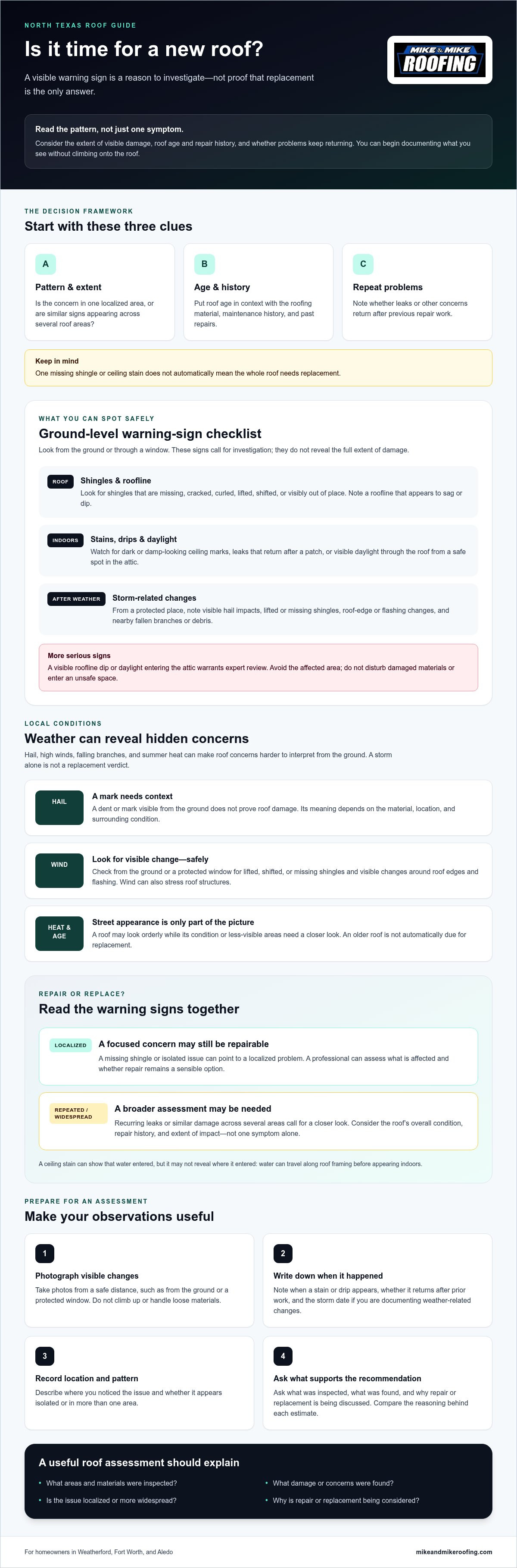
A Safe Roof Check: What to Document Before Calling a Roofer
You don’t need to get on the roof to prepare for an assessment. A clear record of what you’ve noticed can help a roofer understand the concern and explain what needs a closer look. Keep it simple: observe safely, take photos, record timing, then request an assessment.
What can you safely inspect from the ground or attic?
From stable ground, look at visible roof edges, shingles, gutters, and downspouts. If your attic is safely accessible, look for moisture, staining, or daylight from a stable position. Don’t climb onto the roof, enter an unsafe space, or touch wet, loose, or damaged materials. If you can’t see something safely, leave it for a professional.
- Observe: Note visible changes, such as a shingle that appears out of place or a new indoor water mark.
- Photograph: Take clear photos from a safe location, including the surrounding area for context.
- Record: Write down when you first noticed the concern, the date of any storm, where leaks appear indoors, and any previous repairs you know about.
- Request an assessment: Share your notes and ask what the inspection can determine.
Keep your record factual. A stain documents where water appeared inside, not necessarily where it entered. Making that distinction can help prevent a visible symptom from being mistaken for a confirmed cause. Your notes can also put the signs you need a new roof in North Texas into context with the roof’s overall condition.
What should you ask during a roofing assessment?
Ask the roofer to show you each concern and explain what it means. Request a clear distinction between recommended repairs and reasons replacement may be worth considering. Find out which areas were inspected and whether any sections couldn’t be assessed. If a recommendation isn’t clear, ask what evidence supports it and what other options may be reasonable.
A useful assessment connects observations to the proposed next step. Ask for the estimate to describe the recommended work so you can compare its scope with the findings. If replacement is under consideration, this residential roof installation guide explains what homeowners can expect from that process.
Once you’ve documented what you can see, request a roof estimate to discuss your concerns and clarify possible next steps.
Your Next Step: Get a Straight Answer on Your North Texas Roof
Once you’ve recorded what you can safely observe, look at the pattern rather than treating one symptom as a verdict. Recurring leaks, multiple areas of visible wear, or repeated repairs deserve a closer professional assessment. The signs you need a new roof in North Texas should be weighed against documented condition, not assumptions or pressure to decide before you understand the findings.
How to assess a roofing contractor’s recommendation
A clear recommendation should explain what was observed and how those findings support the proposed work. Ask the contractor to walk you through the concerns, share photographs where available, and explain what they could and couldn’t assess. If replacement is recommended, ask why a repair isn’t suitable. If a repair is proposed, ask whether its scope addresses the issue you reported.
Before comparing estimates, check that each one describes the same type of work. Does it cover a specific repair or a full roof replacement? Which areas and materials are included? Confirm any credentials, insurance, reviews, material details, and warranty terms independently. Don’t rely on a verbal assurance or assume two proposals cover the same work. Take time to understand the written scope and ask for clarification if a recommendation or term isn’t clear.
Request a local roof assessment
A local estimate gives you a chance to discuss the roof’s observed condition and understand the options being considered. Mike and Mike Roofing is a family-owned residential roofing contractor serving Weatherford, Fort Worth, and Aledo. The father-and-son team provides estimates through its website. An estimate is a starting point for a conversation, not a reason to skip questions or accept work you don’t understand.
Bring your notes, photos, and any details you have about previous repairs or when a concern first appeared. Ask for a straightforward explanation of the findings and proposed scope. The right next step depends on what the assessment shows, so focus on the evidence and make your decision once the options are clear.
Request a free roofing estimate from Mike and Mike Roofing to discuss your roof concerns and get an estimate based on your home’s observed condition.
Make Your Next Roof Decision With Confidence
One visible problem doesn’t automatically mean you need a full replacement. Look at the pattern of symptoms, keep notes and photos, and ask a roofing professional to explain the assessment. The signs you need a new roof in North Texas should be weighed against the roof’s overall condition, repair history, and the evidence gathered during an inspection.
Before deciding, compare the estimate’s scope with the findings. Make sure you understand whether the recommendation is for repair or replacement, what work it includes, and why that option fits the observed condition. Clear answers help you make a sound choice without relying on pressure or guesswork.
Mike and Mike Roofing is a family-owned, father-son residential roofing contractor serving Weatherford, Fort Worth, and Aledo. To discuss what you’ve observed and understand your options, request a free roofing estimate from Mike and Mike Roofing.
A careful assessment and straightforward explanation can help you choose the next step that makes sense for your home.
Frequently Asked Questions
Is a leaking roof always a sign that I need a new roof?
No. A leak needs investigation, but it doesn’t automatically mean the entire roof must be replaced. Water can enter at one point and travel before showing up indoors, so a ceiling stain may not reveal the source. Note where and when the leak appears, protect belongings from water, and arrange a professional assessment. Ask what was found and whether a focused repair or broader replacement should be considered.
Can a roof need replacement even if it is not leaking?
Yes. Missing or deteriorated shingles, a visibly sagging roofline, widespread damage, or recurring repair needs may warrant an assessment before water reaches the interior. None of these signs alone confirms that replacement is necessary. A roofer should review the roof’s overall condition, explain the evidence, and tell you whether repair remains a reasonable option. Don’t rely only on the absence of a leak to judge roof condition.
How do I know whether hail damaged my roof?
Look from the ground for visible changes, such as displaced shingles, debris, or new signs of water intrusion, and photograph what you see safely. These observations can’t confirm hail damage by themselves, and a mark doesn’t automatically mean the roof needs replacement. Record when the storm occurred and arrange a professional assessment. Don’t climb onto the roof to check for damage.
What happens if I ignore missing or curling shingles?
Missing or displaced roofing materials can leave parts of the roof more exposed to weather. The risk depends on where the shingles are, how much of the roof is affected, and the condition of surrounding materials. Photograph visible changes from a safe location and ask a roofing professional to assess them. An evaluation can clarify whether a focused repair or a broader plan makes sense for your roof.
How old should a roof be before I replace it?
There isn’t one age that proves a roof needs replacement. Material type, installation, maintenance, storm exposure, repair history, and current condition all matter. Check any installation or warranty records you have, then ask a roofer to explain how the observed condition relates to the roof’s age. Avoid deciding based on age alone or on a universal cutoff that may not fit your roof.
Should I repair or replace my roof after a North Texas storm?
The right option depends on the extent and spread of the damage, the condition of the rest of the roof, and whether similar problems have returned. The signs you need a new roof in North Texas should be assessed as a pattern, not judged from one photo or symptom. Document visible concerns from a safe location, then ask the roofer to show the evidence, compare repair and replacement options, and note any areas they couldn’t inspect.
Can I inspect my roof myself before calling a roofer?
You can look for visible concerns from stable ground, a safe window, or an attic you can access safely, but don’t walk on the roof. Take photos from a secure location and record leaks, stains, and when changes appeared. Stop if access requires climbing, entering an unsafe space, or touching damaged materials. A professional can assess areas that are unsafe or difficult to see and explain possible next steps.


