

What if the roof damage you can’t see from the ground is the part that causes the most trouble? After hail or high winds, Fort Worth roof repair for storm damage starts with careful documentation, not a guess about what insurance will cover. A missing shingle or new ceiling stain may be obvious, but damage to flashing, vents, or the roof surface can be harder to spot.
It’s reasonable to feel unsure about what to do next. You want to protect your home without agreeing to unnecessary work, and you may not know whether a repair or replacement makes sense. A clear, documented assessment can help you understand the roof’s condition and compare options. It can also give you useful information as you review your policy and speak with your insurer, though no contractor can promise a claim outcome.
This guide explains what to do after a storm, how to document visible damage safely, what to ask about repair versus replacement, and how to prepare for the insurance process. You’ll also find practical ways to vet a Fort Worth-area roofing contractor and recognize pressure tactics before you commit.
Key Takeaways
- After a storm, stay off the roof, record damage you can see, and limit further exposure only if it’s safe to do so.
- Hail and wind can affect roof components in ways that aren’t obvious from the driveway, so look for a documented assessment rather than relying on a quick visual check.
- For Fort Worth roof repair for storm damage, keep the roofer’s findings and proposed work separate from the insurer’s decision about coverage.
- Before work is scheduled, review the written findings, clarify the scope, and understand what information may help with your insurance discussions.
- Compare contractors by written scope, materials, relevant experience, references, and clear terms, not by pressure or headline promises.
Fort Worth Roof Repair for Storm Damage: What to Do First
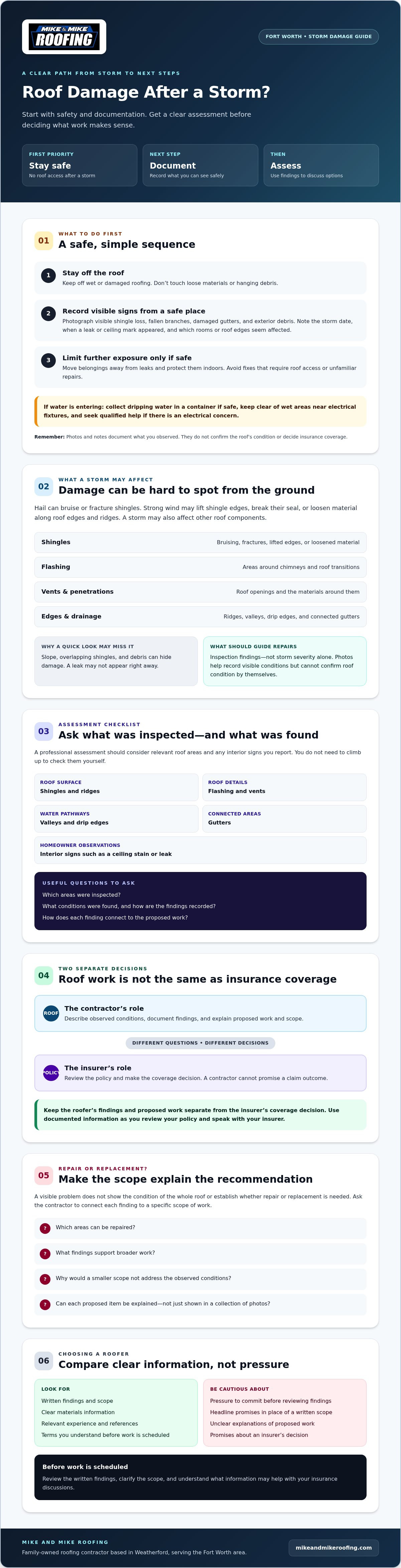
Finding a missing shingle, fallen branch, or ceiling stain after a Fort Worth-area storm can be unsettling. Start with safety, not a ladder. A visible problem is a reason to document what you see and arrange an assessment, but it doesn’t show the condition of the entire roof or establish whether repair or replacement is needed.
- Stay safe. Keep off a wet or damaged roof, and don’t touch loose roofing materials or hanging debris.
- Document what you can see. Take photos from a safe location. Note the storm date, when you noticed a leak or interior mark, and which rooms or roof edges appear affected.
- Limit further exposure only if it’s safe. Move belongings away from leaks and protect them indoors. Avoid temporary fixes that require roof access or unfamiliar repairs.
Prompt documentation records what you’ve observed; it isn’t a final repair recommendation or an insurance coverage decision. For Fort Worth roof repair for storm damage, a professional inspection can help establish which areas are affected. A roofing contractor can describe observed conditions and proposed work, but can’t promise how an insurer will decide a claim.
What can homeowners safely check from the ground?
From a safe spot, photograph visible shingle loss, fallen branches, damaged gutters, and exterior debris. If hail is suspected, the overview of Hail damage to roofs explains how hail can affect property. Don’t climb up to look for marks or move debris. Record the storm date and when leaks or ceiling stains first appeared. These observations help document your concerns, but they can’t replace a professional roof inspection.
What should you do if water is entering the home?
Move belongings away from the leak and collect dripping water in a container if you can do so safely. Keep clear of wet areas near electrical fixtures, and seek appropriate qualified help if there’s an electrical concern. Contact a suitable professional promptly to discuss next steps. Temporary measures should never mean climbing onto a damaged roof, handling loose materials, or attempting repairs you’re not equipped to make.
How Hail and Wind Can Damage a Fort Worth Roof
Hail can bruise or fracture shingles, while strong wind may lift shingle edges, break their seal, or loosen material along roof edges and ridges. A storm can also affect flashing around chimneys and other transitions, vents, and gutters. That doesn’t mean every storm leaves damage. The effect depends on the storm and the roof’s condition.
Some marks may be cosmetic; others may point to a problem with the roof’s ability to shed water or protect underlying materials. Damage can be hidden from the driveway by the roof’s slope, overlapping shingles, or debris. A leak may not show up right away, either. Inspection findings, not storm severity alone, should guide repair recommendations. Photos can help record what’s visible, but they can’t confirm roof condition on their own.
Which roof areas should an assessment cover?
A thorough assessment should consider shingles, flashing, roof penetrations such as vents, ridges, valleys, drip edges, and connected gutters. The roofer should document relevant exterior conditions and consider any interior signs you report, such as a ceiling stain or leak. Don’t climb onto the roof to check these areas yourself. Ask which areas were inspected, what conditions were found, and how the findings are recorded.
How can you tell whether repair or replacement deserves discussion?
Ask the contractor to connect each finding to a specific scope of work. If the proposal recommends broader work, ask which areas can be repaired, what supports the recommendation, and why a smaller scope wouldn’t address the observed conditions. Request an explanation for each proposed item, not just a collection of photos. If replacement becomes a reasonable option, this residential roof installation guide can help you understand the process.
For general safety and recovery steps after a storm, FEMA’s guide to recovering from a disaster is another useful reference. Mike and Mike Roofing is a family-owned roofing contractor based in Weatherford, serving the Fort Worth area. Learn about its residential roofing work and prepare questions about the findings and proposed scope.
Roof Repair or Insurance Claim? Separate the Two Decisions
A roofer’s inspection and estimate answer a different question from your insurer’s coverage review. The contractor documents observed conditions and outlines possible work. The insurer applies your policy to decide whether the damage is covered and what payment, if any, may be available. A repair estimate describes proposed work; an insurance decision determines coverage under your policy.
| Roofer’s inspection and estimate | Insurer’s coverage determination |
|---|---|
| Records observed roof conditions and may include photos or other findings. | Reviews the claim under the terms, limits, and exclusions of your policy. |
| Explains a proposed repair or replacement scope and its basis. | Determines whether the reported damage qualifies for coverage and how the claim is handled. |
| Can answer questions about materials and the work described. | Can explain your deductible, documentation requirements, and claim deadlines. |
A contractor can provide evidence and a written scope, but can’t promise claim approval or dictate the insurer’s decision. Review your policy and ask your insurer about applicable deductibles, notice deadlines, and required documentation before making decisions. Policy terms vary, so check your own documents and contact the insurer directly with questions. FEMA’s guide to recovering from a disaster also offers general guidance on documenting damage and finding assistance.
What documentation can help you discuss storm damage?
Keep dated photos, the storm date or timing, notes about when interior leaks or marks appeared, and contractor findings together. Save estimates and insurer communications in the same file so you can compare information and refer back to what was said. Preserve the evidence as it is. Don’t exaggerate damage, remove relevant materials, or alter records to influence a claim decision.
What questions should you ask before approving work?
Ask what damage the contractor observed, what work is proposed, and which findings remain uncertain. Request a written scope that identifies work boundaries, materials, cleanup, and any applicable warranty terms. Confirm what the estimate includes and excludes before agreeing to proceed. For Fort Worth roof repair for storm damage, clear evidence and specific written answers are more useful than pressure or verbal assurances.
Compare contractors using their written scopes and terms, and review roofing contractor ratings and reviews as part of your research. To learn about Mike and Mike Roofing’s residential roofing work and estimate process, visit its residential roofing information.
How to Arrange Fort Worth Storm-Damage Roof Repair
A clear process helps keep storm concerns from turning into rushed decisions. For Fort Worth roof repair for storm damage, move from documentation to assessment, then review the recommended work before setting a project date.
- Record your concerns. Note the storm date, visible exterior damage, and any interior leaks or stains. Save photos taken from a safe location.
- Request an assessment. Share your observations and ask what the inspection will cover. Confirm how the contractor will communicate its findings.
- Review the written findings. Check which areas were assessed, what damage was observed, and how the proposed work addresses it.
- Agree on the scope. Clarify materials, work boundaries, exclusions, and how unexpected findings will be handled before authorizing work.
- Schedule approved work. Confirm project timing and next steps directly with the contractor. If you’re working with an insurer, keep its coverage decision separate from the contractor’s repair recommendation.
An assessment typically involves reviewing accessible roof areas and related exterior conditions, documenting relevant findings, and discussing possible work. The appropriate scope depends on documented conditions, selected materials, and site-specific requirements. An inspection or estimate can inform your decisions, but it doesn’t guarantee insurance approval.
What should a written roof repair estimate explain?
Look for the affected areas, proposed work, material descriptions, exclusions, and any assumptions behind the estimate. Ask how newly discovered conditions would be documented and discussed before additional work proceeds. If the estimate mentions a warranty, check its wording against the written agreement and applicable manufacturer terms. Don’t rely on a verbal summary if the details affect what you’re agreeing to.
How should you prepare for the roofer’s visit?
Have the storm date, safely collected photos, visible exterior concerns, and leak locations ready. Point out known attic or interior water marks, and make any needed access arrangements. Bring questions about repair versus replacement, cleanup, and how updates will be shared. A short list helps keep the conversation focused and makes it easier to compare the findings with the written scope.
Mike and Mike Roofing is a family-owned, father-son contractor based in Weatherford, serving the Fort Worth area. The company offers free estimates, so you can discuss your concerns and ask what work may be appropriate. An estimate can clarify proposed work; it can’t assure an insurer will cover it.
Choosing a Fort Worth Storm-Damage Roofer You Can Trust
A dependable contractor should make the condition of your roof and the proposed work easier to understand, not harder. For Fort Worth roof repair for storm damage, compare written details and answers rather than relying on bold claims, a rushed estimate, or promises about an insurance outcome.
What are signs of a straightforward roofing contractor?
Look for a roofer who explains what was observed and connects each recommendation to a written scope. They should answer questions without pressuring you to approve work immediately or guaranteeing what an insurer will decide. Before work begins, get clear terms for materials, project communication, cleanup, and any applicable warranty. Confirm warranty language in writing and check which terms apply to the specific materials and work proposed.
- Written scope: The proposal identifies affected areas and describes the work and materials.
- Clear answers: The contractor explains uncertainties and how unexpected findings will be discussed.
- Relevant experience: Ask about experience with residential storm-damage assessments and similar roofing work.
- References and reviews: Check recent, independent feedback and ask for references you can contact.
- Documented terms: Confirm communication, cleanup, project timing, and applicable warranty details before agreeing.
Compare proposals line by line. A low headline price or sweeping promise doesn’t tell you whether the work, materials, and exclusions match another proposal. Ask each contractor to clarify differences so you can judge the actual scope.
When might storm damage involve gutters or other exterior areas?
Ask whether visible gutter damage or drainage concerns should be documented alongside the roof assessment. A damaged gutter doesn’t automatically need replacement, and gutter work may not be included in the roofing scope. Keep each recommendation and its terms clear. For practical drainage follow-up, see this gutter maintenance guidance.
Mike and Mike Roofing is a family-owned, father-son roofing contractor based in Weatherford and serving the Fort Worth area. The company also offers siding, window, patio, and gutter services, which may be relevant if your storm concerns extend beyond the roof. Ask which materials and terms apply to your particular project. Before relying on a company rating or review claim, check current details through the relevant listing and recent customer feedback.
If you’re looking for a practical next step, request a free estimate from Mike and Mike Roofing to discuss your roof and the work under consideration. An estimate can help clarify a proposed scope; it doesn’t determine insurance coverage.
Take the Next Step With a Clear Assessment
After a storm, visible damage is a reason to document concerns and arrange an assessment, not a verdict on the whole roof. A written scope can clarify what a contractor observed and whether repair or replacement is being proposed. Keep that information separate from your insurer’s coverage decision, and ask questions before approving work.
For Fort Worth roof repair for storm damage, Mike and Mike Roofing is a family-owned, father-son contractor based in Weatherford and serving the Fort Worth area. The company offers free estimates, a practical way to discuss your roof concerns without assuming an insurance outcome.
Request a free estimate from Mike and Mike Roofing and take the next step with your questions ready. Bring your observations and ask for a clear explanation of the findings and proposed work.
Frequently Asked Questions
How do I know if my Fort Worth roof has storm damage?
Look for visible signs such as missing or displaced shingles, damaged gutters, fallen branches, roof debris, or new ceiling stains, but don’t climb onto the roof to check. Damage can be hard to see from the ground, and a stain or missing shingle doesn’t reveal the condition of the entire roof. Take photos from a safe location, note when concerns appeared, and arrange a professional assessment in the Fort Worth area.
Can hail damage a roof without causing an immediate leak?
Yes. Hail can affect shingles or other roof components without creating an opening that leaks right away. Some damage may be difficult to spot from the driveway, and water intrusion may not become visible until later. A lack of an immediate leak doesn’t confirm that the roof is undamaged. If hail passed through your area, document what you can safely see and ask a roofing professional to assess the roof.
Should I call a roofer or my insurance company first after storm damage?
Document visible concerns and review your policy, then contact your insurer promptly to ask about notice requirements and claim documentation. You can also request a roofer’s assessment to understand observed conditions and possible work. There isn’t one sequence that fits every policy, so check the “duties after loss” section and ask your insurer about deadlines. A contractor can provide findings, but the insurer determines coverage under your policy.
What should a roof storm-damage estimate include?
A useful estimate identifies the affected areas, describes the proposed work and materials, and explains the work boundaries, exclusions, and assumptions. Ask how unexpected conditions will be documented and discussed before additional work proceeds. If warranty terms are mentioned, request them in writing and confirm what applies to the proposed materials and project. The estimate should make the contractor’s recommendation understandable, not promise insurance coverage or claim approval.
Does storm damage mean I need a full roof replacement?
No. Storm damage doesn’t automatically mean the entire roof needs replacement. The appropriate recommendation depends on what an assessment documents, the extent and location of the damage, and the roof’s overall condition. Ask the contractor to explain which areas can be repaired and why broader work may be necessary. A clear written scope lets you understand the reasoning and compare options before deciding what work to authorize.
How soon should I arrange a roof assessment after a storm?
Arrange an assessment promptly once conditions are safe, especially if you’ve noticed a leak, displaced shingles, or other visible concerns. Waiting may leave damage undocumented or allow water intrusion to continue. Don’t climb onto a wet or damaged roof while you wait. Record the storm date and your observations, and check your insurance policy for notice requirements. Homeowners in Weatherford, Fort Worth, and Aledo should confirm scheduling directly with a contractor.
Can a roofing contractor guarantee my insurance claim will be approved?
No. A roofing contractor can document observed roof conditions, provide photos or findings, and propose a scope of work, but the insurer makes the coverage decision under your policy. Treat promises of guaranteed approval as a reason to pause and ask questions. Request written evidence and clear explanations instead. Whether you’re in Fort Worth, Weatherford, or Aledo, keep contractor recommendations separate from insurer decisions.


