

Texas weather can punish a roof long before a leak shows up inside. The safest roof check isn’t a climb after every storm. It’s a steady routine from the ground, with a professional assessment when warning signs appear. These roof maintenance tips for Texas homeowners help you keep tabs on heat, wind, hail, and drainage without putting yourself at risk. If you’ve wondered what to inspect between major storms, start with the small changes that are easy to miss.
A few minutes each season can help you spot missing or lifted shingles, clogged gutters, debris, dark streaks, and signs of water in the attic or on ceilings. Not every mark calls for a new roof, and you shouldn’t walk on one to get a closer look. This checklist explains what to check around your home, what Texas weather can leave behind, and which warning signs deserve attention from a roofing professional. You’ll also learn when a professional assessment is the safer next step, especially after hail or strong winds.
Key Takeaways
- Use seasonal transitions to guide routine roof checks, then look again from the ground after notable hail or wind.
- These roof maintenance tips for Texas homeowners help separate safe upkeep from signs that call for a professional assessment.
- Check visible shingles, gutters, roof edges, attic conditions, and interior ceilings without climbing onto the roof.
- Record changes over time, and seek professional help when concerns recur, areas are hard to inspect, or visible damage appears.
- Routine observation can catch warning signs early, but it isn't a substitute for repairs or a closer assessment when something looks wrong.
Roof Maintenance Tips for Texas Homeowners: What Routine Care Prevents
A roof doesn’t have to leak before it deserves attention. Loose-looking shingles, debris collecting near roof edges, or dampness in an accessible attic can be early clues that something has changed. Routine maintenance helps you notice those clues and respond before a concern goes overlooked. It means observation and basic upkeep, not a promise that weather won’t damage the roof.
Roof maintenance is regular observation and safe upkeep; roof repair is the work required to correct damage or a failing component. The distinction matters. You can look for visible changes from the ground, but determining what’s happening beneath a shingle or around flashing may require a professional assessment. For a general overview of how roofs are designed to protect a building, see Understanding the basics of roof construction and function.
What counts as routine roof maintenance?
Routine care starts with what you can observe safely. From the ground, look for shingles that appear lifted, missing, or uneven, and note branches, leaves, or other debris gathering along roof edges. Check whether gutters and downspouts appear obstructed, or overflow during rain. If your attic is safely accessible, look for visible moisture, staining, or an unusual change in the space. Don’t enter an area that feels unsafe, and don’t climb onto the roof for a closer look.
Keep upkeep to tasks you can do safely from the ground or another stable, accessible area. Roof access, work near steep edges, and inspections requiring specialized equipment belong to trained professionals. Maintenance can reveal a concern, but it can’t guarantee that a roof will avoid damage or uncover every hidden problem.
Why Texas weather changes the maintenance routine
Texas roofs face changing conditions throughout the year. Prolonged sun and heat make it worthwhile to keep an eye on visible materials, while wind, hail, and heavy rain can leave new signs to notice. After notable weather, make an additional visual check from the ground instead of assuming the roof is fine because there’s no water coming through the ceiling.
Seasonal debris also deserves attention. Leaves, small branches, and other buildup can collect around roof edges and affect how water moves into gutters and downspouts. Look over these areas as seasons change, especially after windy weather, and arrange safe upkeep where needed. The right rhythm depends on the home, surrounding trees, and weather, so a fixed calendar isn’t a substitute for paying attention.
These roof maintenance tips for Texas homeowners apply whether you’re in Weatherford, Fort Worth, or Aledo: observe from a safe position, note changes, and don’t mistake a quick look for a repair. If you see a recurring concern, visible damage, or an area you can’t safely assess, a professional can take a closer look. Routine care helps you recognize when an assessment is needed without taking unnecessary risks.
How Texas Heat, Hail, and Wind Shape a Roof-Care Schedule
A useful roof-care schedule follows the home and the weather, not a rigid calendar. Prolonged sun and heat make seasonal observation worthwhile, while hail, strong wind, and heavy rain can prompt an extra look once conditions are safe. You don’t need to inspect the roof after every passing shower. Focus on meaningful changes, and keep debris and drainage on your radar.
A simple seasonal rhythm for Texas homes
Use spring and fall as practical points for a ground-level visual review. In spring, look for changes that may have appeared through the colder months. In fall, check for leaves and branches collecting near roof edges, in valleys, or around gutters. These are suggested check-in points, not a technical requirement. A home beneath mature trees, an older roof, or one with previous concerns may need closer attention. After severe weather, wait until it’s safe to look around the property.
Let the roof’s exposure and condition set the pace: the more weather or debris it faces, the more often you should look for changes from the ground. Tree cover matters because leaves and small branches can collect where roof sections meet or near drainage areas. Don’t climb up to clear a valley or investigate a blocked spot. If debris is out of reach or water isn’t draining as expected, arrange safe help rather than taking a risk.
Weather-related observations that deserve attention
After notable hail or wind, take a fresh look from the ground once it’s safe. Notice whether shingles appear displaced, roof edges look different, or debris has accumulated in a new place. After heavy rain, check ceilings and accessible attic areas for new water stains or damp spots. These observations can help you describe what changed, but they can’t establish the cause. A stain may have more than one explanation, and a shingle that looks different from the ground needs a closer assessment before anyone can determine what it means.
Keep a simple record of what you see and when you noticed it. A dated note or photo taken from the same safe vantage point can help you compare changes at the next seasonal check. If an observation persists or worsens, that history can be useful when discussing the roof with a professional. For homeowners seeking background on roofing professionals in Texas, the Roofing Contractors Association of Texas offers industry resources.
For roof maintenance tips for Texas homeowners, the steady approach is simple: review the roof in spring and fall, add a ground-level check after significant weather, and adjust based on trees, roof age, and past concerns. If visible changes suggest a roof replacement may be needed, you can request a free roof estimate from Mike and Mike Roofing.
Routine Roof Upkeep or Professional Assessment: Know the Difference
Your job as a homeowner is to notice changes, not diagnose what caused them or attempt repairs on the roof. A stain, loose-looking shingle, or recurring pile of leaves is a reason to pay attention, but none proves a specific defect on its own. The practical distinction is whether you can safely observe or handle the concern from the ground, or whether understanding it requires roof access or a closer professional evaluation.
What homeowners can observe safely
Use a ground-level view or binoculars to check visible roof areas. If it’s safe to enter, look over accessible ceilings and attic spaces for new signs of moisture. Note the date and location of anything unusual, and take a photo from a safe spot if useful. Simple records can make a later conversation clearer. For broader guidance, the National Roofing Contractors Association offers roofing resources.
| Homeowner observation or upkeep | Concern requiring professional assessment |
|---|---|
| Look from the ground for visible changes in shingles or roof edges. | Shingles or other roofing materials appear displaced, or an area looks newly damaged. |
| Notice leaves or branches collecting near roof edges, valleys, or drainage areas. | Debris keeps returning in a hard-to-reach area, or water appears not to drain as expected. |
| Check accessible ceilings and attic areas for new stains or dampness. | Water is actively entering, or moisture marks return or spread. |
| Record where and when a change appeared, without guessing at its cause. | The concern persists, worsens, or can’t be safely viewed from the ground. |
When an observation should not wait for routine upkeep
Active water entry or visibly displaced roofing calls for timely professional assessment, not a spot on the next seasonal checklist. Stay clear of affected areas, and don’t climb onto the roof to cover, move, or inspect anything. If water is entering, protect people and belongings from indoors where it’s safe, then arrange for a roofing professional to assess the situation.
Keep your description factual: “a new ceiling stain near the hallway” is more useful than a guess about the source of a leak. A professional can evaluate the roof and determine what the observation means. Maintenance helps you recognize when to escalate; it doesn’t replace assessment or repair. If an assessment points to more extensive work, that’s different from routine upkeep. The residential roof installation guide explains how a larger roofing project differs from ordinary observation and care.
Use these roof maintenance tips for Texas homeowners as a decision aid, not a diagnostic test. If you’re unsure whether a visible change is minor or needs closer attention, opt for a professional assessment. You don’t need to identify the defect yourself; clear observations and a safe distance are enough to start.
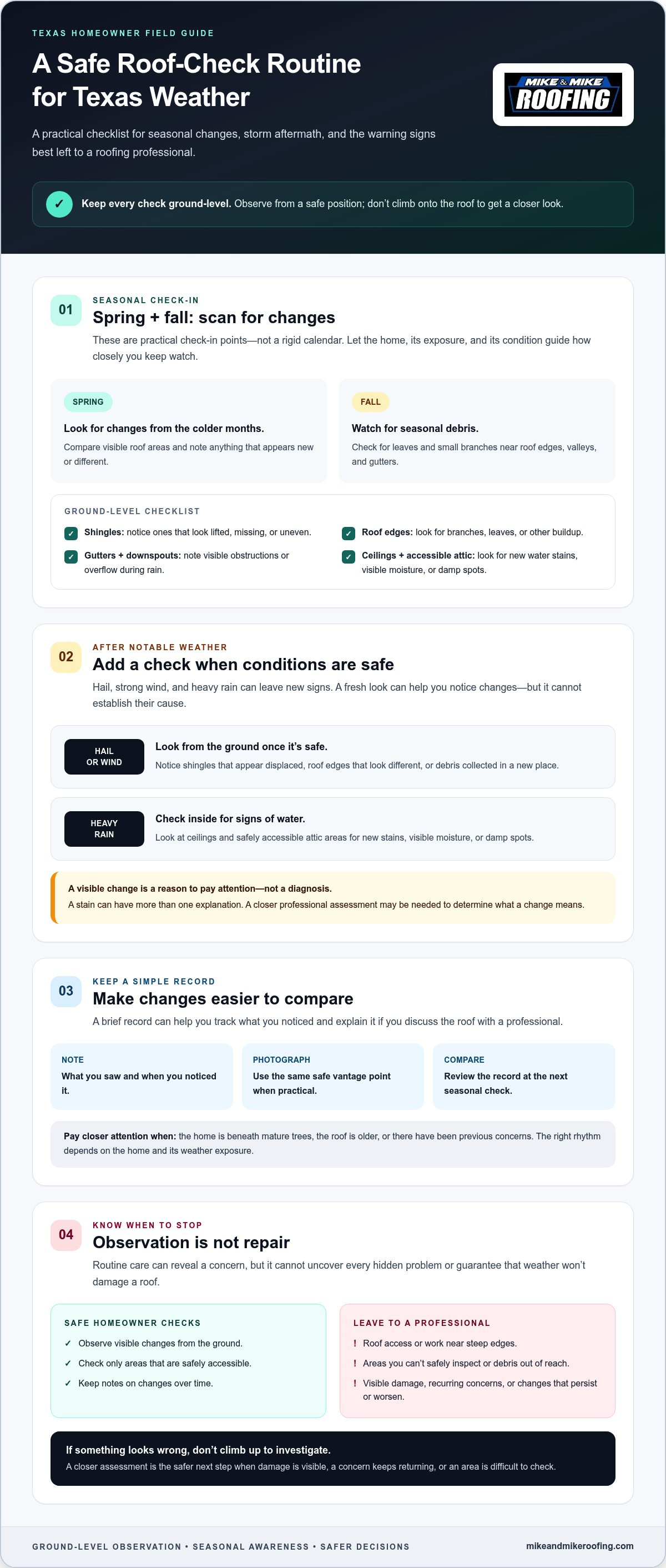
A Practical Roof Maintenance Checklist for Texas Homeowners
Use this checklist during seasonal reviews and after notable weather, once it’s safe to go outside. Keep the inspection to places you can see without stepping onto the roof or leaning over an edge. The goal is to note changes, not diagnose them. If you spot active water entry, visibly displaced roofing, or anything you can’t safely assess, stop and arrange a professional evaluation.
Exterior and drainage checks from the ground
Walk around the home from stable, clear areas. Binoculars can help you see details without climbing a ladder. Look at the roof, edges, and drainage paths, then record anything that appears new or out of place. Don’t reach over roof edges or try to clear debris from a high or unstable position.
- Scan visible roof sections. Note missing-looking, uneven, or displaced shingles, damaged-looking edges, and debris in roof valleys. A ground view can’t confirm what’s wrong, so leave further inspection to a professional if something looks changed.
- Check trees and nearby branches. Notice limbs touching or hanging close to the roof, and record where they are. Don’t climb or attempt to remove a branch near the roof or power lines.
- Look over gutters and downspouts. From the ground, check for sagging sections, visible buildup, or downspouts that appear separated. After rain, note whether water seems to flow away as expected. For more detailed drainage guidance, see gutter maintenance in Weatherford.
- Check the ground around the home. Look for fallen roofing pieces or fresh debris after notable weather. Don’t assume a loose object identifies where it came from; record its location and seek an assessment if it raises concern.
Interior checks and maintenance records
If the attic is safely accessible, make a brief visual check without entering cramped or unstable areas. Compare what you see with your last review. A new mark or unusual daylight is a reason to note the location and seek guidance, not proof of a particular roof problem.
- Look for changes indoors. Check accessible attic areas and ceilings for new moisture marks, staining, or other changes. If water is actively entering, keep clear of the affected area and seek timely professional help.
- Keep a simple record. Write down the date, location, and what you observed. Add photographs only from safe positions, and use the same viewpoint when practical so changes are easier to compare.
- Log notable weather separately. Record the date of hail, strong wind, or heavy rain alongside your observations. This creates a useful timeline, but it doesn’t establish damage or determine insurance coverage.
Repeat the process seasonally and after notable weather, adjusting for tree cover or past concerns. If the checklist turns up a change you can’t safely evaluate, request a free roof estimate from Mike and Mike Roofing.
When Texas Homeowners Should Bring in a Roofing Professional
A professional assessment makes sense when a concern keeps returning, a visible change appears, or part of the roof can’t be viewed safely from the ground. Active water entry or roofing materials that look displaced deserve timely attention, not another place on the seasonal checklist. Don’t climb up to investigate, press on materials, or decide from one symptom what’s wrong. An article can help you recognize when to seek help, but it can’t diagnose the roof.
Some signs are easy to overlook because they don’t immediately cause a drip inside. A ceiling mark that returns after rain, a roof edge that looks different from your last check, or debris repeatedly collecting in an inaccessible valley are all reasons to seek a closer look. They are observations, not proof of a specific defect. A professional can assess the roof and explain whether further work may be needed.
What to prepare before requesting an assessment
Clear, factual notes make a conversation more useful. You don’t need to identify the cause or use technical terms. Share what you saw, where it appeared, and whether it has changed. Keep photos to views taken safely from the ground or indoors. Recent weather can provide context, but hail or wind occurring around the same time doesn’t prove it caused a particular condition.
- Pinpoint the location. Note the room, ceiling area, roof edge, or visible section where you noticed the concern.
- Record timing and changes. Include when you first saw it and whether it has returned, spread, or looked different since.
- Bring safe photographs. Dated images from the ground or inside the home can help show what changed over time.
- Describe recent weather plainly. Mention notable hail, wind, or heavy rain as background, not as a diagnosis or prediction about insurance coverage.
A local next step for Weatherford, Fort Worth, and Aledo
For homeowners in Weatherford, Fort Worth, and Aledo, Mike and Mike Roofing is a family-owned, father-son roofing contractor that installs roofs. If your observations suggest a larger roofing project may be needed, a free estimate can help you consider a practical next step. Share the changes you’ve noticed without climbing onto the roof or trying to diagnose them yourself.
Good roof maintenance tips for Texas homeowners include knowing when routine observation has reached its limit. If a roof project appears to be the next step, request a free roofing estimate from Mike and Mike Roofing. There’s no need to turn a ground-level check into a risky climb. Describe what you’ve observed and let the project be assessed from there.
Make Your Next Roof Check Count
A roof-care routine is most useful when it becomes a familiar habit, not a scramble after every storm. Add a reminder to your household calendar and keep your notes in one place. Over time, that record gives you a clearer baseline for noticing changes and explaining what you’ve observed. It won’t predict every problem, but it can help you make a steadier decision about what deserves attention.
The best roof maintenance tips for Texas homeowners aren’t about doing more or taking risks. They’re about knowing what you can safely observe, keeping track of changes, and recognizing when a closer assessment makes sense. If your observations point to a roofing project, Mike and Mike Roofing can help with roof installation.
Request a free roofing estimate when you’re ready to discuss your roof. A little attention now can help you feel more prepared for whatever the next season brings.
Frequently Asked Questions
Is it safe to pressure-wash an asphalt shingle roof?
Pressure-washing an asphalt shingle roof isn’t a safe DIY maintenance method. The water’s force can disturb protective granules or drive moisture beneath roofing materials, and walking on a wet roof adds a serious fall risk. If algae, dark streaks, or other buildup concerns you, don’t apply a pressure washer or chemicals yourself. A roofing professional can assess the surface and advise on an appropriate approach for the specific roof.
Can I walk on my roof to check for damage?
No, don’t walk on the roof for a routine check. Slopes, loose granules, heat, and damp surfaces can make footing unpredictable, and stepping in the wrong place may damage roofing materials. Use binoculars from the ground, or look from a window if it gives you a safe view. If you can’t see an area clearly, leave it to a professional. The roof’s condition isn’t worth risking a fall to investigate.
What should I do if I notice a ceiling stain after rain?
Take a photo of the stain, note when you first saw it, and check whether it changes after later rain. Move belongings away if they’re at risk, and place a container beneath active dripping only if you can do so safely. Don’t cut into a ceiling or assume the stain marks the exact source of water. If the area is wet, spreading, or actively dripping, arrange a professional assessment.
Does homeowners insurance cover routine roof maintenance?
Homeowners insurance generally isn’t intended to pay for routine upkeep, such as ordinary cleaning or maintenance. Coverage for sudden damage depends on the policy, circumstances, and any applicable exclusions or deductible. If you suspect storm damage, document what you observed and review your policy or contact your insurer about the claim process. Don’t assume a roof concern is covered, or that a maintenance record determines the outcome.
How should I keep a roof maintenance record?
Use a dated note, spreadsheet, or folder to track each check. Record the areas viewed, visible changes, interior moisture marks, and any upkeep completed, then save photos with the date and location in the filename. Keep the original images rather than editing them to imply a cause. For homeowners in Weatherford, Fort Worth, and Aledo, a consistent record can also make conversations about a roofing concern clearer.
Can overhanging tree branches cause roof maintenance problems?
Yes. Branches that touch or hang close to roofing can scrape surfaces, drop leaves and twigs, and create recurring debris that blocks drainage paths. During windy weather, a limb may also break and fall onto the roof. Note which branches are close and where debris collects, but don’t climb or reach over roof edges to handle them. Keep tree work separate from roof checks, and use qualified help for branches that are difficult to reach safely.


