

What is the best time of year to replace roof in Texas? Often, it depends less on the calendar than on your roof’s condition and the local forecast. Fall may bring milder working weather, but a leak or storm damage can make waiting for a preferred season a poor choice. Around Weatherford, Fort Worth, and Aledo, heat, rain, hail, and shifting schedules can all affect a replacement, so no single month works for every home.
Before planning a major project, compare seasonal weather with the roof’s condition, the work involved, and your household schedule. This guide explains the trade-offs of replacing a roof in each season, when damage should take priority over preferred timing, and how to choose a workable window. You’ll also find practical steps for preparing your home and discussing the project with a local residential roofing contractor.
Key Takeaways
- The best time of year to replace roof in Texas depends on roof condition, local weather, scheduling, and your household’s needs.
- Compare seasonal conditions, but don’t treat any season as a guarantee of suitable weather.
- A roof with active leaks or visible damage may need attention sooner than your preferred season.
- Record leaks, visible damage, and previous repairs to make a roof assessment more useful.
- Discuss the roof’s condition, project scope, forecast, and scheduling before setting a replacement window.
When Is the Best Time of Year to Replace a Roof in Texas?
No single season works best for every Texas roof. The practical choice depends on the roof’s condition, the local forecast, scheduling, and what works for your household. If the roof is sound, you may have time to plan around those factors. Active damage can make waiting for a preferred season unwise.
A suitable replacement window is a period when the forecast and project schedule allow the work to be planned responsibly around the roof’s needs. It does not mean perfect weather is guaranteed. Rain or wind can affect plans in any season, so a workable forecast close to the project may matter more than choosing a month well in advance.
Why Texas homeowners should think in weather windows
Roof replacement takes place outdoors, so rain, wind, heat, and storm forecasts all matter. Rather than assuming an entire season will be favorable, look for a suitable forecast as the project approaches and keep some flexibility in your schedule. Texas has distinct climate regions, and seasonal conditions vary across the state. The Climate of Texas overview provides context for those regional differences.
For North Texas homeowners, spring storm activity is one factor to account for. A changing forecast may affect the work schedule, so avoid building plans around the assumption that conditions will stay clear. Household commitments and contractor scheduling also shape the window that works for your project.
When the roof’s condition matters more than the calendar
A leak, missing shingles, or visible damage is a reason to arrange an assessment rather than wait for a preferred season. Water entering the home can lead to further damage, and storm damage may need prompt attention. What you can see from the ground is a warning sign, not a reliable assessment of the roof’s full condition or whether replacement is needed.
Write down where you’ve noticed leaks or visible changes, and note any previous repairs. Share those details during an assessment to help clarify whether you have time to plan around the forecast or whether the roof needs more timely attention. The residential roof installation guide explains what homeowners can expect from the installation process.
Once the roof has been assessed, weigh the findings against the forecast, scheduling options, and your household’s needs. If the roof is sound, you may have room to plan. If there’s active damage, waiting only for a season you consider ideal may leave the home exposed longer than necessary. For homeowners in Weatherford, Fort Worth, and Aledo, an estimate can help clarify the roof’s condition and the scope of a potential replacement before setting a date.
How Texas Seasons Affect Roof Replacement Conditions
Season can influence the work plan, but it cannot guarantee a clear stretch of weather. In North Texas, consider rain, wind, heat, cold, and how much flexibility you have if the forecast changes. NOAA climate information and National Weather Service forecasts can help you understand regional patterns and check conditions near your home. Use local forecasts as planning tools, not as a statewide rule about what every season will bring.
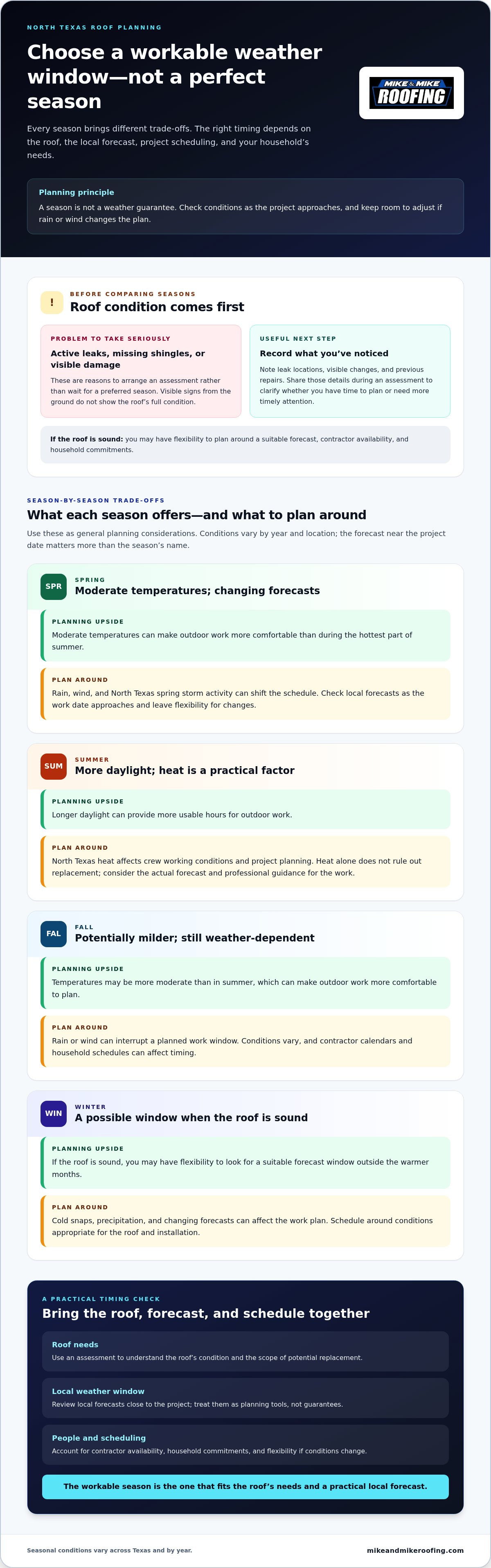
The table below summarizes general planning considerations. Conditions vary by year and location, so the forecast near the project date matters more than the season’s name.
| Season | Potential planning benefits | Weather and scheduling cautions |
|---|---|---|
| Spring | Moderate temperatures can make outdoor work more comfortable than during the hottest part of summer. | Rain, wind, and storm forecasts can shift. Leave flexibility in the schedule and review local forecasts as the work date approaches. |
| Summer | Longer daylight can provide more usable hours for outdoor work. | North Texas heat is a practical consideration for crew work and project planning. Heat alone doesn’t rule out replacement, but the forecast and safe working conditions matter. |
| Fall | Temperatures may be more moderate than in summer, which can make outdoor work more comfortable to plan. | Conditions still vary, and rain or wind can interrupt a planned work window. Contractor calendars and household schedules may also affect timing. |
| Winter | A sound roof may give a homeowner flexibility to look for a suitable forecast window outside warmer months. | Cold snaps, precipitation, and changing forecasts can affect the work plan. Schedule the project around conditions appropriate for the roof and installation. |
Spring and summer: changing forecasts and heat
Spring conditions in North Texas can change quickly. Check the local forecast and leave room to adjust the schedule if rain or storms approach. A spring date does not guarantee suitable weather. Summer brings heat, which affects working conditions and planning, but it is not an automatic reason to avoid replacing a roof. Plan around the actual forecast and professional guidance for the work.
Fall and winter: planning around workable conditions
Fall may offer a break from summer heat, while winter can be an option if the roof is sound and timing is flexible. Neither season is universally ideal. Cold, precipitation, and changing conditions may narrow the workable window, so base the decision on the specific roof and forecast rather than a statewide rule. The best time of year to replace roof in Texas is the season that fits the roof’s needs and a practical local weather window.
For homeowners planning a replacement near Weatherford, a roof assessment can turn seasonal considerations into a project-specific plan. Request a free estimate from Mike and Mike Roofing to discuss your residential roof and timing.
Is It Better to Replace a Roof in Spring, Summer, or Fall?
Spring, summer, and fall each bring different planning trade-offs. Compare them by asking three questions: Can your schedule accommodate a change if the forecast shifts? How might the work affect your household routine? And how urgently does the roof need attention? These answers help distinguish a convenient season from a practical project window.
- Spring: If the roof is serviceable, you may have time to work around rain or storm forecasts. A flexible schedule can make it easier to coordinate a date with fewer conflicts at home. If you’ve noticed damage, don’t let the season determine how long to wait for an assessment.
- Summer: Account for heat and household routines, including whether someone needs to be home or areas around the house need to stay clear. A forecast change can still affect the plan. Summer is not automatically unsuitable, but actual conditions matter.
- Fall: Some homeowners prefer to plan during milder weather, but local forecasts and contractor calendars still vary. If your roof is sound, you may be able to choose a date that fits family or work commitments. If it shows signs of damage, get its condition assessed before prioritizing convenience.
These are planning considerations, not guarantees of a smooth schedule or better pricing. Contractor availability can change with local demand, and a season that suits one household may not suit another. The best time of year to replace roof in Texas is a project-specific decision: weather affects the work window, while the roof’s condition determines how much choice you have.
When a flexible schedule makes seasonal planning easier
If the roof appears serviceable, plan early enough to coordinate access, household routines, and project updates. Think through parking, pets, and commitments that may make it difficult to be home. Flexibility can help you consider a suitable forecast without treating a preferred season as a guarantee. It is not a reason to postpone an assessment if you’ve noticed damage.
When waiting for a preferred season is the wrong call
An active leak or visible storm damage calls for timely professional attention, not a calendar-based delay. That does not automatically mean the whole roof needs replacement. An assessment helps establish its condition and the appropriate scope. If a storm has raised concerns, the roof inspection for storm damage guide can help you understand what to look for and why a professional evaluation matters.
Keep the decision practical. If the roof is sound, weigh the forecast and your household schedule against contractor availability. If it shows signs of damage, have its condition assessed first, then plan the work around what the roof needs and what the weather allows.
How to Choose a Roof Replacement Window in North Texas
Start with the roof, not the calendar. In North Texas, use this sequence to move from uncertainty to a workable replacement window:
- Assess the roof’s condition. Write down leaks, missing or damaged shingles you can see, and previous repairs. Share these observations during a professional assessment instead of trying to diagnose the roof from the ground.
- Define your timing constraints. Consider household commitments, property access, and dates when work would be especially disruptive. If the roof has active damage, prioritize an assessment instead of waiting for a preferred season.
- Review the forecast. Check local forecasts as the potential work period approaches. Rain, wind, or other changing conditions may affect scheduling. A forecast can guide planning, but it cannot guarantee uninterrupted work.
- Plan the project. Use the assessment, your schedule, and expected conditions to discuss a practical start window and the scope of work.
This process helps answer the question of the best time of year to replace roof in Texas for your home. The right window reflects what the roof needs and what can be planned responsibly, not just a date that looks good on the calendar.
Prepare the home and your schedule before work begins
As the project is planned, think through logistics around your home. Clear access to the work area, move vehicles where needed, and put away outdoor items that could get in the way. Make arrangements for pets and consider how roofing work may affect calls, remote work, or children’s schedules.
Discuss how weather-related schedule changes will be communicated. A shift in the forecast may require an adjustment, so knowing how you’ll receive updates can make coordination easier. For a broader picture of residential roof installation, review the residential roof installation guide.
Use an inspection to turn uncertainty into a plan
An assessment helps distinguish a roof that can be scheduled around household and weather preferences from one with concerns that need timely attention. Bring notes on leaks, visible damage, and earlier repairs. Ask for an explanation of the roof’s condition, the recommended scope, and an estimate so you can make a decision with the relevant details in front of you.
If you’re planning a residential replacement in the Weatherford area, request a free roof estimate to discuss your roof and a practical window for the work.
Plan Your Texas Roof Replacement With a Local Roofing Contractor
A seasonal guide can help you think ahead, but a roof assessment turns general advice into a plan for your home. Discuss the roof’s condition, the work it may need, local forecast considerations, and scheduling options that fit your household. This keeps the decision grounded in the roof itself rather than a date chosen by season alone.
For homeowners in Weatherford, Fort Worth, and Aledo, Mike and Mike Roofing is a family-owned, father-son contractor focused on residential roofing. The company installs residential roofs using premium Owens Corning materials. When discussing replacement timing, cover practical questions such as:
- What condition is the roof in, and are there signs that call for prompt attention?
- What work is included in the proposed project scope?
- How should the local forecast factor into choosing a workable window?
- What scheduling considerations should your household plan around?
These details help keep the decision practical. The best time of year to replace roof in Texas is not simply the season with the most appealing reputation. It is a workable period for the specific roof, based on its condition, the forecast, and the needs of the people living under it.
What to expect from a roof replacement estimate
An estimate should help you understand the proposed scope and timing considerations. Review what the assessment found, what work is recommended, and how changing weather could shape scheduling. Share any notes you’ve made about leaks, visible damage, or previous repairs. A clear explanation gives you a better basis for deciding whether your roof allows time to plan or needs more timely attention.
Keep the conversation focused on your home. A general seasonal recommendation cannot account for every roof, forecast, or household calendar.
Get a local assessment for your Weatherford-area home
North Texas weather can shift, so local conditions matter when planning a project. A forecast can help you choose and adjust a work window, but it cannot guarantee uninterrupted conditions or a fixed start date. Pair it with a professional assessment. If the roof is sound, you may have more room to plan. If you see signs of damage, let the roof’s needs guide how promptly you act.
Mike and Mike Roofing brings a local, family-owned perspective to residential roof installation in the Weatherford area. Start with an assessment and estimate, then use the findings to make a practical timing decision. Request a free roof estimate.
Make Your Next Roofing Decision With Confidence
Don’t let the search for a perfect date hold up a useful decision. Set a practical target window, note any changes in the roof that need attention, and use an assessment to decide what should happen next. That is a clearer starting point than choosing a season and hoping it fits your home.
The best time of year to replace roof in Texas is the time that makes sense for your roof’s condition and a workable project plan. If you’re weighing whether to plan ahead or move forward sooner, a project-specific estimate can help clarify your next step.
Mike and Mike Roofing helps homeowners plan residential roof installation in the Weatherford area. Request a free roof estimate to discuss your home and timing.
Frequently Asked Questions
What is the best month to replace a roof in Texas?
There isn’t one best month for every Texas home. The best time of year to replace roof in Texas depends on the roof’s condition, local forecasts, and project scheduling. If the roof is sound, choose a target month while leaving flexibility in case the forecast shifts. If you notice leaks or damage, arrange an assessment instead of letting a preferred month determine when you act.
Is fall the best time to replace a roof in Texas?
Fall may suit some projects, but it is not automatically the best choice statewide. A mild forecast can make a particular stretch useful for planning, while rain or wind may change the picture. For a home in North Texas, check local conditions near the proposed work period and consider whether the roof can wait. Season is one planning factor, not a guarantee of suitable weather or timing.
Can you replace a roof in Texas during the summer?
Yes, roof replacement can be planned during summer, though heat is a practical consideration for the crew and household. Before settling on dates, discuss how changing conditions may affect the plan and how updates will be communicated if the forecast shifts. If you’re home during the work, consider where daily routines may be affected. Summer alone does not determine whether a specific project can proceed.
Should I wait until spring to replace my roof?
Only if the roof’s condition gives you room to wait. If you’re unsure, note indoor signs such as a new ceiling stain or dampness after rain, and arrange an assessment rather than relying on the calendar. If no urgent concerns are found, you may have more freedom to plan ahead. If damage is present, a professional can help clarify the next step before you decide to delay.
Does rain delay roof replacement in Texas?
Rain can affect the schedule, depending on local conditions and the work planned. A forecast helps with preparation, but it cannot promise work will proceed without interruption. Before the project, discuss how weather-related changes will be shared and what the revised plan may involve. For example, clarify how you’ll receive an update if rain affects a planned workday instead of assuming a dry forecast guarantees the schedule.
What happens if a storm damages my roof before replacement?
Document what you can see from the ground and arrange a professional assessment. Don’t climb onto the roof, especially if shingles or other materials appear loose. Note where you see damage and whether you’ve noticed water inside, such as a ceiling stain or active dripping. Share those details when requesting an assessment so the roof’s condition and appropriate next steps can be evaluated.
How far ahead should I plan a roof replacement in Texas?
Start planning once you suspect the roof may need replacement, especially if you have a preferred date or household commitments to work around. Gather records of earlier repairs and note dates that would be difficult for your household. Then discuss the roof’s condition, project scope, and scheduling. Timing depends on the project and current conditions, so a fixed statewide lead-time estimate won’t fit every home.


