

What if the shingle color that looks right on a sample feels wrong across your entire roof? A small swatch can’t show how a blend will look over a large surface, and online images don’t capture the changing light around your home. Learning how to choose a roofing shingle color means looking beyond the sample.
It’s reasonable to want a shade that suits your home without clashing with the siding, brick, stone, or trim you’re keeping. You can make the comparison more reliable with a simple process: assess the shingles against your home’s fixed exterior features, then compare samples in different daylight.
Local light and surroundings matter in Weatherford, Fort Worth, and Aledo, too. Look at the roof as part of the whole home, not as an isolated surface. A roofing professional can help you consider color alongside the design and materials planned for a replacement.
Key Takeaways
- See how roof area, slope, and shadows can change the way a shingle shade appears on your home.
- Use your home’s architectural style and fixed exterior finishes to narrow color choices before comparing samples.
- Compare light, medium, and dark shades by their visual effect and how they coordinate with your exterior.
- Follow a five-step process for how to choose a roofing shingle color, from identifying fixed finishes to reviewing the look at full scale.
- Consider color alongside roofing materials and design so your choice fits the complete roof replacement.
How Roofing Shingle Color Changes Your Home’s Overall Look
Shingle color is a major visible finish that shapes how the roof relates to the rest of your home’s exterior. Depending on its contrast with the walls, trim, and other finishes, it can read as a quiet backdrop or a strong visual feature. The right choice isn’t simply the shade you like best. It’s the shade that works with the house you have.
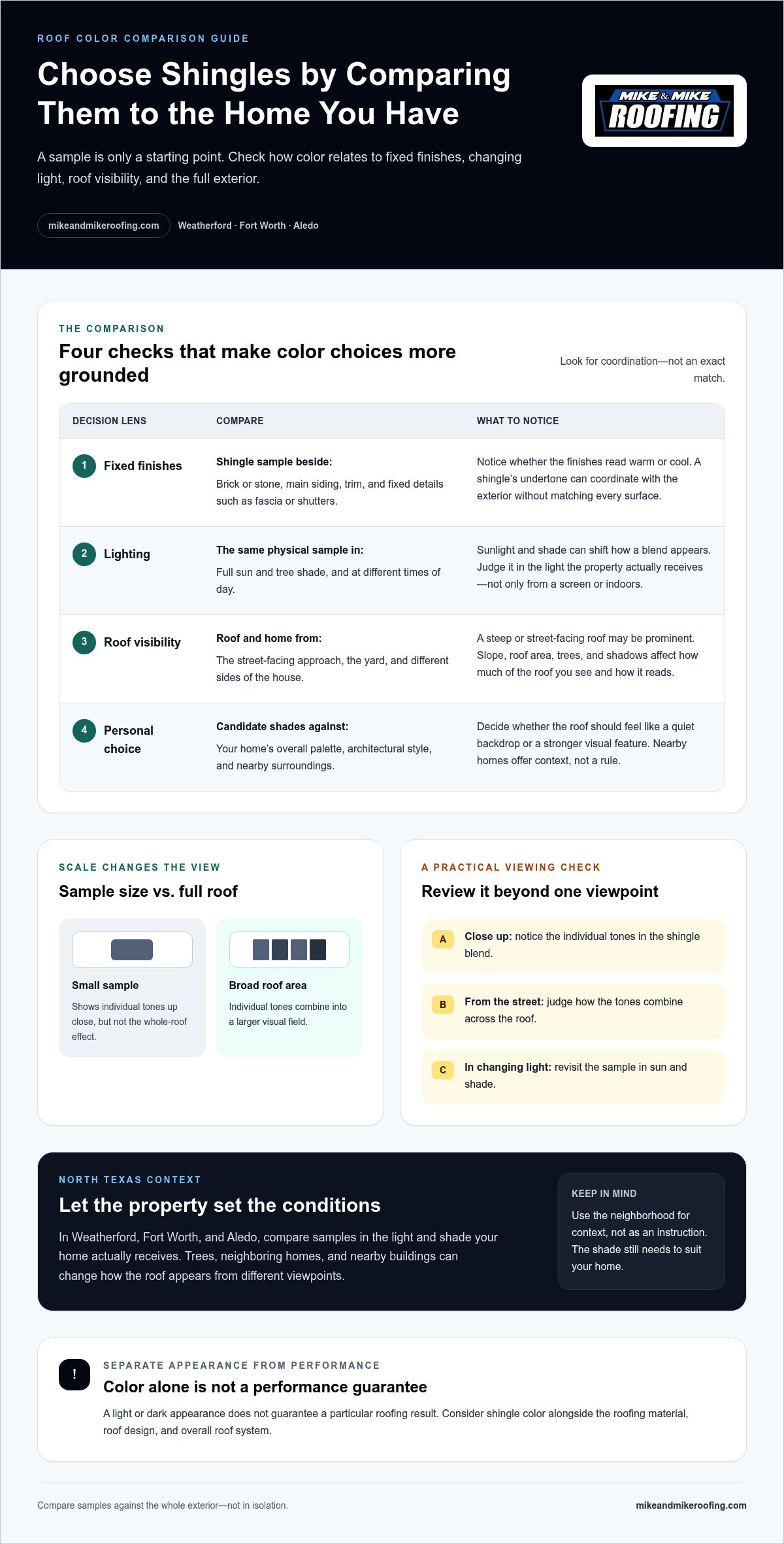
Scale changes the view. A color that seems subtle on a sample can become much more noticeable across a broad roof. The roof slope affects how much of that surface you see from the street, while ridges, valleys, and overhangs create areas of sun and shadow. Nearby trees, neighboring homes, and the direction the house faces can also change how the roof looks from different viewpoints.
Personal preference still matters. If you’re drawn to a popular neutral, use it as a starting point, not a verdict. A color that looks balanced on one home may feel too stark or too warm beside another home’s brick or siding. Ask whether the shade supports the exterior’s overall balance while still feeling like your choice.
Why a shingle sample can look different on the roof
A small sample can suggest a roof color, but it can’t show exactly how that color will read across a roof. Up close, you may notice individual tones in a shingle blend. From the street, those tones combine into a larger visual field. Sunlight, shade, and time of day can shift the appearance, too. Compare physical samples outdoors against your home, and revisit them in different light instead of relying only on screens.
Start with the exterior features that will stay
Before narrowing down shingle colors, identify the exterior finishes that aren’t part of the replacement. Start with:
- Brick or stone
- Siding and trim
- Exterior details such as fascia, shutters, or fixed accents
Look for compatible undertones rather than trying to match every finish exactly. For example, a roof with a warm cast may sit more comfortably beside warm-toned brick, while a cooler-looking blend may coordinate better with cooler siding or stone. These are visual cues, not rigid rules. The full combination matters more than matching a single surface.
Make the comparison repeatable. Photograph the front and sides of your home in daylight, then note which finishes are staying and which may change during the roof replacement. Around Weatherford, Fort Worth, and Aledo, compare samples in both full sun and tree shade if those conditions affect how you see your home. This gives you a grounded starting point for how to choose a roofing shingle color, rather than relying on memory or a screen image.
What to Consider Before Choosing a Roofing Shingle Color
Before settling on a shade, consider the home as a whole. Architectural style can help you judge whether the roof should blend quietly with the exterior or provide stronger contrast. A traditional brick home, a house with broad siding surfaces, and a home with several exterior materials may each call for a different balance. Start with what’s already there, then narrow the choices to colors that support the house rather than compete with it.
Roof visibility matters, too. A steep roof or street-facing elevation may make the shingles a prominent part of the view. A lower roof partly screened by trees may appear less dominant from the street. Think about the views you see most often, including the front approach and the yard, and notice how trees, neighboring homes, and nearby buildings frame the roof.
Use this checklist: fixed finishes, lighting, roof visibility, and personal preference. These factors give you a practical way to judge options without treating a trend or a neighbor’s choice as a rule.
Coordinate shingles with brick, siding, and trim
Compare possible colors beside the largest permanent surfaces first, such as a broad brick wall, stonework, or the main siding color. Then check how the roof relates to trim and smaller accents. You’re looking for coordination, not an exact match. A roof that repeats one subtle undertone can tie the exterior together without making every finish look identical.
Notice whether the fixed surfaces feel warm or cool in natural light. If brick has a warm cast but the shingle sample looks distinctly cool, the combination may feel disconnected. That doesn’t automatically rule it out, but it’s a reason to compare the full palette carefully. The roof color should relate to the dominant exterior finishes while leaving trim and architectural details easy to distinguish.
Account for North Texas light and neighborhood context
For homes in Weatherford, Fort Worth, or Aledo, assess samples in the light and shade the property actually receives. Compare them on a sunny part of the exterior and in a shaded area, if available. Trees can change how a roof reads from one side of a home to another, while the street-facing elevation may show a different balance of roof and wall than the rear.
Look at nearby homes for context, not instructions. The surrounding streetscape can help you judge whether a candidate shade will stand out sharply or sit comfortably among neighboring exteriors. But nearby preferences aren’t rules, and the right choice still needs to suit your house. If you’re considering neighborhood requirements, review the applicable guidance for your property rather than assuming nearby homes share the same rules.
Keep appearance separate from performance claims. Color alone doesn’t determine how a roof performs; the roofing material and overall roof system matter. Don’t treat a light or dark appearance as a guarantee of a particular result. During a replacement, consider the sample alongside the roof design and material options. That context is useful as you work out how to choose a roofing shingle color.
For a residential replacement in the area, Mike and Mike Roofing’s residential roof installation brings the color discussion into the context of the complete roofing project.
Light, Medium, or Dark Shingles: How to Compare the Tradeoffs
Light, medium, and dark are useful starting points, not precise product categories. They describe broad visual ranges, not named shingle lines or guaranteed performance rankings. No shade is best for every home. The right direction depends on the exterior finishes, how much of the roof you see, and whether you want it to blend in or stand out.
Use this comparison to decide which color family is worth examining. Then compare actual samples with your home’s exterior. A color’s appearance can vary between products, so don’t assume every shade in one category will look alike.
| Shade range | Typical visual effect | Coordination considerations |
|---|---|---|
| Light | Can give the roof a softer, less visually weighty appearance. | Consider how it sits beside pale siding, light stone, and trim, and whether it blends too closely with the exterior. |
| Medium | Often provides a measured visual balance between the roof and walls. | Compare its undertones with brick, stone, siding, and trim to see whether it ties the palette together. |
| Dark | Can create stronger contrast and draw attention to the roof. | Check whether the contrast complements the exterior or makes the roof feel visually dominant. |
When lighter shingles may suit the home
Lighter shades may fit an exterior with pale siding, light-colored stone, or a bright overall palette, especially if you want the roof to feel less prominent. But a light roof can blend into light walls, too, so check whether the roofline remains visible. Set a physical sample outdoors against the house and view it in the light the roof receives before deciding.
Don’t choose a lighter shade based on an assumption that color alone will deliver a particular indoor temperature or energy-bill result. Those outcomes aren’t guaranteed by appearance. Treat this as a visual choice, and consider the roofing material and complete roof design separately.
When medium or darker shingles may fit better
Medium shades can provide a middle ground if a light roof feels too pale and a dark one feels too bold. Deeper shades may create clear contrast against light siding, trim, or masonry. That contrast can sharpen the roofline, but it can also make a broad, highly visible roof a stronger feature of the home.
Before treating contrast as a benefit, compare the shade beside the fixed finishes from more than one viewpoint. A dark sample may look balanced next to light siding yet feel disconnected beside warm brick. Likewise, a medium shade may appear understated on a small sample but carry more visual weight across the whole roof. Don’t use color alone to predict resale value or roof performance.
For how to choose a roofing shingle color, first decide what you want the roof to do visually: recede, balance the exterior, or create contrast. Then compare available samples against the home rather than relying on the category label. The house itself is the final test.
How to Choose a Roofing Shingle Color: A Five-Step Process
A repeatable process makes it easier to move from “I like that shade” to a choice that works with the house. Keep the comparison focused: decide what is staying, narrow the options, then judge the finalists in context. These steps can help you compare samples before deciding on a roof replacement.
- Step 1: Record the fixed finishes. List the brick, stone, siding, trim, and other exterior details that will remain after the roof replacement. Note their dominant colors and whether they read as warm, cool, or neutral. This gives you a clear reference point and keeps a striking sample from distracting you from the whole exterior.
- Step 2: Decide what you want the roof to do visually. Choose whether you want it to blend with the home, balance the exterior, or stand out with contrast. There’s no right answer for every house. Consider the architectural style and the amount of roof visible from the street, then write down the effect you’re aiming for.
- Step 3: Shortlist broad color families. Start with a small group of light, medium, or dark directions that suit the fixed finishes and your visual goal. Don’t compare every available option at once. Use the same clear photo of your home or the same viewing position for each candidate, so the exterior stays a consistent reference as you narrow the list.
- Step 4: Compare actual samples outdoors. Place each sample near the roofline where it can be viewed beside the home, without putting yourself or anyone else on the roof. Check it in direct light and shade, then look from the street or another realistic viewing distance. If possible, compare at more than one time of day. Make brief notes so your impressions don’t blur together.
- Step 5: Review the whole-roof effect. Step back and judge how the chosen color family would read across the complete roof, not just within the sample’s edges. Consider the roof’s visible slopes, the front elevation, and how the shade relates to the home from your usual approach. Revisit the finalists on another day before settling on one. Discuss the samples in the context of the planned replacement, including roof design and material selection.
This process keeps the decision grounded in your home rather than a screen image or a quick first impression. For a wider view of the project, review the residential roof installation process alongside your color choice.
If you’re planning a roof replacement in the Fort Worth area, request a roof replacement estimate and discuss how sample colors fit the complete project.
Make Your Shingle Color Decision Part of a Sound Roof Replacement
Shingle color is one part of a roof replacement, not a decision that should stand alone. Material selection, roof design, and appearance belong in the same conversation. A color sample may look appealing, but the choice also needs to make sense for the planned roof and the exterior finishes you’re keeping. Looking at these pieces together helps you make a considered decision instead of choosing by color alone.
Mike and Mike Roofing is a family-owned, father-son roofing contractor serving Weatherford, Fort Worth, and Aledo. The team installs residential roofs using premium Owens Corning materials. Its A+ BBB rating and five-star customer reviews give homeowners a picture of the company’s standing and customer feedback.
Bring color preferences into the project discussion
Bring exterior photos and a short list of the finishes that will remain, such as brick, siding, stone, and trim. If you’ve narrowed your preference to a few shades, share that, too. The team can discuss how samples appear in the context of your home and roof design, connecting the visual choice to the larger replacement project.
Consider material alongside appearance. Think about the roofing material planned for the project, then weigh color as part of that overall selection. Owens Corning shingle durability information can help you consider material characteristics as you discuss your options. Keep the decision specific to your home: what suits one property may not fit another.
Take the next step with a local roofing team
A sound color decision follows a straightforward path: coordinate the options with fixed exterior finishes, compare samples outdoors in realistic light, and judge the overall effect from a distance. If the samples are difficult to compare, Mike and Mike Roofing can discuss them as part of a planned residential roof installation.
That’s the practical answer to how to choose a roofing shingle color: consider the whole home and the complete replacement, not just a small swatch. Mike and Mike Roofing serves homeowners in Weatherford, Fort Worth, and Aledo, Texas, with residential roof installation using premium Owens Corning materials.
If you’re planning a residential roof project, request a free estimate and discuss your color preferences as part of the project.
Move From Color Shortlist to a Confident Plan
You don’t need to have every detail settled before discussing a roof replacement. Bring your leading color choices and exterior photos into the project conversation, then consider how each option fits the roof design and materials being planned. That gives you a practical next step without forcing a decision based on a small sample or an online image.
The best answer to how to choose a roofing shingle color is one that feels right on your home and makes sense as part of the full project. If you’re ready to talk through your plans, request a free roofing estimate and bring your questions along. A clear conversation can help turn your preferences into a workable direction for the replacement.
Take your time with the choice, then move ahead with confidence. Your home’s next roof can reflect your taste while serving the needs of the project.
Frequently Asked Questions
Can I choose a shingle color from an online image?
Use online images to narrow your preferences, not to make the final choice. Screen brightness and color settings vary, and a photo may show shingles under lighting that’s different from your home’s. Once you have a few possibilities, compare physical samples against your exterior. View them from the street and near the house, in sun and shade. This gives you a more useful basis for deciding how to choose a roofing shingle color.
Do dark roof shingles make a house hotter?
Shingle color can affect how a roof absorbs sunlight, but it doesn’t determine indoor temperature on its own. Roof construction, ventilation, insulation, and other conditions also contribute. A lighter-looking shingle isn’t a guarantee of lower energy bills. If heat performance is a priority, consider the roofing system as a whole and review relevant product information alongside appearance. That way, you’re weighing the complete project rather than relying on color alone.
What shingle color hides dirt and discoloration best?
No single shingle color hides every kind of dirt or weathering. Dust, tree debris, nearby shade, and the roof’s surroundings all affect how visible marks may be. If trees overhang one roof slope, compare how sample colors look against that setting as well as from the street. A shade that blends with the home may make some changes less noticeable, but it won’t remove the need to care for the roof.
Should roof shingles match the siding or the trim?
No, shingles don’t need to match siding or trim exactly. Aim for a relationship that feels balanced with the whole exterior. For example, if your house has several siding colors or contrasting trim, consider which surface dominates from the street before deciding what the roof should relate to most. Check samples beside the main wall color and then against trim. This can help you avoid a roof that either disappears or competes with the details.
Can a roof color affect my home’s appearance or resale appeal?
Yes, roof color can influence curb appeal because it contributes to the home’s overall exterior impression. That doesn’t mean a particular shade guarantees a higher resale price or appeals to every future buyer. A practical choice suits the home’s architecture and exterior finishes rather than being selected solely because it’s popular. If you’re considering a future sale, think about whether the color feels cohesive and broadly compatible with the property.
How can I tell what shingle color will look like on my whole roof?
You can’t know the full-roof effect from a small sample alone, but you can make a more informed comparison. Set physical samples near the roofline, then view them from the street or another spot where you usually see the home. Take photos from the same viewpoint for each option, and compare those images alongside the samples. If you’re planning a replacement in Weatherford, Fort Worth, or Aledo, include the sample review in the project discussion.
Do HOA rules or neighborhood guidelines limit shingle colors?
They may, depending on the requirements that apply to your property. Don’t assume a color is permitted or restricted just because nearby homes use it; their circumstances or guidelines may differ. Before finalizing a selection, review the written documents that govern your property and any applicable local requirements. This step can prevent you from choosing a shade that conflicts with a rule. Requirements vary, so avoid relying on a general assumption about a particular neighborhood.


