

If you peel back a single panel of your home's current exterior, would you find solid wood or a crumbling mess of rot and termite damage? Many homeowners in Weatherford and Fort Worth live with this uncertainty, fearing that a necessary upgrade will lead to a financial ambush. It is frustrating to stare at a confusing quote and wonder if you are paying for quality or simply padding a contractor's pocket. We understand that your home is your most significant investment, and protecting it from the brutal North Texas heat requires more than just a fresh coat of paint.
This guide provides a straight-shooting breakdown of the home siding installation cost you can expect in 2026. We won't hide behind marketing fluff or vague estimates. Instead, you will get a clear look at how different materials like fiber cement and vinyl hold up against our local climate and what actually drives the price of a professional job. We will also help you identify the hidden factors, such as structural repairs and permit fees, that often catch people off guard. By the end, you will know exactly how to spot a fair estimate and ensure your home stays secure for the long haul.
Key Takeaways
- Understand how the "per square" pricing model works to accurately estimate the total home siding installation cost for your specific floor plan.
- Compare the resilience of fiber cement against standard vinyl to determine which material provides the best protection against North Texas hail.
- Recognize how architectural complexities like dormers and old siding removal can shift your final project estimate.
- Evaluate the long-term ROI of new siding, including how it lowers cooling bills during our intense summer months.
- Learn to spot the red flags of a low-ball quote by insisting on a detailed, professional line-item estimate.
Understanding the Baseline Costs for Siding Replacement
Setting a budget for a whole-house exterior renovation requires a clear look at local market conditions. In North Texas, your home siding installation cost is influenced by more than just the size of your walls. A standard 2,000 square foot home in the Weatherford or Fort Worth area involves a significant investment, covering everything from the removal of old boards to the final trim work. While national websites might provide a broad range, local realities like DFW supply chain shifts and high demand for skilled labor can move those numbers significantly.
The primary function of Siding (construction) is to protect the building's envelope from the elements. In our region, those elements are particularly harsh. Cheap materials often lead to expensive regrets. In the Dallas-Fort Worth hail belt, standard materials that work in other states might fail here within a few seasons. Homeowners often pay more for high-impact durability because the alternative is replacing the exterior again after the next major storm. Your money is split between raw materials and the specialized labor required to install them correctly, which ensures your warranty stays valid.
National Averages vs. North Texas Realities
Local supply chains in the DFW metroplex dictate much of the material cost. If a specific manufacturer has a distribution hub nearby, you might save on shipping, but high regional demand can also drive prices up. Labor demand in our area is consistently high due to rapid residential growth. This means finding a qualified crew takes more than just a quick phone call. It's better to wait for a seasoned professional than to hire a cut-rate contractor who doesn't understand Texas building codes. A "cheap" installation usually hides poor flashing or improper sealing, which leads to rot behind your new walls.
The 'Per Square' Siding Math
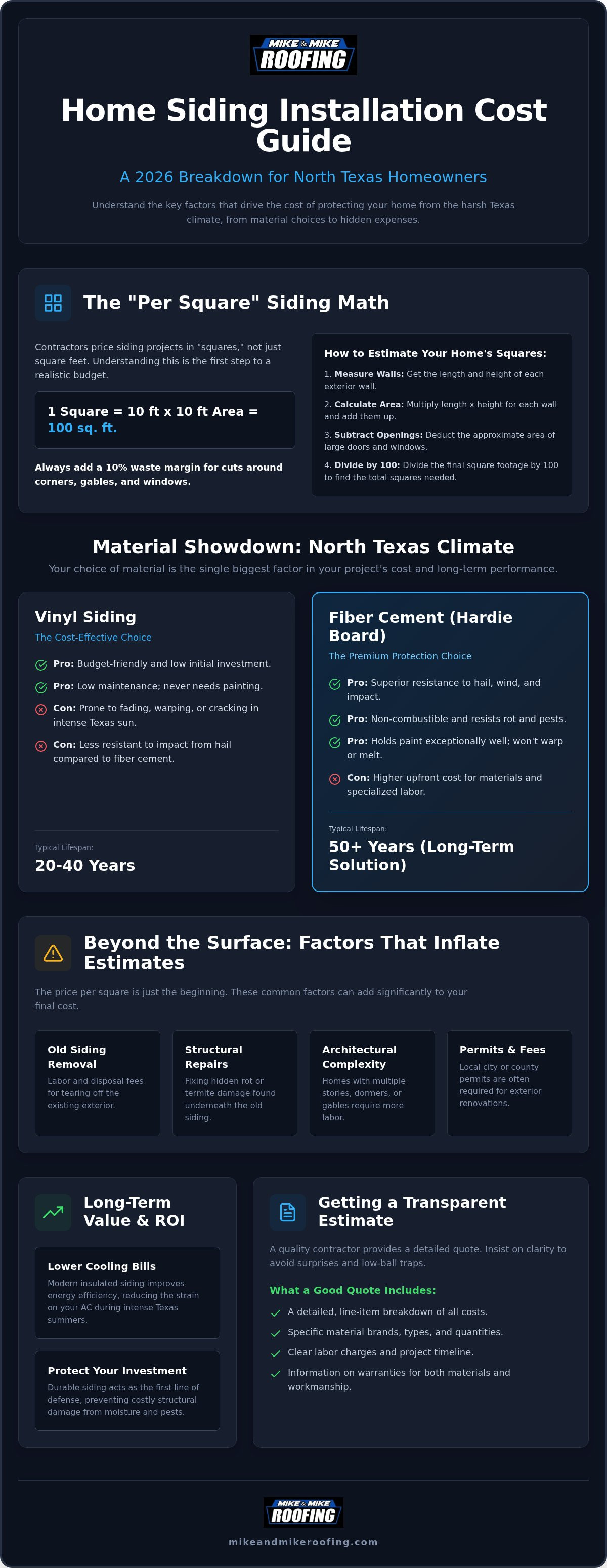
Contractors don't talk in square feet; we talk in "squares." A square is simply a 10-by-10-foot area, or 100 square feet. If you want to do a rough estimate yourself, follow these steps:
- Measure the length and height of each exterior wall.
- Multiply those numbers to get the total square footage.
- Subtract the area of large windows and doors.
- Divide the final number by 100 to find the number of squares needed.
Always factor in a 10% waste margin. This extra material is necessary for precise cuts around gables, corners, and dormers. Without it, you risk running out of matching materials mid-project, which stalls the timeline and can leave your home exposed to the weather while you wait for more supplies to arrive.
How Material Choice Dictates Your Total Investment
Choosing the right material is the most critical decision in your renovation project. It sets the baseline for your home siding installation cost and dictates how much time you will spend on maintenance over the next decade. While a This Old House siding cost guide provides a helpful look at national trends, North Texas homeowners face unique challenges. Our combination of extreme UV exposure and sudden hailstorms means that the "cheapest" option might end up being the most expensive over time.
Vinyl Siding: Cost-Effective but Climate Sensitive
Vinyl is often the first choice for homeowners looking for a low-maintenance, budget-friendly exterior. Standard vinyl is thin and lightweight, making it fast to install. Insulated vinyl is a step up; it features a foam backing that improves your home's energy efficiency and creates a more rigid surface. In Weatherford, vinyl is popular because it never needs paint. However, it has limitations. High winds can cause thinner panels to rattle, and the intense Texas sun can lead to fading or warping on darker colors. Modern vinyl in 2026 typically lasts 20 to 40 years depending on the thickness of the panels and the intensity of local UV exposure.
Fiber Cement: The Premium Protection Choice
Fiber cement, commonly known as Hardie Board, is widely considered the gold standard for our region. It is a heavy, durable product made from a blend of cement, sand, and cellulose fibers. This material is non-combustible and stands up to large hail better than almost any other siding type. Because it is so heavy, it requires more installers and specialized cutting tools. This increased labor intensity is a significant factor in your total home siding installation cost. The trade-off is a product that doesn't expand and contract like plastic. It holds paint for much longer than wood, meaning you won't be paying for a full exterior repaint every few years. If you want a long-term solution, this is usually it.
For those who want a different look, engineered wood and stone veneer offer excellent alternatives. Engineered wood provides the deep textures of real cedar but uses resins to prevent rot and insect damage. It is lighter than fiber cement, which can sometimes reduce labor hours. Many homeowners also choose to add premium stone veneer as an accent on gables or entryways. These accents boost curb appeal and can significantly increase your home's resale value. If you aren't sure which material fits your property's specific needs, getting an honest assessment from a local expert can help you make a confident choice.
Beyond the Surface: Factors That Inflate Siding Estimates
A simple square-foot calculation rarely tells the whole story. While material prices are a baseline, your total home siding installation cost depends heavily on the "degree of difficulty" your specific property presents. A flat, single-story ranch is a straightforward project. However, homes with multi-level gables, intricate dormers, and numerous corners require significantly more time and precision. Every corner requires specialized trim and careful flashing to prevent water intrusion, which naturally increases the labor hours required to do the job right.
The height of your home also plays a major role in the final quote. Working on a two-story or three-story residence involves scaffolding, specialized ladders, and enhanced safety protocols. Moving materials up high is slower and more physically demanding for the crew. Additionally, we have to consider the "tear-off" factor. Some contractors might suggest siding over your old exterior to save money. We don't recommend this. Stripping away the old layers is the only way to verify the condition of your home's bones and ensure the new siding has a solid, level surface for attachment.
Structural Integrity and Sheathing Repairs
The biggest wild card in any siding project is what we find once the old boards come off. If we discover rot, mold, or termite damage in the OSB or plywood sheathing, it must be addressed immediately. Skipping rot repair is a straight-shooter dealbreaker. Covering up structural damage only allows the problem to fester, eventually compromising your new investment. We also include high-quality house wrap and moisture barriers in our estimates. These layers act as a secondary defense against the North Texas humidity, ensuring that moisture doesn't get trapped against your frame.
Trim, Soffits, and Fascia
Don't overlook the "extras" that complete the look. Siding alone doesn't finish a house; you also need to consider the trim, soffits, and fascia. These components bridge the gap between your walls and your roofline. While wood trim might seem like a way to cut costs, it is highly susceptible to the Texas heat and moisture. Composite or fiber cement trim options offer much better longevity. For a deeper look at how to navigate these choices, check out our Expert Siding Installation Service in Weatherford & Fort Worth: A Homeowner’s Buying Guide. Investing in durable trim now prevents the need for piecemeal repairs five years down the road.
The Long-Term Value and ROI of Professional Installation
Looking at your home siding installation cost as a simple expense is a mistake. It is an investment in your property's equity. According to regional data for 2026, homeowners in the Southern United States can expect a return on investment between 70% and 82% for siding replacement projects. In a competitive market like Fort Worth or Weatherford, curb appeal is often the deciding factor for a quick sale. New siding signals to a buyer that the home has been well maintained and is protected from the elements.
Ongoing maintenance is another area where quality siding pays dividends. Old wood siding requires a full repaint every five to seven years to prevent moisture from seeping into the grain. This recurring cost adds up quickly over a decade. By choosing the modern materials we discussed earlier, you trade those high maintenance bills for a simple garden hose wash once or twice a year. You aren't just buying new walls; you are buying back your weekends and your maintenance budget.
Thermal Protection in the Texas Heat
The North Texas sun is relentless. During a siding project, we have the opportunity to install rigid foam insulation directly under the new panels. This creates a continuous thermal bridge that prevents heat from transferring through your wall studs. While the "straight-shooter" take is that insulated siding rarely pays for itself through energy savings alone in the first two years, the immediate increase in indoor comfort is undeniable. Your HVAC system won't have to work as hard during a 105-degree July afternoon, which extends the lifespan of your cooling unit and stabilizes your monthly utility bills.
Warranty and Workmanship
A warranty is only as good as the company that stands behind it. You will find two types of protection: manufacturer warranties on the material and workmanship guarantees from the contractor. Most premium manufacturers require specific installation techniques to keep their warranties valid. If a crew cuts corners on flashing or nailing patterns, you might find yourself without coverage when a problem arises.
As a father-son team, we stand behind our work differently than a massive corporation. Our reputation in the Weatherford community is our most valuable asset. We treat every home with the same protective instinct we apply to our own property. This level of care ensures your investment is protected for decades, not just until the check clears. If you are also considering upgrades to your roof line, you can find more information in our A Comprehensive Guide to Residential Roof Installation in Weatherford & Fort Worth (2026). Before you commit to a major exterior project, schedule a professional consultation to get an honest assessment of your home's needs.
Getting a Transparent Estimate from a Local Contractor
Online calculators are useful for a general ballpark, but they cannot detect the hidden rot or hail damage specific to your property. When you receive a bid for your home siding installation cost, it should be the result of a physical walk-around by a seasoned professional. A "low-ball" estimate is often a major red flag. It usually means the contractor is using thin, inferior materials or plans to hit you with "unforeseen" change orders once the project is underway. A professional quote must be a detailed, line-item document. It should clearly separate material costs from labor and specify the exact brands and product lines being used.
Before you sign any contract, ask the difficult questions. Inquire about the crew's experience with fiber cement and how they handle moisture barriers. A straight-shooter won't mind the scrutiny. They should be able to explain their process for protecting your landscaping and how they manage the job site during a multi-day installation. If a contractor seems evasive or pushes for a signature before you are ready, it's best to walk away. Your home's exterior is too important to leave to someone who prioritizes a quick sale over quality craftsmanship.
How to Compare Siding Quotes
Don't just look at the bottom number. Check if the estimate includes permit fees and disposal costs. In Dallas, permit fees for siding work start at $50, while Denton requires a minimum of $100 for residential replacements. If these aren't explicitly listed in the quote, you might find yourself paying for them later. Always verify that your contractor carries active liability insurance and check for an A+ BBB rating. Local references in Weatherford and Fort Worth are your best insurance policy. Ask for the addresses of homes they sided three or four years ago. This allows you to see how their work stands up to the intense North Texas sun over time.
Start Your Exterior Project Today
We believe in a straightforward, no-pressure approach. When you call Mike and Mike Roofing, you are talking to a father-son team that lives and works right here in your community. We don't use high-pressure sales tactics or "limited-time" discounts to force a signature. During our first visit, we will perform a thorough inspection of your home's exterior, looking for signs of moisture trapped behind the panels or structural issues that might impact the home siding installation cost. We provide an honest assessment of what needs to be done immediately and what can wait.
You deserve to know exactly what you are paying for before the first board is removed. We take pride in providing estimates that are accurate, transparent, and easy to understand. Request your free siding estimate from Mike and Mike Roofing today to get a professional evaluation of your home's exterior and a clear path forward for your renovation.
Secure Your Home’s Future Today
Replacing your siding is about more than just aesthetics; it is about building a defense against the unpredictable North Texas climate. By understanding the variables that drive your home siding installation cost, you can move forward with the confidence that your investment is sound. Whether you choose the rugged durability of fiber cement or the low-maintenance appeal of modern vinyl, the quality of the installation remains the most critical factor. Cutting corners now only leads to expensive repairs after the next major hailstorm.
We focus on doing things the right way, from identifying hidden rot to providing premium material warranties. As an A+ BBB rated father-son team, we take pride in being Weatherford’s trusted exterior specialists. We provide the honest assessments you need to make the best decision for your property and your budget. Get a Straight-Shooting Siding Estimate Today and let us help you protect your home for the long haul. You don't have to navigate these choices alone; we are here to provide the clarity you deserve.
Frequently Asked Questions
How much does it cost to reside a 2,000 sq. ft. house in Texas?
The total for a 2,000 square foot home varies based on material choice and architectural complexity. In the Dallas-Fort Worth area, industry data suggests homeowners typically pay between $10,000 and $23,000 for a full replacement. Vinyl remains the entry-level option, while premium fiber cement sits at the higher end. These figures cover professional labor and materials but do not account for structural repairs that might be discovered during the tear-off process.
Is it cheaper to paint or replace siding?
Painting has a lower immediate cost but acts as a temporary fix for aging materials. If your boards are warped, rotting, or infested with termites, paint will not solve the underlying issue. Replacement involves a higher initial home siding installation cost but eliminates the need for repainting every few years. Investing in new materials like fiber cement or vinyl provides a permanent solution that protects your home's structural integrity against North Texas humidity.
Does new siding increase home value for appraisal?
New siding significantly boosts a home's appraisal value by improving curb appeal and structural protection. Regional reports for 2026 indicate that Southern homeowners can recoup over 70% of their investment upon sale. Appraisers look for modern, durable materials that require minimal maintenance. High-quality siding signals to potential buyers that the property is well-maintained, which often leads to faster sales and higher offers in competitive markets like Aledo and Weatherford.
What is the most durable siding for North Texas hail and heat?
Fiber cement is widely considered the most durable option for our local climate. It is engineered to resist high-impact hail damage and will not warp under the intense Texas sun. Unlike wood, it is non-combustible and resists rot and wood-boring insects. While the installation requires more specialized labor, the long-term resilience of fiber cement makes it a superior choice for homeowners who want a permanent defense for their exterior.
How long does a typical siding installation take?
Most residential siding projects take between seven and fourteen days to complete. This timeline includes the removal of old materials, any necessary sheathing repairs, and the installation of the new panels and trim. Weather conditions in North Texas can occasionally cause delays, especially during the stormy spring season. A professional crew will keep the job site organized and ensure your home remains protected from the elements throughout the entire construction process.
Can I install new siding over my old siding to save money?
We do not recommend installing new panels over old siding. While it might seem like a way to save on labor, it prevents us from inspecting the underlying sheathing for rot or termite damage. Trapping old materials behind a new layer can also create moisture pockets that lead to mold growth. A full tear-off is the only way to ensure a level surface and a secure attachment that meets manufacturer warranty requirements.
Should I replace my windows and siding at the same time?
Replacing windows and siding simultaneously is often the most efficient approach. It allows the crew to properly integrate the window flashing with the new moisture barrier, creating a seamless seal against rain and wind. This coordination prevents the need to cut into new siding later, which can compromise the exterior's integrity. Doing both projects at once also minimizes the total time your home is under construction and ensures a consistent aesthetic finish.
What are the hidden costs of siding replacement?
The most common hidden expenses involve structural repairs found behind the old siding. Replacing rotted OSB or plywood sheathing can add to the final bill. Other factors include local permit fees, which vary by city, and the cost of debris disposal. Architectural details like steep gables or intricate dormers also require more labor and specialized equipment. A transparent estimate should account for these variables to prevent financial surprises once the work begins.


