

What if the hail damage you can’t see from the ground is the damage most likely to cause trouble later? A roof inspection for storm damage can reveal bruised shingles, loosened flashing, or other functional damage before water gets inside. You don’t need to climb a ladder to start checking, and you shouldn’t risk a fall to get a closer look.
After a North Texas storm, it’s natural to worry about hidden leaks, mold, and whether your insurance claim has a deadline. It’s also fair to be wary of anyone pushing you to sign before you understand what’s wrong. A sound inspection starts with evidence, not pressure.
This guide explains how to spot warning signs safely from the ground, recognize what needs a closer professional assessment, and document what you find. You’ll also learn how to approach the insurance process and make a clearer decision about protecting your home and whether the roof can keep doing its job.
Key Takeaways
- Use binoculars for a safer ground-level check, and note debris or shingle pieces around your home.
- Learn how hail bruising, wind-creased shingles, and debris impacts can leave different signs.
- A careful roof inspection for storm damage can help distinguish cosmetic marks from damage that may affect roof performance.
- Keep dated photos and storm details together, and review your policy’s claim deadline before deciding what to do next.
- Get clear documentation before making repair or insurance decisions, and avoid signing under pressure.
The Deceptive Nature of Storm Damage in North Texas
A roof can look intact from the driveway and still have damage that shortens its service life. On asphalt shingles, aesthetic damage changes the appearance without clearly affecting the roof’s ability to shed water. Functional damage weakens that protection, such as a cracked shingle mat, a loosened shingle, or a failed seal. The difference isn’t always obvious from the ground, and the absence of a visible leak doesn’t settle the question.
North Texas roofs face hail, wind, and flying debris. These forces can leave subtle marks while disrupting the shingle surface or the bond between overlapping shingles. A roof inspection for storm damage should look beyond whether shingles are missing. It should assess whether the roof’s protective layers remain intact.
Why ‘No Leaks’ Doesn’t Mean ‘No Problem’
Shingles can be bruised or develop small cracks in the underlying mat without immediately letting water into the home. That damage may leave the shingle more vulnerable to aging and future weather. If hail strips away protective granules, more of the asphalt surface is exposed to sunlight and ultraviolet rays, which can speed deterioration. A leak may appear later, after the damage has had time to worsen.
From the ground, you may spot missing shingles or debris, but subtle impact damage and lifted edges can be hard to judge. A trained professional can examine damage patterns and roof details to distinguish a mark from a compromised shingle. After a storm in Weatherford, documenting the roof’s condition while the event is recent can also help you keep a clear record. Check your policy for its specific claim requirements and deadlines.
North Texas Weather Patterns and Your Roof
Hail can strike with rain or fall with little accompanying rainfall, sometimes called “wet” and “dry” hail. The amount of rain doesn’t determine whether a shingle is damaged; the impact, hail characteristics, and condition of the roof matter. Some damage may show as granule loss or bruising rather than a clean hole. Wind can also lift shingle tabs and break their seal, leaving edges vulnerable to further uplift even if the shingles haven’t blown away.
Wind inspection principles focus on how roof components resist uplift and protect the building. Windstorm inspections offer broader context for that approach, though a local roof assessment must account for the actual storm and roof condition. For an overview of asphalt-shingle systems, see the Composition Roofing Guide for North Texas Homeowners.
After a storm, don’t climb onto the roof to investigate. Note visible changes from a safe location and arrange a professional assessment if you suspect damage. The goal is a clear, evidence-based answer, not a guess based on whether water has reached the ceiling.
Step-by-Step: Conducting a Safe Ground-Level Visual Inspection
Start with safety. Don’t climb onto the roof, even if the shingles look dry or the damage seems minor. A roof can be slick, unstable, or weakened in ways you can’t see. Use binoculars from the ground, take notes, and leave close-up assessment to a trained professional. This ground-level check can help you spot warning signs without putting yourself at risk.
Walk the Property First
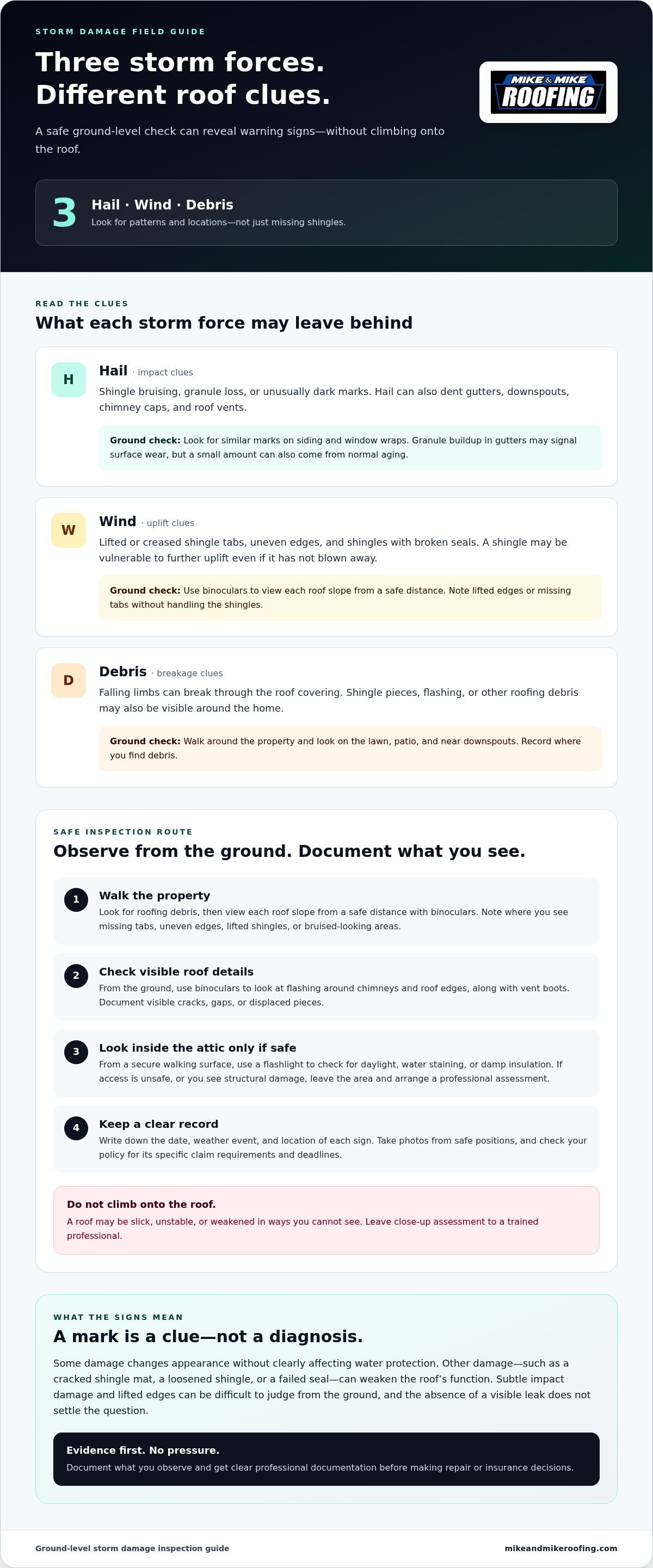
Begin in the yard and work your way around the house. Look for shingle pieces, flashing, or other roofing debris on the lawn, patio, and near downspouts. Then view each roof slope from a safe distance with binoculars. Note missing tabs, uneven edges, lifted shingles, or areas that look bruised or unusually dark. Don’t treat one mark as proof of damage; record what you see and where.
Check the “soft metals” too. Dents on gutters, downspouts, chimney caps, and roof vents can indicate hail impact. Look at siding and window wraps for similar marks. Damage on several exterior surfaces may help show the storm’s direction and where the roof deserves a closer look.
Check Gutters, Flashing, and Roof Openings
Look inside gutters only from a stable position on the ground or another safe, accessible spot. A buildup of shingle granules may signal surface wear, especially after a storm, but a small amount can also collect through normal aging. Note unusual accumulation rather than assuming it confirms damage. From the ground, use binoculars to inspect visible flashing around chimneys and roof edges, along with vent boots. Cracks, gaps, or displaced pieces are worth documenting, and if chimney structures or caps appear damaged, teams like Absolute Chimney Pros can assist with specialized chimney inspection and repairs.
Look Inside the Attic Only If It’s Safe
If you can enter the attic safely, use a flashlight to check the underside of the roof deck for daylight, water staining, or damp insulation. These signs may reveal an issue before it appears on a ceiling. Don’t step off a secure walking surface or enter if access is unsafe. After strong winds, look for obvious shifting or cracked rafters from a safe vantage point. If you see structural damage, leave the area and arrange a professional assessment.
Write down the date, weather event, and location of each sign, and take photos from safe positions. These notes give a professional a useful starting point for a thorough roof inspection for storm damage. If the findings raise questions about your roof’s condition, explore residential roofing options before deciding on next steps.
Identifying Specific Damage: Hail vs. Wind vs. Debris
Storm damage can leave different clues depending on what struck the roof. Hail may bruise shingles and dislodge granules, wind can lift or crease shingle tabs, and falling limbs can break through the roof covering. A careful roof inspection for storm damage looks at the pattern and location of marks, not just whether a shingle is missing. These signs can be hard to distinguish from the ground, so don’t climb up to test or handle shingles.
Hail Damage: The Silent Shingle Killer
A hail hit may leave a defined impact area with granule loss and a bruise in the shingle mat beneath. Blistering, by contrast, can result from changes within the shingle’s surface and may resemble impact damage. Appearance alone isn’t always enough to tell them apart. Hail size also doesn’t determine damage by itself. Shingle age and condition, roof slope, and the angle of impact can all affect what a storm leaves behind.
Roofing professionals may gently assess the shingle mat to determine whether it has lost integrity. This is sometimes called a “thumb test,” but it requires close contact with the roof and should not be attempted by homeowners. A mark that looks minor from below may still need an experienced assessment.
Wind Uplift and Seal Failure
Shingles rely on their seal strips to bond to the layer below. Strong wind can lift a shingle edge, stress or break that bond, and crease the shingle as it bends. The tab may settle back into place afterward, hiding the separation. “Chatter” marks or scuffing may also suggest movement or contact between shingle surfaces, but marks need to be considered in context. An unsealed shingle is more vulnerable to being lifted again, allowing wind-driven rain beneath the roof covering.
Debris and Material Performance
A branch can scrape granules away, crack a shingle, or puncture the roof covering. Even if the visible damage seems limited, a hard impact may also affect the underlayment or roof deck below. Look for fallen limbs and note where they landed, but don’t inspect a damaged area by walking on the roof.
Roofing materials are built to provide weather protection, but no shingle makes a roof immune to storm damage. Mike and Mike Roofing installs residential roofs using Owens Corning materials; the right product and proper installation both matter to the finished system. Learn more in this guide to Owens Corning roofing shingles and durability. After a storm, documenting visible clues and having uncertain damage assessed is more reliable than judging a roof by one mark alone.
The Insurance Process: Documentation and Avoiding Scams
Storm damage and an insurance claim are related, but they’re separate decisions. A roofing contractor’s estimate describes observed damage and the work needed to address it. The adjuster’s report reflects the insurer’s assessment under your policy. The documents may not match, so review them carefully and ask your insurer about any differences before approving work.
A straightforward approach means documenting what you see and getting a professional assessment, not assuming every storm calls for a claim. Don’t let that delay a call to your insurer if you’re concerned about a deadline or worsening damage. Policy requirements vary. The Texas Department of Insurance advises homeowners to check their policy and report claims promptly; the research for this guide notes that many policies require notice within a year. Your policy’s terms control.
Document First, Then Follow Your Policy
Keep a simple record of the event and what you observe. Include dated photos from safe locations, notes about where you found debris or visible damage, and available storm information for your area. Save inspection findings, estimates, insurer correspondence, and receipts together. A thorough roof inspection for storm damage can provide useful evidence, but it doesn’t determine coverage or replace the insurer’s claim process.
If an adjuster schedules a roof visit, ask whether your roofing contractor can be present to point out documented conditions. The adjuster evaluates the claim for the insurer; the contractor can explain the roof’s construction and the work described in an estimate. Neither role guarantees a particular coverage decision.
Watch for Pressure and Know What You’re Signing
After a storm, door-to-door offers can arrive quickly. Be cautious if someone pressures you to sign immediately, demands a large deposit before explaining the work, or promises that insurance will pay for everything. Out-of-area plates alone don’t prove a person is dishonest, but urgency and unclear paperwork are good reasons to pause. Read any agreement, keep copies, and don’t accept an offer to waive or absorb your deductible. Texas law prohibits contractors from waiving, rebating, or absorbing an insurance deductible.
Choose a contractor with roots in the area and a record you can review. Mike and Mike Roofing is a family-owned Weatherford father-son team with an A+ BBB rating. A written estimate should clearly describe the proposed work. A workmanship warranty concerns the work performed, while insurance coverage is governed by your policy. Learn more with this roofing workmanship warranty checklist.
For a grounded assessment and a free estimate, request a roof estimate from the local father-son team.
Why a Professional Inspection is Your Best Defense
A small area of storm damage can become a larger problem if water gets beneath the shingles and reaches the roof deck or other building materials. That doesn’t mean every mark calls for a replacement. It means the roof’s condition should be assessed before you assume it’s fine or commit to major work. A professional roof inspection for storm damage can help separate repair concerns from normal wear and give you a clearer basis for your next decision.
Storm resistance also starts with sound installation. Properly installed shingles, flashing, and roof details work together to shed water and resist wind uplift. Quality materials matter, but no roofing system is immune to severe weather. An inspection can identify concerns; careful installation helps build reliable protection for the years ahead.
The Mike and Mike Difference
Mike and Mike Roofing is a family-owned, father-son team based in Weatherford. The straightforward approach means explaining what the roof needs, not pushing a replacement simply because a storm has passed. If the roof appears serviceable, homeowners deserve a clear assessment and practical next steps. The team focuses on residential roofing for local homeowners in Weatherford, Fort Worth, and Aledo.
For a closer look at what goes into a new roof, read this guide to residential roof installation. It explains why the work beneath and around the shingles matters just as much as the visible roofing material.
Start With a Clear Assessment
During a professional roof assessment, the focus should be on the roof’s overall condition and the specific areas that may have been affected by the storm, such as shingles, flashing, and roof penetrations. A useful assessment explains what was observed and what it could mean, rather than relying on vague claims or pressure to sign. Keep the findings with your storm notes and insurance documents so you can make informed choices.
Mike and Mike Roofing offers free estimates for residential roofing projects. If the assessment points to installation work, a clear estimate can help you understand the proposed scope before moving forward. There’s no need to make a rushed decision based on a knock at the door or a single mark on a shingle.
Protecting your home starts with an honest assessment and a plan based on evidence. Request a free roofing estimate from Mike and Mike Roofing to discuss your roof and the right next step.
Protect Your Roof With a Clear Next Step
Storm damage isn’t always obvious, and a dry ceiling doesn’t prove the roof is sound. Check for signs from the ground, document what you find, and avoid climbing onto the roof or rushing into an insurance decision. A professional roof inspection for storm damage can help clarify whether there’s a problem and what steps make sense.
Mike and Mike Roofing is an A+ BBB-rated family business serving Weatherford, Fort Worth, and Aledo. The father-son team uses Owens Corning materials for residential roofing projects and takes a straightforward approach focused on long-term protection, not pressure. If your roof needs attention, a free estimate can help you understand the next step.
Request your free storm damage estimate from Mike and Mike Roofing. With a clear assessment, you can make an informed plan and move forward with greater confidence.
Frequently Asked Questions
How long do I have to file an insurance claim for roof storm damage in Texas?
Your policy sets the deadline, so check it and report suspected damage promptly. Some Texas homeowners’ policies require notice within a year of the storm, but terms vary. Don’t assume the two-year period sometimes associated with property-damage lawsuits is your insurance claim deadline. Record the storm date, review your policy’s reporting instructions, and contact your insurer if you’re unsure what timing applies.
Can I see hail damage from the ground?
You may spot missing shingles, debris, or dents on gutters and other metal surfaces from the ground, but subtle hail damage is often hard to confirm without a closer assessment. Granule loss or bruising may not be visible from the driveway. Use binoculars if you have them, and don’t climb onto the roof. A professional roof inspection for storm damage can assess signs that aren’t clear from below.
What happens if I ignore minor storm damage on my roof?
Damage that seems minor can leave shingles less able to shed water or withstand further wind. If water gets beneath the roof covering, it may affect the underlayment, roof deck, or insulation before a ceiling stain appears. That doesn’t mean every mark will become a leak, but waiting can make it harder to understand when the damage occurred. Document what you see and arrange an assessment if you suspect a problem.
Will my insurance company cancel my policy if I file a storm damage claim?
Filing a claim doesn’t automatically mean your policy will be canceled, but no one can promise how an insurer will handle an individual policy. Decisions depend on the insurer’s terms and circumstances, including your claims history. Before filing, review your deductible and policy, and ask your insurer how a claim may affect your coverage or renewal. Base the decision on documented damage and your policy, not pressure from a contractor.
How much does a professional roof inspection for storm damage cost?
There isn’t one standard price for every assessment; cost can depend on its scope and what it involves. Mike and Mike Roofing offers free estimates for roofing projects. A written estimate explains the proposed project scope, so review it to understand what work it covers before making a decision.
Do I need to be home when the roofing inspector arrives?
Whether you need to be home depends on the assessment and whether the inspector needs access to areas such as the attic. For an exterior assessment, you may be able to arrange access without being present, but discuss access and timing beforehand. If you can attend, you can point out where you found debris or noticed changes and hear the findings directly. Never climb onto the roof during the inspection.
What is the difference between a roof repair and a full roof replacement after a storm?
A repair addresses limited damage when the rest of the roof remains serviceable. A replacement may be considered when damage is widespread or the roof’s overall condition makes a localized repair inadequate. The right scope depends on the affected shingles, roof components, and existing wear, not just the storm itself. A contractor’s estimate describes proposed work; your insurer makes its own coverage determination under your policy.
Why should I choose a local Weatherford roofer over a national company?
A local roofer is based in the community and can build an ongoing relationship with homeowners in Weatherford, Fort Worth, and Aledo. Mike and Mike Roofing is a family-owned, father-son team based in Weatherford, with an A+ BBB rating. Local roots can make communication more personal, while a documented assessment and clear estimate help keep decisions grounded in the roof’s actual condition.


