

A Texas roof commonly lasts 15 to 30 years, depending on its material and exposure. For asphalt shingles, a practical range is 15 to 25 years, but intense heat, poor attic ventilation, and storm damage can shorten that span. A shingle’s labeled lifespan is not a promise that it will last that long on your home.
It’s reasonable to expect a roof to last for years, but Texas weather tests that expectation. Sun and heat wear on roofing materials, while hail and strong storms can cause damage that isn’t immediately obvious.
This guide explains how roofing material, ventilation, local weather, and warranty terms affect a roof’s lifespan, and what signs may mean replacement is approaching. You’ll also learn when an inspection can help you weigh repair against replacement, so you can decide based on the roof’s condition, not age alone.
Key Takeaways
- Roofing material and local exposure shape lifespan; asphalt shingles in Texas commonly last 15 to 25 years, while other materials may last longer.
- A warranty’s stated term isn’t the same as a roof’s expected service life. Ventilation and installation conditions matter, too.
- Look beyond age for signs such as curling, cracking, missing shingles, or granule loss when weighing repair against replacement.
- Heat, hail, and storms can speed up roof wear. A closer look after damage can help you decide whether roof installation is the next step.
Roof lifespan versus warranty and insurance coverage
A roof’s service life, warranty term, and insurance coverage describe different things. For homeowners in Weatherford, Fort Worth, and Aledo, material, workmanship, and local weather all shape how a roof performs over time.
Material and Workmanship Effects
Roof lifespan is the period a roofing system remains functional, shaped by its material and installation quality. That distinction matters because a warranty’s advertised term doesn’t promise the roof will last that long. A shingle labeled “30-year” isn’t guaranteed to remain in service for 30 years. Manufacturer 30-year warranties often assume northern or moderate climates, rather than Texas conditions.
Workmanship affects how roofing components fit together and shed water. Installation details and supporting components matter alongside the shingles themselves. Tile, for example, may outlast the underlayment beneath it. A 50-year shingle warranty likewise doesn’t guarantee a 50-year roof lifespan.
Insurance coverage is separate from expected lifespan and manufacturer warranties. A roof’s age doesn’t determine coverage by itself; policy terms matter. The Texas Department of Insurance advises homeowners to check roof coverage at every renewal.
Lifespan Ranges by Roofing Material
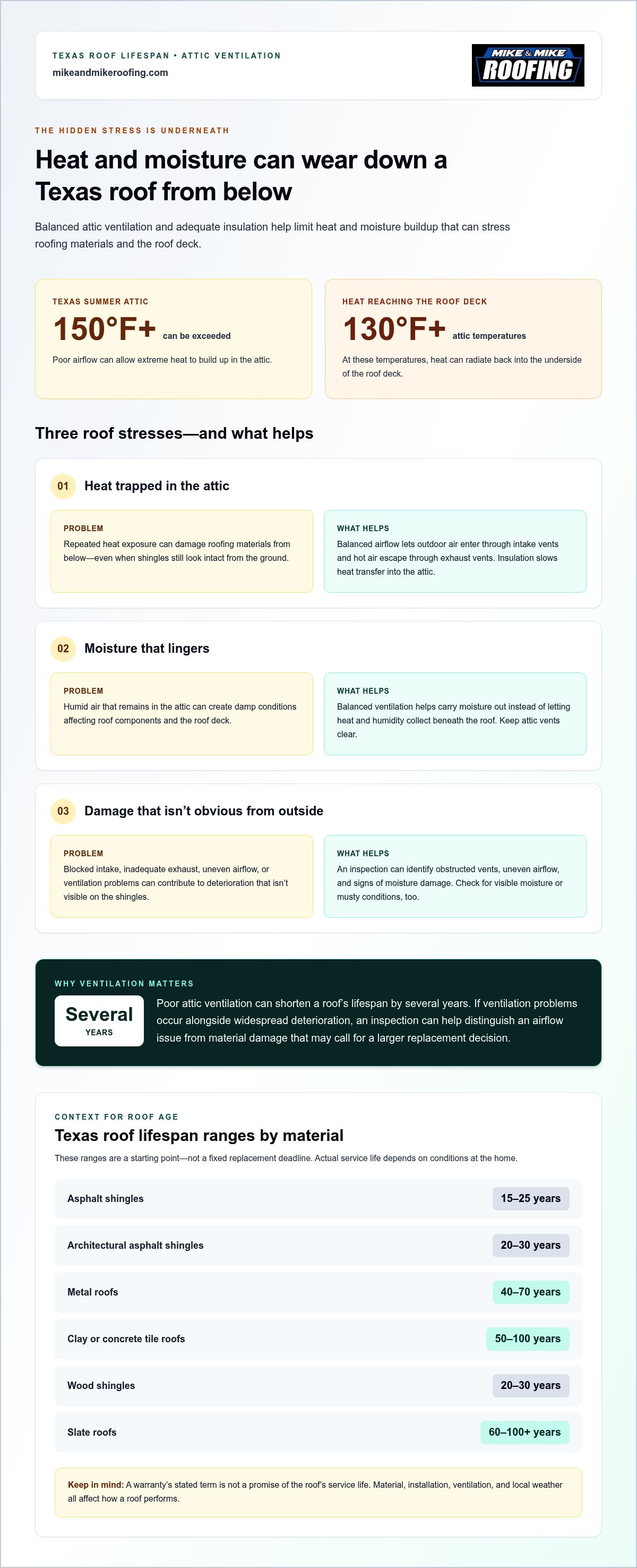
Material-specific ranges offer a starting point for homeowners around Weatherford, Fort Worth, and Aledo, not a fixed replacement deadline. Texas asphalt shingle roofs typically last 15-25 years, while architectural asphalt shingles are listed at 20-30 years. Actual service life depends on conditions at the home.
Other materials have different expected ranges. Metal roofs generally last 40-70 years; clay or concrete tile roofs in Texas are listed at 50-100 years. Wood shingles generally last 20-30 years and require maintenance, while slate roofs in Texas are listed at 60-100+ years.
Use lifespan ranges as a reason to inspect, not as a replacement decision based on age alone. Compare the roof’s visible condition with its material and installation history, then review warranty terms and insurance coverage separately. Heat exposure and storm damage can affect how a specific roof performs.
How does poor ventilation shorten roof lifespan?
In Texas, balanced attic ventilation and adequate insulation help control heat and moisture that can stress roofing from below. Poor airflow can accelerate aging, while insulation slows heat transfer into the attic and helps protect the roof deck and shingles.
Balanced attic intake and exhaust ventilation helps reduce heat and moisture buildup, which can support a longer-lasting roofing system. Both sides matter: intake lets outdoor air enter, while exhaust allows hot, humid air to escape.
With poor airflow, summer attic temperatures in Texas can exceed 150 degrees. Attic temperatures exceeding 130 degrees can radiate heat back into the underside of the roof deck. That repeated heat exposure can damage roofing materials from below, even when shingles still look intact from the ground.
Moisture adds another strain. Humid air that lingers in an attic can create damp conditions affecting roof components and the roof deck. Balanced ventilation helps carry moisture out instead of letting heat and humidity collect beneath the roof. Insulation supports this system by slowing heat transfer between the living space and attic.
In practical terms, sound ventilation helps limit heat buildup compared with blocked intake or inadequate exhaust. Poor attic ventilation can shorten a roof’s lifespan by several years. An inspection can identify obstructed vents, uneven airflow, or signs of moisture damage before problems spread.
Maintenance matters, too. Keep attic vents clear and check for visible moisture or musty conditions during a home inspection. If insulation has shifted or gaps allow indoor air into the attic, correcting those issues can support ventilation. Neither a “30-year” shingle label nor intact-looking shingles erase damage developing underneath.
If ventilation problems accompany widespread deterioration, consider whether the roof needs more than airflow improvements. An inspection can help distinguish a ventilation issue from material damage that may call for a larger replacement decision.
When should I replace my roof in Weatherford?
In Weatherford, Fort Worth, and Aledo, consider replacement when a roof is 20 or more years old, or when damage is widespread. Texas roofs should be inspected at least once a year in spring or fall, and after severe weather.
Repairing or Replacing a Roof
Monitoring suits a roof with no visible damage; a targeted repair can address isolated trouble, while widespread wear points toward replacement. Standard asphalt shingles in Weatherford typically last 15 to 20 years in regional heat and hail conditions, so age helps frame the decision, but condition matters too.
After a storm, look for leaks and visible damage, then arrange an inspection. The Texas Department of Insurance advises having a roofing contractor present when an insurance adjuster inspects storm damage. Clear leaves and debris from gutters to help prevent water buildup that can aggravate roof problems.
Insurance terms also affect the financial decision. Actual cash value coverage accounts for depreciation, while replacement cost coverage concerns the cost of replacing damaged property, subject to policy terms. Review your policy at renewal, and distinguish an insurance settlement from the roof’s condition and expected remaining life.
Signs of Roof Replacement Needs
Granule loss, curling, cracking, and missing shingle sections can signal that an asphalt roof needs replacement. A leak or storm damage also deserves prompt attention, since even a small opening can let water affect more of the roofing system.
Look at the whole roof, not one shingle. If deterioration appears across multiple areas, ventilation problems accompany the wear, or repairs keep addressing separate damaged sections, replacement may make more sense than another isolated fix. A 20-year-old roof in Fort Worth isn’t automatically due for replacement, but it should be closely inspected. Weatherford homeowners can use age, exposure, and visible condition together to guide the decision, and Mike and Mike Roofing is always ready to help evaluate your home.
How Does Austin’s Climate Affect Roof Aging?
Austin’s climate brings hot summers, hail, and wind, so roof exposure matters alongside material. Asphalt shingle roofs in Texas typically last 15-25 years, but actual service life varies with weather and roof condition.
Insurance terms can affect replacement coverage. The Texas Department of Insurance advises homeowners to check roof coverage at every renewal. Applicable local building requirements can also affect replacement work.
Weather Effects on Roof Aging
Heat, ultraviolet exposure, hail, and wind gradually wear roofing materials, which can shorten roof lifespan. Texas summers regularly exceed 100 degrees, and dark asphalt shingles in the Hill Country can reach surface temperatures of 150-170 degrees.
After 15+ Texas summers, asphalt shingles can become brittle and more vulnerable to hail impact. Hail can weaken shingles without causing an immediate leak, so an apparently dry ceiling doesn’t rule out damage. Texas recorded 902 major hail events in 2025, defined as hailstones at least an inch across.
Wind can loosen or remove shingles, especially when storms hit an aging roof. Consider both storm exposure and visible wear rather than judging condition by leaks alone. A post-storm inspection can reveal damage that isn’t obvious from the ground.
Asphalt Shingle Aging in Texas Heat
Texas heat accelerates the aging process for asphalt shingles by exposing them to repeated high roof-surface temperatures. Standard asphalt shingles in Texas may last 15 to 20 years, compared with 25 to 30 years in cooler climates. That difference makes age a useful prompt to examine the roof, not a replacement deadline by itself.
As shingles age, they can become more brittle and vulnerable to hail. Look for granule loss, curling, cracking, or missing sections, then consider whether wear is isolated or widespread. Manufacturer warranty terms don’t replace an assessment of the roof’s actual condition or storm damage.
For a roof affected by heat or hail, discuss roof replacement options based on its condition and material.
Mike and Mike Roofing: Roof Installation
Mike and Mike Roofing installs roofs when aging, widespread damage, or storm wear makes replacement the practical next step. If shingles are curling, cracking, or losing granules across multiple areas, a new roof can address deterioration that isolated repairs may not resolve.
Consider the existing roof’s condition, material, ventilation, and exposure to Texas weather. Warranty terms and insurance coverage are separate considerations, so review them alongside physical signs of wear. A roof doesn’t automatically need replacement at a particular age; the extent and pattern of damage matter.
Mike and Mike Roofing also works on siding, windows, and patios, which may be useful when planning broader exterior improvements. If your roof shows widespread wear, contact Mike and Mike Roofing to discuss installation and your home’s needs.
Make Your Next Roof Decision With Confidence
How long a roof lasts in Texas heat depends on its material, installation history, and exposure. Keep records of roof work and storm damage together. A timeline can help you track changes and explain the home’s history during an assessment.
To estimate how long a roof lasts in Texas heat, note when leaks or visible changes first appeared and which areas are affected. This helps clarify whether a concern calls for repair or a broader replacement plan. Separate observations from assumptions, and keep insurance documents with your roof records.
If you’re considering roof installation, Mike and Mike Roofing can discuss the work involved for your home. Start a conversation about your roof and take the next step with a clearer plan.
Frequently Asked Questions
How Will a Roof Last in Texas?
Texas roofs commonly last 15 to 30 years, depending on material and exposure. For homeowners in Weatherford, Fort Worth, and Aledo, how long a roof lasts in Texas heat also depends on its installation history and storm exposure. Asphalt shingles generally have shorter lifespans than metal or tile. Use the range to plan inspections and budgeting, not as an automatic replacement deadline.
Does a “30-year” shingle really last 30 years?
No. A “30-year” label describes a product rating, not a promise that the roof will remain in service for that long. Warranty coverage has its own terms and conditions. Keep the shingle and installation paperwork with your home records, then compare those documents with the roof’s current condition. That helps separate the manufacturer’s coverage from the roof’s actual service life.
Does hail shorten a roof's life even if it doesn't leak?
Yes. Hail can weaken shingles without opening the roof to water. After a storm, record the date and visible changes, such as marks on roof vents or damaged shingles. A dry ceiling doesn’t rule out roof damage. Keeping a record of storms and subsequent repairs gives you a clearer timeline for assessing changes in the roof’s condition.
How Can You Tell How Old Your Roof Is?
Look for dated installation invoices, home purchase records, or paperwork from previous roofing work. Older inspection reports may document the roof’s condition at a particular time. If records don’t show the installation date, visible wear alone can’t establish the roof’s age. Collecting documents and comparing them with repair history can help narrow down when it was installed.
Why do roofs sometimes age faster around Weatherford, Fort Worth, and Aledo?
Repeated summer heat, sun exposure, hail, and wind can put added strain on roofs in Weatherford, Fort Worth, and Aledo. How long a roof lasts in Texas heat varies between nearby homes because materials, installation, ventilation, and storm exposure differ. After severe weather, note visible changes and compare them with the roof’s earlier condition.
How long do metal roofs last in Texas?
Metal roofs in Texas commonly last 40 to 70 years. That range is useful for comparing materials, but it doesn’t establish the remaining life of a particular roof. For example, a metal roof with storm damage or installation problems needs to be judged by its actual condition. Keep records of repairs and note changes after severe weather to support future maintenance decisions.


