

A hailstorm doesn’t automatically mean your siding needs to come off. After Aledo’s April 28, 2026 hail event, homeowners may be looking at marks, cracks, or loose panels and wondering whether they’re seeing storm damage or ordinary wear. Aledo siding replacement after hail should start with a siding-specific assessment, not a rushed decision.
It’s reasonable to worry about what you can’t see, especially if damaged siding could leave the wall underneath more exposed to moisture. And when repair, replacement, and an insurance estimate are all in the picture, it isn’t always clear what to do first.
This guide explains what hail damage can look like, what to document, and how to weigh targeted repairs against replacing more of the siding. You’ll also learn how to review a project estimate alongside your insurer’s process. The goal is a sound next step for your Aledo home, based on the siding’s condition rather than assumptions about the storm.
Key Takeaways
- Look for cracks, chips, dents, holes, and shifted panels. Signs of damage can vary by siding material.
- When weighing repair against replacement, consider how much siding is affected, the condition of nearby panels, and whether repairs can blend with the existing material.
- For Aledo siding replacement after hail, take photos and note the location of visible damage before deciding what work may be needed.
- Keep your records together and review your homeowner’s policy and insurer’s process so you understand what information is involved in a claim.
- A siding estimate can help clarify observed damage and potential project scope. Mike and Mike Roofing is a family-owned, father-son contractor serving Aledo and nearby communities.
Aledo Siding Replacement After Hail: What Damage Should You Look For?
Hail marks can be subtle, and the same storm can leave different signs on different siding materials. A small surface mark may be hard to distinguish from ordinary wear, while a crack or displaced panel can be easier to spot. Since hailstones vary in size and impact, as general background on Hail explains, inspect the whole exterior rather than judging the siding by one mark.
Walk around the house from the ground and look for cracks, chips, dents, holes, loose panels, or pieces that appear out of place. Check each wall, including corners and areas around windows and doors. Don’t press, pull, or pry at a panel to test it. A visual check helps you record what you can see, but it can’t reveal every condition behind the siding.
What hail damage can look like on different siding materials
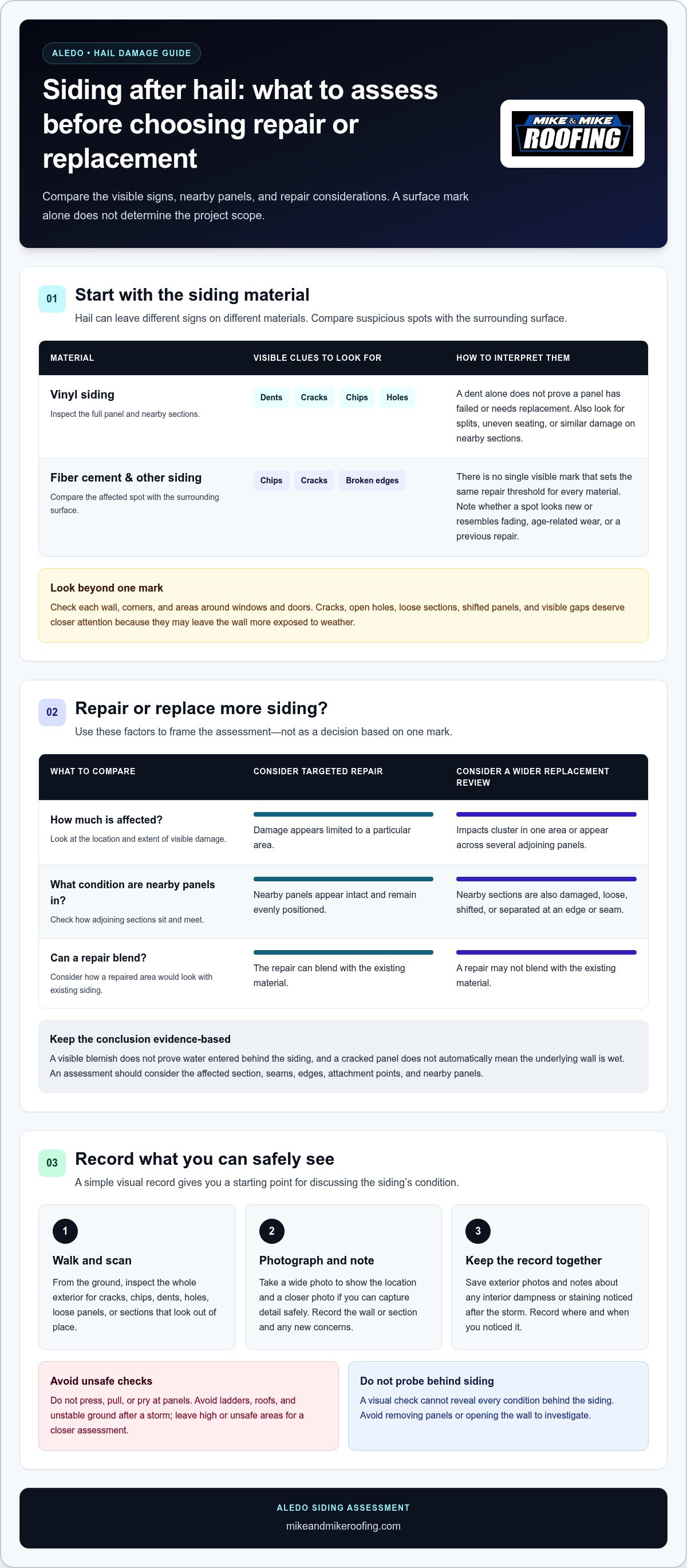
On vinyl siding, impacts may leave dents, cracks, chips, or holes. A dent alone doesn’t prove that a panel has failed or needs replacement. Look for other signs, such as a split, a panel that no longer sits evenly, or similar damage across nearby sections.
Fiber cement and other siding materials may show different surface changes, including chips, cracks, or broken edges. There’s no single visible mark that sets the same repair threshold for every material. Compare suspicious spots with the surrounding surface, and note whether they look freshly damaged or resemble older fading, age-related wear, or a previous repair.
When siding damage deserves a closer assessment
Pay closer attention to cracked panels, open holes, loose sections, and places where the layer beneath the siding is visible. These openings may leave the wall more exposed to weather. Damage can also be harder to judge when impacts cluster in one area or appear across several adjoining panels. Note the location and extent, but don’t assume one mark determines the amount of work required.
A visible clue can point to damage, but the siding material, surrounding panels, and affected area help determine whether repair or replacement makes sense.
- Photograph each affected area from a safe position on the ground.
- Take a wide shot to show the location, then a closer photo if you can capture the detail without climbing.
- Record which wall or section you photographed and note new concerns, such as a shifted panel.
Avoid ladders, roofs, and unstable ground after a storm. If a spot is too high or unsafe to view from the ground, leave it for a closer assessment rather than risking a fall. Photos and location notes give you a useful record of what you can safely see. For Aledo siding replacement after hail, that record is a starting point, not a final verdict on the project’s scope.
How Hail Can Affect Siding, Seams, and the Layers Behind It
Siding is the outer covering of a home. It helps shield the wall assembly from weather, but it works as part of a system rather than as a single sealed barrier. The layers behind the visible panels help protect the home, and their arrangement varies by construction. Hail may mark or break the siding without affecting those layers, so a visible blemish alone doesn’t prove that water has entered or that replacement is needed.
The details around an impact matter. A panel may crack, chip, or shift; its edges may pull away from an adjoining piece, or an attachment point may loosen. If a panel moves out of position, a gap can form where sections meet. Even when an opening looks small from the yard, the surrounding edges and nearby panels are part of the picture. The goal is to understand the affected section, not assume what lies behind it.
Why seams, edges, and attachment points matter
Siding sections connect along edges and seams, while fasteners help hold them in place. A hard impact can affect more than the center of a panel: it may disturb an edge, loosen an attachment, or shift one section against the next. When an opening or displaced section is visible, the surrounding area deserves attention too. A sound assessment looks at how the affected pieces meet and whether adjacent siding remains properly positioned.
The layers behind siding help form the home’s exterior protection, but homeowners can’t reliably judge their condition from the surface. A cracked panel doesn’t automatically mean the underlying wall is wet. Likewise, siding that looks mostly intact doesn’t rule out a concern if there’s an opening or visible separation. An assessment should follow the evidence without jumping from an exterior mark to a conclusion about hidden damage.
How to think about moisture concerns after hail
Pay attention to new interior dampness, staining, or other changes noticed after a storm, and record where and when you saw them. These clues may be useful to share during an assessment, but they don’t identify the source on their own. Avoid removing siding, probing behind panels, or opening the wall to investigate. Invasive checks can disturb the exterior without establishing what caused the concern.
An opening or displaced siding deserves prompt attention because it can leave the wall assembly more exposed, even though it doesn’t by itself prove hidden damage. Keep exterior photos and notes about interior changes together. If the issue is unclear, a closer assessment can help establish what’s affected and what next step is reasonable.
For Aledo siding replacement after hail, distinguishing an exposed seam from damage that extends farther into the assembly helps shape a sound decision. If you’ve noticed a shift or opening, a siding project estimate can help clarify the observed condition and potential scope before you decide how to proceed.
Repair or Siding Replacement After Hail in Aledo: How to Weigh the Options
Hail damage doesn’t point to one automatic fix. A small, isolated impact on otherwise sound siding may call for a different scope than damage repeated across several walls. Consider how much siding is affected, whether nearby sections remain secure, and whether a repair can work with the existing material and appearance. These details help guide a project assessment, but they don’t determine insurance coverage.
When a targeted siding repair may be worth considering
A targeted repair may be worth exploring if damage appears confined to a small, accessible area and the surrounding panels are in good condition. The existing material, its age, and the availability of a suitable match all matter. A repaired area may not look exactly like the original siding, especially if the surrounding surface has faded. An assessment can clarify what a repair would involve without assuming it’s the right fit.
When a broader siding replacement may make more sense
Widespread impacts, multiple compromised sections, or siding that was already in poor condition may point toward a broader project. Repeated damage can make isolated repairs less practical, particularly if matching the existing siding is difficult. That doesn’t make full replacement automatic. An assessment can help define the affected area and potential scope. Homeowners comparing project choices can also use a siding installation buying guide to understand the considerations involved in planning new siding.
Repair considerations: Damage appears limited; surrounding panels are sound; a workable match in material and appearance may be available.
Replacement considerations: Damage is widespread or repeated; multiple sections are compromised; the existing siding is in poor condition or difficult to match.
Use this comparison as a starting point, not a verdict. Several marks on one wall don’t necessarily mean the whole home needs new siding. Conversely, one obvious break may deserve a broader look if nearby sections are loose or the existing siding is already deteriorating. The condition of the material, the area affected, and the integrity of surrounding panels all influence the scope.
A siding assessment can clarify the work being considered, but the insurer determines whether the damage is covered under the homeowner’s policy. Review your policy and follow your insurer’s process. Don’t treat an estimate or a contractor’s observation as a guarantee of approval or a particular settlement. Keep the observed damage and proposed work clearly documented so you can compare the project scope with the insurer’s evaluation.
Aledo siding replacement after hail is best approached with a clear account of what’s damaged and what remains sound. A siding project estimate can outline potential scope, whether the assessment points toward a focused repair or a broader replacement. Let the siding’s condition guide the decision, not just the fact that hail struck the home.
What Aledo Homeowners Can Do After Hail Damages Their Siding
Once it’s safe to go outside, create a clear record before deciding what the siding needs. Good notes can help you track new concerns, discuss the damage, and follow your insurer’s process. Keep the steps simple and stick to what you can observe safely.
- Record the storm date. Note when hail occurred, or the date you first noticed the damage if you’re unsure. This helps distinguish new concerns from older marks or repairs.
- Photograph visible damage. Take wide shots that show the affected wall, then closer photos of marks or openings. Use a stable, ground-level position, and note any detail that’s too high to capture safely.
- Write down new concerns. Note which elevations or sections look affected, whether any pieces appear shifted, and any indoor changes you’ve noticed, such as fresh staining or dampness. Record observations without guessing at their cause.
- Keep your records together. Save photos, storm notes, prior siding repair records, and relevant messages or documents from your insurer in one place.
Documenting siding damage safely
Take both wide and close-up photos from a steady spot on the ground, and include enough context to identify each location later. Don’t climb a ladder, walk on a roof, remove a panel, or enter an area that seems unsafe. Avoid quick fixes that might cover an opening, hide the condition, or create a hazard. If you can’t view a section safely, note its location and leave it for assessment.
Preparing for a siding project assessment
Gather your photos, storm timing, prior repair records, and relevant insurer communications. Before an assessment, list what you want clarified: which sections appear affected, what work is being considered, and how new siding would coordinate with existing material if replacement is proposed. Clear questions keep the discussion focused on observed conditions and potential scope.
Review your homeowner’s policy and the insurer’s claim process, including any instructions for documenting damage or submitting information. Coverage depends on the policy terms and the insurer’s assessment. A siding estimate can explain potential work, but it doesn’t decide whether a claim is covered or what an insurer will pay. Keep those decisions separate as you plan your next step.
Aledo siding replacement after hail starts with a record you can refer back to, not a rushed repair. If you’d like a practical view of the siding work that may be involved, request a free siding estimate from Mike and Mike Roofing, a family-owned, father-son exterior contractor serving Aledo and nearby communities.
Plan Aledo Siding Replacement With Mike and Mike Roofing
After hail, a siding project estimate can turn scattered observations into a clearer picture of the work under consideration. It can help you discuss which areas appear affected, whether a focused repair may be practical, and whether the observed conditions point toward a broader replacement scope. An estimate is a planning tool, not a promise about insurance coverage or a final decision made before the siding is assessed.
What an estimate can help you understand
Bring your photos and storm notes to the project conversation. Point out the walls or sections where you saw damage, along with any concerns you recorded. This gives the discussion a useful starting point and keeps attention on the siding’s actual condition.
As the scope is discussed, focus on questions that help you understand the work:
- Which sections show visible damage, and which areas need a closer look?
- Does the observed condition appear limited, or could several connected sections be involved?
- If replacement is being considered, how would the affected area and surrounding siding be addressed?
- What information should you keep for your records as you review the project and your insurer’s process?
Clear answers help you compare the observed damage with the proposed work. If the estimate describes replacement, ask for the scope to be explained in practical terms, such as which parts of the exterior are included. If the condition appears localized, discuss what a targeted approach would involve. The goal is to understand the work being considered, not assume the outcome before an assessment.
A local, family-run approach to siding work
Mike and Mike Roofing is a family-owned, father-son exterior contractor serving Weatherford, Fort Worth, and Aledo. The company provides siding installation for homeowners planning exterior work. For Aledo homeowners, that means you can discuss siding work with a contractor serving the local area.
For Aledo siding replacement after hail, an estimate can connect your observations with a practical project scope. Keep your storm records handy and be ready to describe what you noticed. This context helps focus the conversation, whether you’re considering replacement across a larger area or trying to understand the extent of damage to a specific section.
Mike and Mike Roofing offers free estimates through its website. If you’re ready to discuss siding replacement for your Aledo home, request a free siding estimate and bring your photos and notes to the project conversation.
Move Forward With a Clear Siding Plan
Storm damage can make it feel as though you need to decide before you have the full picture. You don’t have to choose between repair and replacement based on one mark or a quick guess. Start with the siding’s condition and a clear understanding of the work being considered.
For Aledo siding replacement after hail, a project estimate can give you a practical basis for discussing the scope and deciding how to proceed. Bring the notes and photos you’ve gathered, and use the conversation to understand the siding work your home may need. An informed decision is better than a rushed one.
When you’re ready to discuss your siding project, request a siding estimate from Mike and Mike Roofing. Bring your photos and notes to help make the project conversation more focused.
Frequently Asked Questions
How can I tell if hail damaged my siding?
Look for a pattern of fresh marks that differs from the siding’s usual wear, especially on walls facing the storm. Check for broken edges, new splits, or panels that no longer sit evenly. Compare similar sections rather than relying on one spot: older fading and previous repairs can resemble storm marks. If you have photos from before the storm, comparing them may help identify what changed.
Does hail damage always mean siding needs to be replaced?
No. A mark or dent doesn’t automatically mean a panel has failed, and a cracked section doesn’t by itself determine whether the whole exterior needs replacement. The affected area, condition of nearby siding, and practicality of a repair all matter. For Aledo siding replacement after hail, base the decision on the siding’s condition and a clear assessment, not the storm alone.
Can hail damage siding without leaving obvious holes?
Yes. Hail can leave dents, chips, hairline cracks, or loosened edges without punching through the panel. Some marks may be hard to see straight on, so viewing the wall from a different angle in daylight can reveal surface changes. A lack of holes doesn’t prove the siding is unaffected, but it also doesn’t establish hidden damage. Record what you can see and have uncertain areas assessed.
Will homeowners insurance cover siding replacement after hail?
Coverage depends on the terms of your specific policy and the insurer’s assessment of the damage. A siding estimate can describe potential work, but it isn’t a coverage decision or a promise of payment. Review your policy’s claim instructions and keep copies of photos, estimates, and communications. If the insurer’s evaluation and the proposed project scope differ, ask the insurer to explain its decision and the relevant policy terms.
Should I repair or replace siding after a hailstorm?
Consider repair when the damage appears contained and the surrounding siding is in sound condition. A larger replacement may be worth discussing if damage extends across multiple areas, nearby panels are compromised, or the existing material is already in poor condition. Matching the existing siding can also affect what’s practical. An assessment can explain the options for your home without assuming that repair or full replacement is necessary.
Is it safe to inspect hail-damaged siding myself?
A ground-level visual check is generally the safest way to start, provided the area around your home is stable and clear. Take photos from firm ground, but don’t climb ladders, walk on the roof, pull at panels, or enter damaged areas. If a section is too high to inspect safely, leave it alone. Your notes can identify areas for a closer assessment without risking injury or disturbing the siding.
How soon should I assess siding after hail in Aledo?
Make a safe visual check once the storm has passed and conditions around the home are stable. Record the storm date and any new concerns while they’re easy to place in context. If you suspect an opening or notice interior dampness, arrange a closer assessment promptly rather than waiting for visible changes to worsen. Review your policy’s claim instructions as well, since applicable notice steps depend on the policy and insurer.


