

Most standard homeowners policies cover hail damage to the home’s structure, but your policy sets the coverage and how a claim is valued. Knowing what to do after a hail storm hits your house starts with documenting visible damage, taking reasonable steps to protect your property, and notifying your insurer promptly. A roof may need monitoring or repair, not automatic replacement.
It’s understandable to want damage fixed quickly, especially when a roofer arrives with a confident pitch. But pressure to sign or pay before you understand the damage and paperwork can make a stressful situation harder. This guide explains how to check your home safely, document a claim, and understand what to do if insurance funds fall short. You’ll also learn to spot storm-chaser warning signs and choose a clear next step without rushing into major repairs.
Key Takeaways
- Review your policy’s hail coverage and deductible so you can understand how they affect a potential claim.
- Document visible damage from the ground, and keep clear records before cleanup or temporary repairs change the scene.
- Prepare photos, notes, and any contractor estimate for the adjuster inspection; a roofer can help document observed damage.
- Pause before signing under pressure, and read any roofing agreement carefully so you understand the obligations it creates.
What if Insurance does not provide enough funds for my roof?
You can take minor temporary protective steps yourself, but roof repairs are safer to assess and complete with a qualified contractor. A roofer can inspect damage you may miss from the ground and explain whether monitoring, repair, or replacement planning suits the roof’s condition.
- Separate urgent protection from scheduled inspection. Active water entry, an exposed roof, or a sagging ceiling calls for emergency roof protection. Tell the contractor immediately if you see a leak or exposed area. For new damage, roofing debris, or interior moisture, arrange a prompt inspection. A routine professional roof inspection is recommended every one to two years or after a major storm.
- Prepare a clear inspection record. Before the insurance adjuster arrives, gather policy details, photographs, receipts, and any contractor estimate you have. Note where you saw damage, such as a ceiling stain, dented gutter, or roofing debris. This record helps you compare the adjuster’s findings with what you observed across the property.
- Ask your contractor to attend the adjuster inspection. A contractor present during the visit can help ensure observed hail damage is properly documented. They can point out roof areas and explain construction details, while the adjuster records the claim findings. Compare the resulting scope with the contractor’s estimate. If items differ, ask the insurer to explain its assessment before deciding how to proceed.
- Hold final payment until the work is inspected. Don’t make the roofing company’s final payment until the roof has been inspected and you’re satisfied with the completed work. Check that agreed repairs are finished and that any concerns are addressed. Hail damage doesn’t always mean full replacement, so base the next step on documented damage rather than assumption.
Does homeowners insurance cover hail damage?
Most standard homeowners policies cover hail damage to the home’s structure, but coverage depends on the policy. Review your deductible and claim steps before authorizing major repairs.
-
Review Your Policy and Deductible
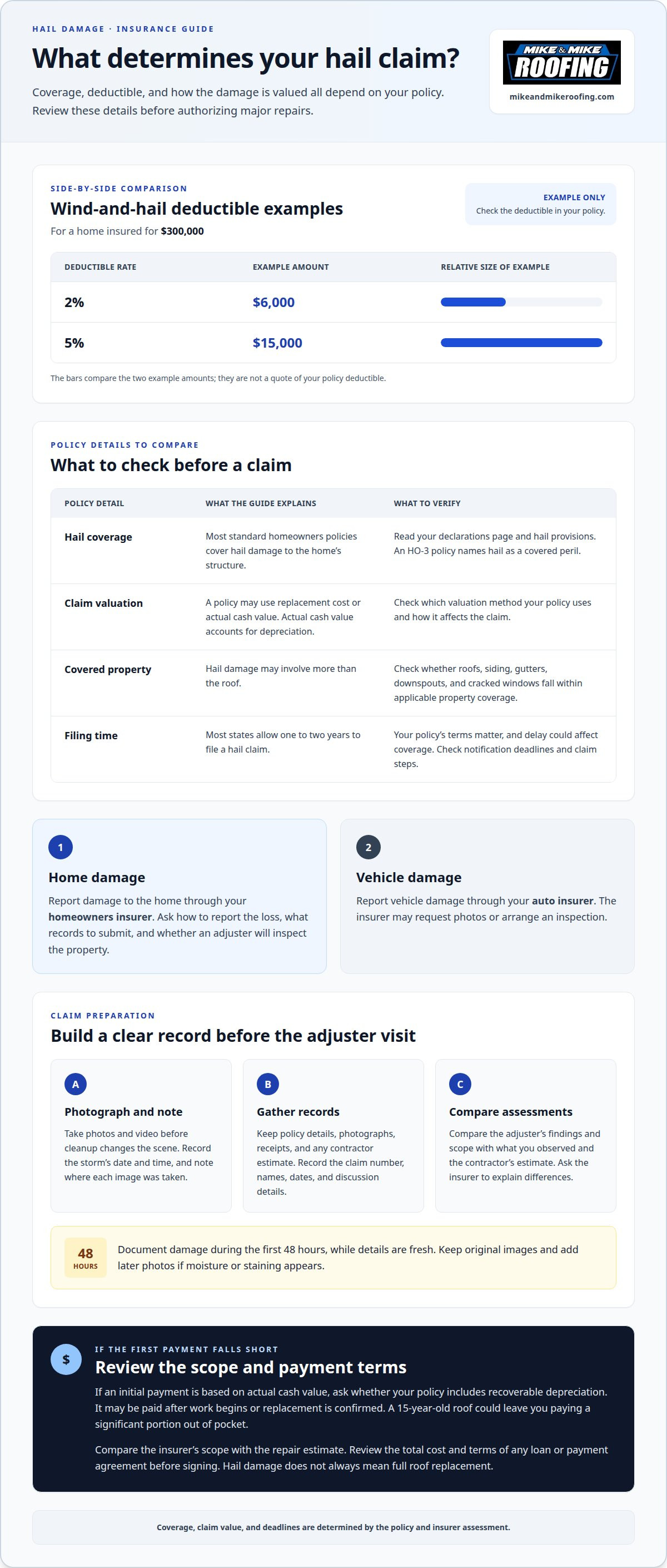
Read your declarations page and hail provisions; an HO-3 policy names hail as a covered peril. Check whether the policy uses replacement cost or actual cash value, which accounts for depreciation. For a home insured for $300,000, a 2% wind-and-hail deductible is $6,000; at 5%, it is $15,000. Check whether roofs, siding, gutters, downspouts, and cracked windows fall within applicable property coverage.
-
Contact Your Home Insurance Company
Document the damage, then promptly call your insurer and follow any notification deadlines in your policy. Ask how to report the loss, which records to submit, and whether an adjuster will inspect the property. Record the claim number, names, dates, and discussion details. Keep receipts for hail-related expenses and submit them for possible reimbursement; store copies with your claim notes.
-
File a Homeowners or Auto Insurance Claim
Report home damage through your homeowners policy and vehicle damage through your auto insurer. Most states allow one to two years to file a hail claim, but your policy’s terms matter, and delay could affect coverage. The insurer may request photos or arrange an inspection. A roofer can describe observed damage and repair costs; the insurer and policy determine coverage and claim value.
-
Plan for a Shortfall
If the initial payment is based on actual cash value, ask whether your policy includes recoverable depreciation, which may be paid after work begins or replacement is confirmed. A 15-year-old roof could leave you paying a significant portion out of pocket. Compare the insurer’s scope with the repair estimate, then review any loan or payment agreement’s total cost and terms before signing. If hail debris blocks drainage, gutter cleaning service can help clear the flow.
Safely checking the property for visible hail damage
Knowing what to do after a hail storm hits your house starts with a safe, ground-level check. Local building codes affect required repairs, while wind and rain can influence exposure and temporary protection needs.
-
Assess Damage to Your Home and Car
Wait until it’s safe to go outside, then walk around the property. From the ground, look for dented gutters and downspouts, damaged siding, cracked windows, and stripped leaves on nearby plants. Check visible roof edges without climbing or using a ladder. Indoors, look for new stains, drips, or damp areas.
Check your car for dents or broken glass, too. Don’t touch wet wiring or stand beneath a bulging or sagging ceiling. A dry ceiling doesn’t prove the roof is undamaged; impacts can be difficult to see from below.
-
Photograph and Document Damage Before Repairs
Take photos and video before cleanup changes the scene. Capture roof areas visible from the ground, gutters, windows, metal surfaces, hailstones, and interior water stains from several angles. Record the storm’s date and time, and note where each image was taken.
Document damage during the first 48 hours, while details are fresh. Part of what to do after a hail storm hits your house is keeping original images and adding later photos if moisture or staining appears. This record can show the property’s condition before repairs or temporary coverings change the scene. Once documentation is complete, exterior property maintenance providers like JBM Custom Contracting can assist with exterior washing and cleanup to clear storm debris and restore visibility to exterior surfaces.
- Protect your home from further weather damage only when it’s safe. Move belongings away from incoming water, and use plastic, a tarp, or boards to cover exposed areas or broken windows. Don’t climb onto the roof to install a covering. Stay clear of wet wiring and sagging ceilings, and arrange a professional inspection for damage you can’t safely reach.
Avoiding roofing scams after a storm
After a hailstorm, quick promises can sound tempting, but roof replacement should follow documented damage, not pressure. These steps help keep decisions and paperwork under your control.
- Judge your own roof, not the neighborhood. Nearby homes replacing shingles doesn’t prove your roof needs replacement. Hail impacts vary with roofing material, roof age, wind, and existing condition. Ask for a clear inspection report describing the specific damage on your property. Hail damage may call for monitoring, repairs, or replacement planning, depending on what the inspection finds.
- Slow down a high-pressure pitch. After storms, unfamiliar contractors called “storm chasers” may offer quick repairs. Some take homeowners’ money or leave poor work. Be cautious if someone demands an immediate signature, promises an insurance claim will be approved, or pushes a full replacement without explaining the observed damage. Don’t let urgency replace a written scope.
- Compare written estimates and credentials. Get two or three written estimates from licensed contractors. Review each scope for the same work areas, materials, and proposed repairs, including damaged siding or broken windows. Check each contractor’s license, reviews, and insurance coverage. A roofer can explain construction costs and observed damage, but the insurer and policy determine claim coverage and value.
- Read every document before signing. Identify whether the agreement creates payment, contingency, cancellation, assignment, or other obligations. Ask for unclear terms in writing, and keep a copy. Don’t sign a blank form or treat an inspection document as harmless until you understand what it authorizes. Wait for insurance approval before major repairs, while addressing urgent temporary protection to limit further damage.
- Keep control of payments and next steps. Avoid paying large amounts upfront after a hailstorm. Match requested payments to written terms and completed work, and keep invoices and communications with your insurance claim records. If storm-damaged siding needs a professional assessment, discuss siding damage with a contractor before agreeing to replacement.
Mike and Mike Roofing: Roof Installation
Mike and Mike Roofing installs roofs when an inspection and documented damage indicate replacement is appropriate. Hail doesn’t automatically mean a new roof is necessary; the right response may be monitoring, repair, or replacement, depending on the roof’s condition. Once you understand the damage and your insurance claim, match the work to the documented need.
If replacement is appropriate, a new roof can restore this part of your home’s exterior. Mike and Mike Roofing also installs siding and windows and provides patio services for related exterior projects. As you decide how to proceed, keep the insurer’s scope and the agreed work clear.
For roof installation, contact Mike and Mike Roofing or visit mikeandmikeroofing.com.
Make Your Next Step a Clear One
Knowing what to do after a hail storm hits your house means making deliberate decisions, rather than letting storm pressure set the pace. Base your next move on your home’s condition: identify whether the roof, siding, or windows are affected, then decide what needs attention first. This gives you a practical way to move from damage concerns toward restoring your home’s exterior.
Mike and Mike Roofing installs roofs, siding, and windows for homeowners planning exterior work. Roof installation may suit a documented replacement plan, while siding or window work may address damage to those parts of the home. Focusing on the affected areas helps you describe the work clearly.
When you’re ready to talk through exterior work, contact Mike and Mike Roofing. Take the next step with a clear record of what needs attention and a plan grounded in your home’s actual condition.
Frequently Asked Questions
Hail Damage to Your Home: What to Do Next?
After hail damage, keep people away from exposed roofing, broken glass, and areas with active leaks. For a home in Weatherford, Fort Worth, or Aledo, create one claim folder with date-labeled photos, receipts, insurer messages, and inspection notes. This makes it easier to track what changed, what you reported, and which repairs remain unresolved.
How long do I have to file a hail damage claim?
Most states allow one to two years to file a hail damage claim, but your policy may require earlier notice. Don’t treat that general window as permission to wait. Record the storm date, notify your insurer promptly, and ask what filing deadline applies to your policy. Keep the answer with your claim records so you can track the next required step.
What if the insurance adjuster’s estimate seems too low?
Compare the adjuster’s estimate with an itemized contractor scope, noting specific work that appears omitted or understated. For example, list a damaged roof section and a dented gutter separately, then provide photos and ask the insurer to explain its assessment in writing. A contractor can describe observed damage and construction costs. If a claim dispute continues, it may be escalated to arbitration or court.
What is the difference between cosmetic and functional hail damage?
Cosmetic damage changes appearance; functional damage affects how a building component performs. A dent in metal trim may look unsightly, while a compromised shingle or cracked window can allow water intrusion. The distinction depends on the material and impact, not appearance alone. Document the affected area and ask the inspection report to state whether performance, weather protection, or both are affected.
What should you do immediately after a hailstorm damages your house?
First, stay clear of hazards such as wet wiring, broken glass, or a sagging ceiling. Once it’s safe outside, photograph visible damage before cleanup, including hailstones, windows, gutters, and interior stains. Move belongings away from incoming water only if it’s safe. Use a temporary covering for exposed areas only when safe, then keep receipts and report the damage to your insurer.
How can you safely inspect a roof after hail damage?
Inspect the roof from the ground; don’t climb onto it yourself. Look for visible debris, damaged roof edges, dented gutters, or stripped foliage nearby, but remember that hail impacts may not be visible from below. Arrange a professional roof inspection for a closer assessment. Limit roof access to your chosen roofer and insurance adjuster, since foot traffic can cause additional damage.


